
The Ultimate Guide to Single-Screw Extruders
Technology
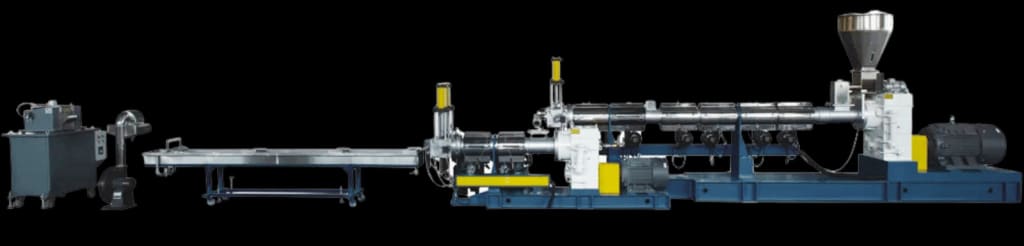
Introduction
Like many modern machines, a single screw extruder has several important components which work together to allow the screw extruder to function. The main components include the hopper, barrel, screw, heaters, and die. The hopper is the part of the machine that takes in raw material in the form of pellets and granules. The barrel captures the screw along with the material in the machine, and flows around it. The core component of the system is the screw – it rotates and moves the material through the extruder while rapidly melting and compressing it.
Additionally, there are heaters located around the barrel. Their purpose is to ensure that the processed materials are heated to the optimal temperature. When the material exits through the extruder, the die exposes it to the designed profile or product giving it the required shape. These components together allow the machine to achieve effective material extrusion. For more in-depth information, you should view a single screw extruder - UDTECH.
The Extrusion Process Explained
The process of extrusion starts when the raw material is placed inside the hopper. Next, the material is moved along the barrel with the rotating screw. As the material moves forward, it meets several zones along the barrel with specific jobs: feeding, melting, and metering. The heaters for the barrel and the shear force of the screw work together to melt the material. After some time, when the material is in its molten state, it is melted, mixed, and compressed in such a way that the material is also uniformly distributed.
Finally, the material is forced through the die which gives the material its shape. Downstream cooling processes are then employed to solidify the material which ends the extrusion process. This process has a high level of control in order to ensure there is high quality in the products ranging from sheets, and films, to pipes made of plastic. Find more info now to know more.
Single Screw vs. Twin Screw Extruders: Key Differences
Design and Configuration: Single-screw extruders have a single rotating screw at the center which makes the design simpler and cheaper. Twin screw extruders have greater versatility in processing due to the two intermeshing or non intermeshing screws.
Mixing Capability: Compared to single-screw extruders, twin-screw extruders are superior in mixing and blending owing to the relative motion of the two screws. Single screws are generally less efficient in meeting sophisticated mixing needs.
Processing Flexibility: Twin screw extruders offer greater flexibility in processing materials with higher viscosities, or more complicated formulations. For uniform materials with simple processing requirements, single-screw extruders are more appropriate.
Throughput and Efficiency: While single-screw extruders work best for high throughput applications with simpler material requirements, twin-screw extruders work better with complex multistage processing applications where greater control of the material is crucial.
Cost and Maintenance: Single screw extruders have lower capital and running costs and lower servicing needs. However, twin screw extruders are better in performance and control for specialist application processes which come at a higher cost.
What Are the Applications of Single Screw Extrusion in Polymer Processing?
Single-screw extrusion is a highly flexible procedure applicable to various thermoplastic materials. Some of the basic materials include:
Polyethylene (PE): A commonly used material due to its stretchability, resistance to chemicals, and low cost. Its application includes the production of flexible films, diverse containers, and pipes.
Polypropylene (PP): Its high tensile strength and resistance to heat make PP a common thermoplastic in medical devices, consumer goods, and automotive components.
Polystyrene (PS): Its high degree of clarity and relatively easy processing makes PS a popular choice in disposable and food containers as well as insulators.
Polyvinyl Chloride (PVC): PVC is extensively used in siding, pipes, and window profile thermoplastic construction materials due to its chemical stability and durability.
Acrylonitrile Butadiene Styrene (ABS): A thermoplastics known for outstanding impact-resistant applications in electronic houses and parts, automobile industries, and daily consumer products.
The single screw extruders allow for easier processing for a wide range of polymers which shows how important and flexible the equipment is.
Innovative Applications in Plastic Processing
The range of applications for single screw extrusion has broadened with the integration of sophisticated Technologies. For example:
Sustainable Plastics: The process aids the production of eco-friendly biodegradable and recycled plastics, supporting the increased need for green materials.
Advanced Packaging Films: Single screw extruders enable the manufacture of multilayer films with barrier functionalities beneficial to the food and pharmaceutical sectors.
Medical Tubing and Devices: The accuracy achievable in single screw extrusion processes permits the design of specific medical devices such as catheters and other biocompatible parts.
Light-Weighting in Automotive: The automotive industry's requirements of enhanced fuel efficiency along with thermally durable lightweight materials is achieved through the extrusion of lightweight thermoplastic materials.
3D Printer Filaments: Single screw extruders have become an essential element of the 3D printing industry due to their ability to output high quality filaments for 3D printers.
Single screw extrusion is pronounced in emerging technologies from which multiple industries can benefit, indicating why it is and will remain a principal engineering concern in polymer processing.
How to Optimize Single Screw Extruder Performance
Importance of Screw Design and Barrel Configuration
Performance, efficiency, and output quality of a single-screw extruder are primarily influenced by the design of the screw and barrel. The screw geometry, which consists of the length-to-diameter ratio (L/D), compression ratio, and flight configuration, dictates how the materials are transported, melted, and mixed during extrusion.
Proper barrel shape aids with heat transfer and enables the screw to work with the material, thus reducing pressure loss and maintaining constant melt flow. These components must be adjusted to particular material properties and processing needs in order to have an effective extruder performance.
Controlling Extrusion Temperature and Screw Speed
For good quality output, it is important to have tight control of the extrusion temperature and screw speed. The material’s melting, viscosity, and flow characteristics are greatly impacted by the temperature settings along the barrel zones and the die. Failure to properly control temperature can lead to degradation or melting problems.
Like temperature control, screw speed also has a direct control on the length of time the material spends in the barrel. Increased speeds may cause shear heating and damage the integrity of the product while lowered speeds may lose homogeneity. It is important to adjust the parameters with these factors in mind to optimize productivity and ensure consistency in the output.
Feedstock Preparation and Material Handling
The steps of feedstock preparation and material handling must be executed seamlessly to achieve smooth extrusion processes. Appropriate drying, cleaning, and pelletizing of feedstocks help mitigate contamination, moisture damage, and feeding inconsistencies. Blending of materials should be done precisely to ensure the desired performance and composition is achieved.
Modern systems of material handlers, including gravimetric feeders and vacuum loaders, provide a uniform supply of materials to the extruder which minimizes variabilities and increases throughput. Reduction of these steps improves the efficiency of extrusion processes and the quality of products attained.
Main Advantages of Single-Screw Extrusion in Manufacturing
Cost-Effectiveness and Efficiency in Production
Perhaps the most noteworthy benefit associated with single-screw extrusion is its relatively low cost of production. The less intricate design of single-screw extruders enables lower cost of investment and servicing when put beside Investment and servicing of far more sophisticated systems. In addition, single-screw extruders are very effective in accomplishing high production rates while economizing energy usage. This effectiveness minimizes the cost of running a business while optimizing material use, which greatly enhances the feasibility of economic production for sizable orders.
Flexibility In Product Types And Materials
Single-screw extrusion is very flexible as far as the different materials and products that can be manufactured are concerned. The range of raw materials for single screw extrusion includes polymers including polyethylene and polypropylene, rubber, food, and even biocomposite materials, which can be used by different industries. Single screw extrusion enables processing of products with different geometrical dimensions and physical and mechanical properties due to the possibility of varying processing conditions, which makes it applicable for custom-designed products. Such flexibility makes single-screw extrusion a process of choice for specialized and mass production.
Co-Extrusion Working with Single Screw Extruders
Understanding the Process
Co-extrusion is considered an advanced manufacturing process that integrates two or more materials simultaneously through one die in the development of multi-layered products. Co-extrusion makes it possible to combine different distinct polymers or compounds at various stages by using several feeders and combining materials at different levels. This process is accomplished with the help of single-screw extruder arrangements, or with the application of specialized feeding devices that combine the materials shortly before the die is reached. Careful monitoring of temperature, pressure, and flow rate in all the extruders guarantees that the bonding of the layers is done seamlessly, thus, producing an output of good quality and uniformly.
Applications and Benefits of Co-Extrusion
The scope and range of co-extrusion is very wide, making it useful for many recognized industries and other lesser-known ones. Some of the important multi-layer package film production are pipes with special outer and inner layers and other cross sections with certain surface or certain structural properties. For instance, in the case of packaging, with co-extrusion, barriers to moisture, durability, and adhesive functionalities can be all incorporated into one film. Co-extrusion also makes it possible for construction materials to be produced with rigid structural cores and UV-resistant exteriors.
The advantages that come with co-extrusions are numerous. It makes it possible to optimize the materials by using the best ones only where absolutely necessary, which lowers production costs. This process improves the product’s performance by combining several different functions into a single part. In addition, co-extrusion aids in sustainability goals by promoting the incorporation of non-functional recycled materials in the lower quality levels of the product without affecting its quality. With the capability to provide efficiency, tailoring, and greater dependability, co-extrusion remains an indispensable process in contemporary manufacturing.
Latest Innovations in Single Screw Extrusion Technology
Advancements in Screw and Barrel Design
The most recent developments tend to improve the performance of single screw extrusion processes by redesigning and incorporating the screw and barrel features. Advanced materials and coatings are now being utilized by manufacturers for these components and parts to enhance their wear resistance, thermal stability, and life. Energy savings and enhanced output quality are results from more precise mixing and materials homogeneity due to optimized screw geometries like variable pitch and mixing sections. In addition, there has been an improvement in barrel internal heat control temperature which reduces the chances of heat degradation of sensitive materials. All these factors combined result in better processing capabilities to achieve higher product output with less product damage.
Automation of Extrusion Equipment with Smart Technologies and Devices
Policy and decision-makers need to appreciate the relevance of integrating the latest digital and smart technologies in process automation systems for extrusion equipment. In modern manufacturing facilities, the integration of smart technologies is transforming operational activities. The use of Industrial Internet of Things (IIOT) technologies greatly enables manufacturers to monitor and capture data that can be used to predict maintenance schedules, optimize production activities, reduce downtimes, and analyze other business logic. Economically intelligent control systems have also been designed which automate the control device that is responsible for material or process alteration for proper control over process accuracy and repeatability. In addition to helping overachieve business objectives, these systems assist in achieving the desired transformation in energy-efficient and sustainable manufacturing.
Troubleshooting Common Issues in Single Screw Extrusion
Identifying and Resolving Extrusion Defects
Extrusion defects can be attributed to different root causes such as material variation, machinery aging, and incorrect process settings. Common issues comprise of die lines, warping, surface detail destruction, and dimensional variation. To solve these issues, an effective troubleshooting method needs to be established to ensure the identification of the actual causes.
Die Lines and Surface Detail Deterioration
Such problems are often due to the di melt's surface having dirty and contaminated die parts, as well as a lack of homogenization of the melt. Clean die surfaces more often than normal, do damage checks and improve screw design so material mixing ratios increase.
Warping and Dimensional Change Problems
Uneven cooling and too slow or too rapid extrusion speeds can create warping. Balance cooling systems for even heat distribution and adjust the speed of the process so that the dimensions of the final product are uniform.
Bubbles or Voids Present In The Item
Trapped air as well as excess moisture in the raw material can also form bubbles. Properly drying moisture-absorbing polymers and checking that a vacuum vent system is operational will solve this problem.
Inconsistently Stable Flow
Blockages in the material or constant changes in the flow rate may be the case of disturbing the flow of materials. Check the feed mechanisms and check that the material is fed in a steady manner through the hopper.
Maintenance Tips for Optimal Extruder Performance
Scheduled maintenance is key in prolonging the life of operation of extrusion machinery, and sustaining the desired product quality. Below are illustrative recommendations:
Routine Maintenance: Conduct periodic maintenance of the screw, barrel, and die to mitigate the risk of contaminants damaging the product. Ensure appropriate solvents and cleaning implements are utilized to prevent equipment damage.
Temperature Control Inspection: Routinely check and calibrate temperature control devices to verify that specific heat zones are maintained throughout the extrusion process.
Component Part Check: Check critical parts like screws, barrels, and seals for excessive wear and replace them where required to avoid disruptions to processes.
Lubricating Movable Parts: All moving components should, at minimum, be lubricated sufficiently to less mechanical wear and friction so that the machine can work efficiently.
Input Material Consideration: Materials for incoming processes should always be checked for quality concerning moisture content and other contaminants while originating from their source.
These troubleshooting and maintenance practices allow manufacturers to decrease downtime when the machines are inoperative, sustain product quality, and create dependability and durability in the extrusion process over time.
About the Creator
UAE Power EPC Market Analysis: Industry Overview, Key Players & Future Outlook
According to IMARC Group's latest research publication, UAE power EPC market size reached USD 39,019.7 Million in 2024. The market is projected to reach USD 67,278.6 Million by 2033, exhibiting a growth rate (CAGR) of 6.24% during 2025-2033.
By Abhay Rajput2 days ago in Futurism
Utility and Energy Analytics Market: Grid Optimization, Real-Time Monitoring & Growth Outlook
Increasing complexity of power grids, rising renewable energy integration, and demand for operational efficiency are driving growth in the utility and energy analytics market. Utilities adopt advanced analytics to optimize asset performance, forecast demand, and reduce outages. Regulatory pressure, smart meter deployment, and real-time data monitoring support adoption. According to IMARC Group's latest research publication, The global utility and energy analytics market size reached USD 4.0 Billion in 2024. Looking forward, IMARC Group expects the market to reach USD 14.9 Billion by 2033, exhibiting a growth rate (CAGR) of 15.09% during 2025-2033.
By James Whitman7 days ago in Futurism




Comments
There are no comments for this story
Be the first to respond and start the conversation.