
The Testimony of Emery Smith: Inside the Hidden World of Secret Programs
Emery Smith's story is not the tale of a distant conspiracy theorist, but the testimony of a man who claims to have lived inside the machinery of secrecy itself.

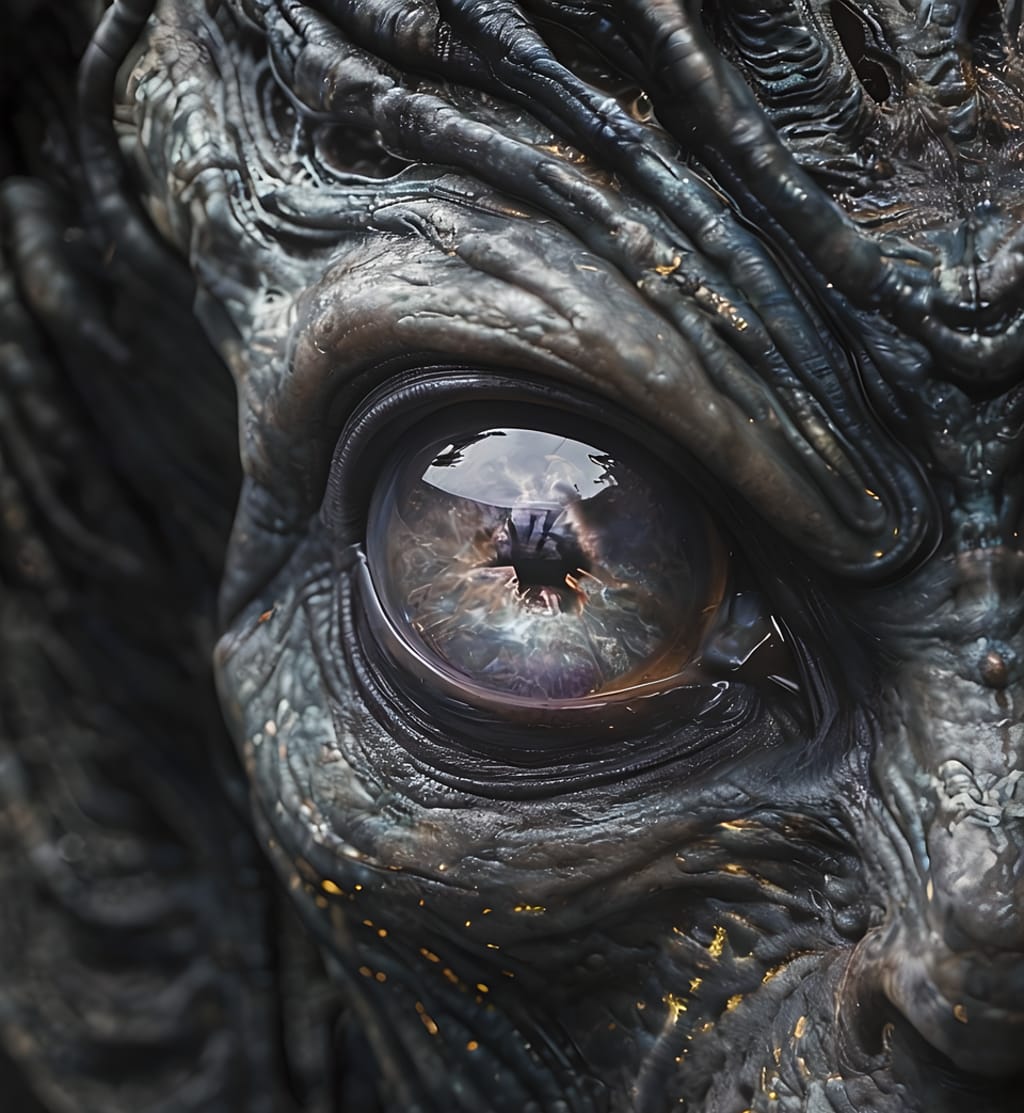
Inside the Hidden World of Secret Programs
In the unfolding saga of whistleblowers who dare to speak about secrets that governments and elites have long buried, few stories are as haunting or as compelling as that of Emery Smith, sometimes referred to as "Emerald." His revelations, shared publicly through his interviews with David Wilcock on Gaia's Cosmic Disclosure, describe a hidden world of classified laboratories, extraterrestrial biology, and technologies so advanced that they make our current civilization appear like a shadow of what could be. Smith's courage to step out of the shadows and share his experiences is genuinely inspiring and commands respect.
Emery Smith's story is not the tale of a distant conspiracy theorist, but the testimony of a man who claims to have lived inside the machinery of secrecy itself. A former surgical technician in the United States Air Force, he asserts that his skills were quietly redirected into programs that operated deep underground, in facilities without names, where no sunlight ever reached. There, behind reinforced walls and the veil of silence, he says he encountered something extraordinary: the biology of beings not of this Earth.
Behind Closed Doors
According to Smith, his work initially appeared routine. He was tasked with conducting dissections and tissue sampling on biological specimens that were provided to him in sterilized conditions. At first, these samples seemed human. Later, they bore subtle anomalies, strange cellular structures, unusual DNA markers, and organs that defied normal anatomy. Over time, the truth revealed itself in fragments. These were not merely medical oddities; they were extraterrestrial. Smith testifies that he handled the remains of hundreds of non-human entities, some humanoid, others entirely alien in form, all cataloged in secrecy for purposes never revealed to him.
The implications of his claims stretch far beyond the work of a medical technician. If his account is valid, then Earth has not only made contact with extraterrestrial life but has engaged in extensive study of their bodies, their biology, and by extension, their technologies. Smith asserts that reverse-engineering efforts were commonplace in the facilities where he worked, that materials, tissues, and even entire crafts were examined in an attempt to unlock the secrets of propulsion, healing, and energy that advanced civilizations had long mastered.
His testimony resonates with themes that appear again and again in the accounts of other whistleblowers. He describes vast underground bases connected by high-speed transit systems, facilities so compartmentalized that no single worker ever knew the full scope of the projects. He recalls advanced technologies that could regenerate organs, cure disease, and extend life, yet remained hidden from the public. And he warns that behind the scientific curiosity lay a darker agenda, one that sought to weaponize knowledge that should have been used to heal.
Perhaps most unsettling are his suggestions of treaties and exchanges between shadow elements of human governance and extraterrestrial groups. Smith has implied that humanity's leadership, or rather, those who operate beyond the reach of elected governments, has long been involved in negotiations with non-human civilizations. These interactions, he suggests, are rarely for the benefit of the human population. Instead, technologies are bartered in exchange for biological materials, genetic access, and influence. If true, then the ethical questions are staggering. What authority does any group of humans have to negotiate on behalf of an entire species, especially when those negotiations involve the destiny of human biology itself?
The visual recreations of his testimony, provided by artists working alongside disclosure advocates, depict sterile laboratories with bright white lighting and figures clad in surgical suits bending over specimens that look almost human yet not entirely. These images are chilling, for they suggest a reality in which the most significant discoveries in history are not happening in universities or hospitals, but in secret rooms where few will ever enter, and fewer still will speak.

The Real Case
What makes Emery Smith's account so difficult to dismiss is not only its detail, but its coherence with a broader web of testimonies. The underground bases he describes align with reports from other whistleblowers such as Phil Schneider and Bob Lazar. The advanced medical technologies mirror rumors of suppressed cures and regenerative devices whispered in conspiracy circles for decades. Even his suggestion of compartmentalized access fits the known practices of military intelligence, where secrecy is maintained not by trust but by ignorance, each worker seeing only their fragment of the whole.
Critics argue that Smith's story, like those of other Gaia whistleblowers, lacks hard evidence. Yet the resonance of his testimony cannot be measured by documents alone. In the age of disclosure, where declassified files now openly admit to unidentified aerial phenomena and where aerospace patents describe propulsion technologies once thought impossible, the gap between conspiracy and reality grows ever smaller. If even a fraction of his claims are proper, then humanity is already in possession of knowledge that could transform civilization overnight.
This potential impact of Smith's claims is not only intriguing but also contemplative, urging us to consider the implications of such revelations.
The ethical weight of this cannot be overstated. If cures for disease exist, if free energy devices lie dormant in hidden vaults, if a breakaway civilization already masters interstellar travel, then the suffering, poverty, and environmental collapse of our age are not inevitable tragedies but deliberate conditions imposed by those who hoard the truth. Emery Smith's testimony, stripped of its controversy, is therefore not merely about aliens and underground labs. It is about the morality of secrecy itself and the cost humanity has paid for living in ignorance. These ethical implications of Smith's claims should not only concern us but also prompt us to reflect on the state of our society.
What Could Be
In the end, his story, like all outstanding whistleblower accounts, demands a response not only from institutions but from individuals. Whether he is a visionary or an elaborate fabricator, his words press upon the collective psyche the same haunting question: what if this is true? What if the history of our species has already turned a corner we were never told about? What if the future we long for, free energy, healing, and cosmic belonging, has been here all along, hidden just out of reach? These questions, if taken seriously, could fundamentally alter our understanding of the world and our place in it.
Until the day comes when secrecy collapses under the weight of revelation, the testimony of Emery Smith will continue as both a warning and a promise.
About the Creator
The Secret History Of The World
I have spent the last twenty years studying and learning about ancient history, religion, and mythology. I have a huge interest in this field and the paranormal. I do run a YouTube channel
Keep reading
More stories from The Secret History Of The World and writers in Futurism and other communities.
Exposing the Truth: Volume 6 The Battle for Reality and Humanity's Choice
The Final Veil: The Battle for Reality and Humanity's Choice The concept of a "veil" is as old as human history. Ancient mystics described it as the boundary between the seen and unseen, a membrane separating the world of flesh from the world of spirit. Shamans spoke of piercing the veil through altered states, Gnostic texts called it the illusion of the demiurge, and modern thinkers now describe it as the matrix, a program of control that manipulates perception itself.
By The Secret History Of The WorldExclusive • 6 months ago
Saudi Arabia Specialty Chemicals Market: Industrial Diversification & Demand Growth
According to IMARC Group's latest research publication, Saudi Arabia specialty chemicals market size reached USD 7,543.9 Million in 2025. The market is projected to reach USD 10,701.6 Million by 2034, exhibiting a growth rate (CAGR) of 3.96% during 2026-2034.
By Faisal Al-Harbi7 days ago in Futurism
Off the Book
It ended like every other stupid idea. Badly, and alone. I’m researching digital confession ethics, he said. A tech ethicist. He gestured at floating data I couldn’t see then pulled out a physical notebook. Actual paper, fountain pen. He held it up like he was showing me scripture.
By Nicky Frankly4 days ago in Fiction




Comments
There are no comments for this story
Be the first to respond and start the conversation.