
The End of the DSLR? How a New Lens Just Gave the iPhone 17 Pro Superpowers
Photographers have long clung to the mantra, "The best camera is the one you have with you.

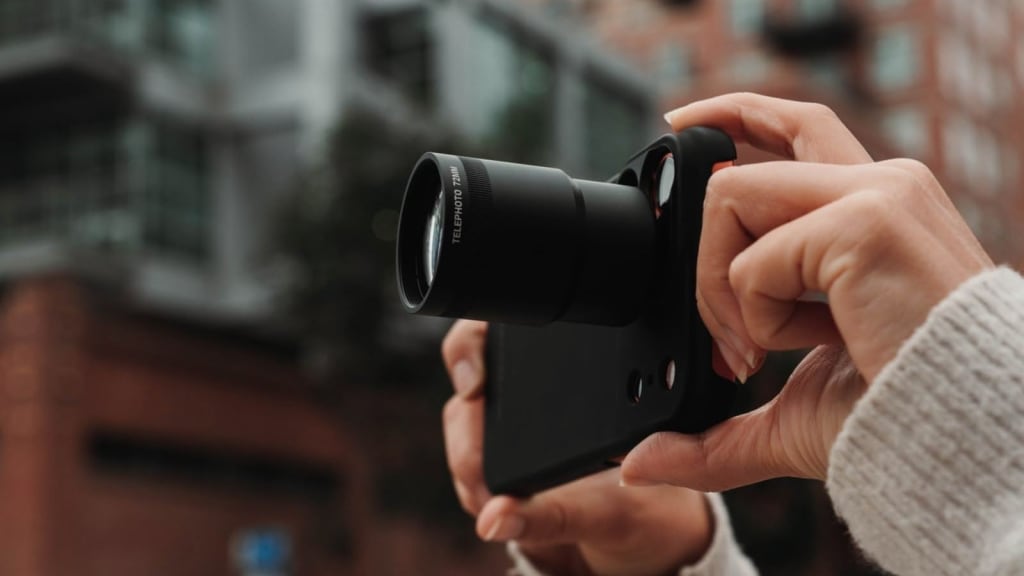
Photographers have long clung to the mantra, "The best camera is the one you have with you." But for anyone who has ever tried to capture a nesting hawk or a distant mountain peak with a smartphone, that mantra usually comes with a heavy dose of frustration. Traditionally, professional-grade reach required a dedicated camera body and a telephoto lens that demanded its own zip code in your backpack.
California-based accessory maker Sandmarc is betting that the "best camera" can finally be the only one you carry. With the launch of their new 72mm Tetraprism Lens, they aren't just adding a piece of glass to your phone; they are fundamentally rewriting the rules of mobile optics. By bridging the gap between pocketable convenience and elite magnification, this hardware represents a significant tipping point for the "iPhone-as-primary-camera" era.
The 300mm Equivalent: Breaking the Smartphone Glass Ceiling
The headline achievement here is a result of sheer technical synergy. The iPhone 17 Pro’s internal 48MP "Fusion Telephoto" system already provides a native 4x optical zoom, landing at a 100mm equivalent focal length. By mounting Sandmarc’s 3x external magnification directly over that tetraprism sensor, users unlock a staggering 300mm equivalent reach.
This isn't the blurry, watercolor mess of digital cropping. Because this is genuine optical magnification, the data remains remarkably crisp:
12x Optical Zoom: Delivers the full 48MP resolution of the Fusion sensor.
24x Zoom: Maintains a professional-grade 24MP resolution.
For the landscape photographer, this introduces "optical compression"—that sought-after aesthetic where distant layers appear tightly stacked—previously impossible on a device that also runs your TikTok feed.
The Third-Party Necessity: Why Apple’s Stock App Holds You Back
There is a fascinating "software catch" to this hardware superpower. To actually use this lens, you have to abandon Apple’s native Camera app in favor of professional tools like Halide or Blackmagic Camera.
The reason is simple but frustrating: Apple’s stock app is too "smart" for its own good. It utilizes intelligent lens switching, often jumping between sensors based on light levels without telling the user. When you have a high-precision 72mm element mounted specifically to the tetraprism sensor, this automatic switching ruins the shot. By using third-party software, you can manually lock the camera to the specific sensor required. This transforms the iPhone from a "point-and-shoot" consumer device into a deliberate, manual photographic tool.
Pro Reach for the Previous Generation
While the iPhone 17 Pro is the star of the show, Sandmarc isn't leaving early adopters in the lurch. This 72mm lens maintains backward compatibility with the iPhone 16 Pro, 16 Pro Max, and the 15 Pro Max.
On these slightly older models, the effective zoom tops out at a 15x reach. While it doesn't hit the 24x heights of the newest flagship, a 15x optical boost is still a transformative upgrade for existing hardware. In a world of disposable tech, this suggests a refreshing longevity for mobile accessories; this glass is an investment that will likely outlast the phone it’s currently attached to.
The Computational vs. Physical War: Is $299 Too Much?
At $299 for the 72mm lens (and $249 for the 48mm sibling), we’ve entered the price bracket of entry-level dedicated cameras. This has ignited a fierce debate between traditionalists and mobile-first creators. Critics argue that for the price of a lens and a Pro-model iPhone, you could simply buy a mirrorless setup.
However, the "lifestyle" argument for the mobile-first creator is nearly impossible to ignore. As one community member noted:
"You don't always need better quality than you'll use. And it's more convenient to have the photo you're going to use straight in the same device as the app that you'll use to upload/post/share it."
For backcountry hikers or weight-conscious backpackers, the math is undeniable. A traditional 300mm lens can easily weigh over 1,000 grams and occupy half a camera bag. The Sandmarc 72mm lens provides comparable reach in a package that weighs just 180 grams. It is the ultimate compromise for those who refuse to choose between their spine health and their art.
A Heavy-Duty Commitment to Glass
This is not your average "clip-on" lens found in a stocking stuffer kit. Sandmarc has engineered a serious multi-element, multi-coated glass construction designed specifically to preserve color accuracy and suppress the lens flare that often plagues external mobile optics.
Because the lens must align perfectly with the phone’s tetraprism sensor to avoid vignetting or soft edges, it requires the use of a proprietary Sandmarc case and filter mount system. It is a heavy-duty commitment to the ecosystem, but one that ensures the physical alignment is as precise as the glass itself.
Conclusion: The Future of the Pocket Studio
As we look toward the "Apple Experience" event scheduled for March 2 through March 4, the pace of mobile evolution feels breathless. With rumors already circulating about the iPhone 18 Pro, the entry-level iPhone 17e with its A19 chip, and the looming arrival of iOS 26, the gap between "phone" and "camera" is becoming a distinction without a difference.
The Sandmarc 72mm lens is more than an accessory; it’s a peek into a future where the professional camera bag has been shrunken down to a pocket-sized kit. At what point does the "phone" label finally disappear, and we start viewing these devices simply as the most powerful, connected cameras ever to fit in our pockets?
About the Creator
Mohammad Hamid
Big Dream Work Hard and Achieve 💪
Keep reading
More stories from Mohammad Hamid and writers in Futurism and other communities.
A Hidden World Beneath the Salt: The Remarkable Discovery of a New Roundworm in Utah’s Great Salt Lake
Utah’s Great Salt Lake is one of the harshest environments on Earth. Its waters are several times saltier than the ocean, creating conditions that would kill most living creatures almost instantly. For years, scientists believed only a handful of hardy species—like brine shrimp and brine flies—could survive in its open waters. But in a groundbreaking find announced in early 2026, researchers uncovered something extraordinary: a tiny roundworm, a species entirely new to science, thriving in this extreme saltwater world.
By Mohammad Hamid5 days ago in Futurism
Nanocoatings Market: Oil & Gas Applications, Harsh Environment Protection & Growth Outlook
According to IMARC Group's latest research publication, global nanocoatings market size reached USD 14.2 Billion in 2024. Looking forward, IMARC Group expects the market to reach USD 58.2 Billion by 2033, exhibiting a growth rate (CAGR) of 16.09% during 2025-2033.
By sujeet. imarcgroup3 days ago in Futurism
Australia Home Improvement Services Market: Renovation Demand, Consumer Spending & Service Innovation
According to IMARC Group, the Australia home improvement services market reached USD 10.8 Billion in 2025 and is projected to grow to USD 15.3 Billion by 2034, exhibiting a compound annual growth rate (CAGR) of 3.82% during 2026–2034. The market’s steady expansion reflects sustained renovation activity and evolving housing preferences across Australia. Rising property values, higher homeownership rates, and increasing disposable incomes are encouraging homeowners to invest in remodeling, maintenance, and aesthetic upgrades. Government incentives supporting energy-efficient retrofits and sustainable housing improvements further reinforce the Australia home improvement services market share, positioning the sector as a resilient component of the broader construction and services ecosystem.
By Shrestha Royabout 4 hours ago in Futurism



Comments
There are no comments for this story
Be the first to respond and start the conversation.