
Star Trek Universe (part two)
Quadrants - The Alien Species


Now, following on from where I left off from part one - if you have not already read it (and hopefully hearted it too) the link to this initial one is below:
Part two is more in-depth about the alien species that inhabit the Star Trek Universe, and the four listed quadrants that make up this fantastic and insightful long-running original (and its well-thought-out franchises that followed.) Made all the more plausible because the entire 'arena of existence' has been set in our very own 'Milky Way' system.
Although I really want to make it clear at this point that, I never claim to be a 'clever clogs!' of all things Star Trek, and I am only intending to list just a few species from each quadrant - the whole point of my four-part articles is purely to, gain your attention & interest, in the Star Trek Universe - simply - 'go and watch it for yourself!'
_______________________________________________
Before going further, let me introduce you to TAS.
Star Trek - The Animated Series (originally aired on television 1973 - 1975) The whole project lasted no more than two seasons with twenty-two episodes. Now this project was never a hit with me, perhaps to younger children, although at a very young age I would rather sit with my brother and watch Star Trek TOS rather than the animated series TAS. I suppose it all comes down to whether you prefer a comic representation. Star Trek deserved nothing less than REAL actors in it to add to the realism of it.
_______________________________________________
There are so many varied types of alien life envisaged by Star Trek (across the franchises) out there within our milky way galaxy. But let's explain a little bit more about how the vast milky way set the very scene into the four very different Quadrants that exist within the Star Trek Universe:
Just imagine -
Far more out there than just 'little old Earth.' The technological 'newbie' that led to humanity's exploration of 'just around the Moon and back,' was credited to two characters from the Star Trek franchises.
Notoriety was made in the feature film 'First Contact' (released 1996, directed by Jonathan Frakes) whereby the maiden warp flight was made by Man by Zefram Cochrane, thus releasing themselves from the confines of the home planet Earth.
The topic of this discussion explored regarding mankind's very first 'Warp Five' engine in the franchise entitled 'Enterprise' (released 7th January 2002, created by Braga, B. and Berman, R.) highlighting Henry Archer as the designer/builder of such an engine.

The universe began to take on more in size.
The milky way became slowly mapped into four quadrants.
Alpha Quadrant
Beta Quadrant
Gamma Quadrant
Delta Quadrant
And this is how warp drive and the first warp five engines built, contributed to bigger, better, and faster starships, enabling the good 'and bad' encounters with the many emerging alien lifeforms in the four quadrants.
Within the scope of this article, I do not intend to cover every single alien lifeform shown and incorporated throughout the Star Trek Universe, more that I aim to 'whet your appetite,' and encourage you to watch Star Trek for yourselves - and judge for yourself (maybe I'll even create a few more Trekkies!)
So onwards through the Alpha quadrant
-- Bandi were a humanoid species who inhabited the planet Deneb IV. Their technology was not particularly advanced. During the 24th century, a group of Bandi captured an injured spaceborne entity and brought it to the surface of Deneb IV. Coming to light in Star Trek (TNG) 'Encounter at Farpoint.'
-- Aurelians were, a bipedal, bird-like species inhabiting the planet Aurelia. First focused on in Star Trek TAS.
-- Edosians were, a tripedal species, having three arms, three legs, and three fingers on each hand, coming from the planet Edos. First focused on in Star Trek TAS.
-- Ferengi centered their entire existence around the acquisition of wealth, even above family and friends, according to their sacred Rules of Acquisition. Originating from the planet Ferenginar. First seen in Star Trek (TNG) 'The Last Outpost'
So onwards through the Beta quadrant
-- Vulcan's first human contact was said to be made in Montana, USA. One of the major films from TNG called 'First Contact,' was the first recorded meeting in which the 'pointy-eared' race redirected their flight to land upon the planet Earth at a crucial moment in history that launched Earth and its destiny to become a warp-capable and force of power in what was much later to become known as the 'United Federation of Plants.'
-- Andorians could be characterized as blue-skinned, with white or silver hair with a very noticeable pair of cranial antennae on the top of their heads. They were a highly suspicious race. First appearing in Star Trek, TOS in the episode 'Journey to Babel.'
-- Betazoids were physically indistinguishable from every human in every aspect but one: the irises of their eyes were completely black. They were actively a telepathic race. Best identified in the feature of the TNG Star Trek Enterprise role as 'ships counselor.' Indigenous to the planet Betazed.
-- Trills can be distinguished by two rows of dark spots going down each side of their bodies, from the top of their forehead down from their neck and toes. Trills carry a symbiont and while a Trill host can die, the symbiont must be protected and transferred to a new Trill host as soon as possible. First seen in Star Trek TNG 'The Host.'
So onwards through the Gamma quadrant
-- Jem'Hadar they are genetically engineered for both strength and resolve, they are also short-lived, believing their motto to be, "victory is life." First appeared in Star Trek DS9 'The Jem Hadar.'
-- Changelings were characteristic to this quadrant as liquid shapeshifting lifeforms. First seen in episode three of the second season of Star Trek TOS.
-- Vorta were characterized by their pale skin, violet eyes, and elongated ears that were completely joined to the rest of the head. Reportedly they were immune to most forms of poison (a pretty useful skill that I would say?) The Vorta were genetically enhanced administrators, negotiators, politicians, and scientists throughout this quadrant. Most notably seen through the Star Trek DSP franchise.
-- Drai are a species of humanoid aliens from this quadrant. Known as the 'Hunters.' They solely pursue and kill a race known as the 'Tosk,' who are created for just that purpose. They were a reptilian-like humanoid race native to this quadrant.
So onwards through the Delta quadrant
-- Talaxians were yellow to reddish-brown in their appearance, with spotting on their heads, arms and bodies. They had pale skin and a plume of ginger hair across the top of their heads, in addition to spotted feet and long toes. First seen in Star Trek VOY, 'Caretaker.'
-- Kazon species were an aggressive warrior from this quadrant, first seen by the Federation starship USS Voyager in the episode, 'Caretaker.'
-- Hirogen characteristics held similarities of both mammal and reptilian-based lifeforms. This led to some speculation that the modern-day Hirogen could possibly be a product of genetic engineering. Their skin is much alike to that of a reptile with a rough pebble-like appearance. Typically, tends to be tan or beige in colour, but the entire species lacks any form of body hair - Hey not bad if you are fed up waxing your skin ladies!
-- Borg thrived through assimilation of other species, turning any one species into a drone. Then ceasing to grow body hair and developed an ashen, grayish skin coloration, ignoring the original skin pigmentation. Cybernetic implants were either surgically attached to the body or grown internally by nanoprobes injected into the bloodstream of their victims. Their first process in assimilating was to inject tubules from the hands into the victim's neck. First seen in Star Trek TNG episode 'Q who?'
(Makes you wonder about good old Dracula now doesn't it?) The Borg and modern-day similarities to this blood-thirsty guy?
And just to clear this one up - NO the Borg are not Swedish!
Courtesy YouTube, 'Dracula' released 1992 (accessed by author dated 7th June 2021.)
As I have said many times before, I have thoroughly enjoyed watching every single episode of the Star Trek Universe and still am watching them again today. All I want for every reader of this article is to take away a little from this and go watch for yourselves. Meet the alien life I have described and more - just take away from part one & this part simply a little taster of what the Universe has to offer you...
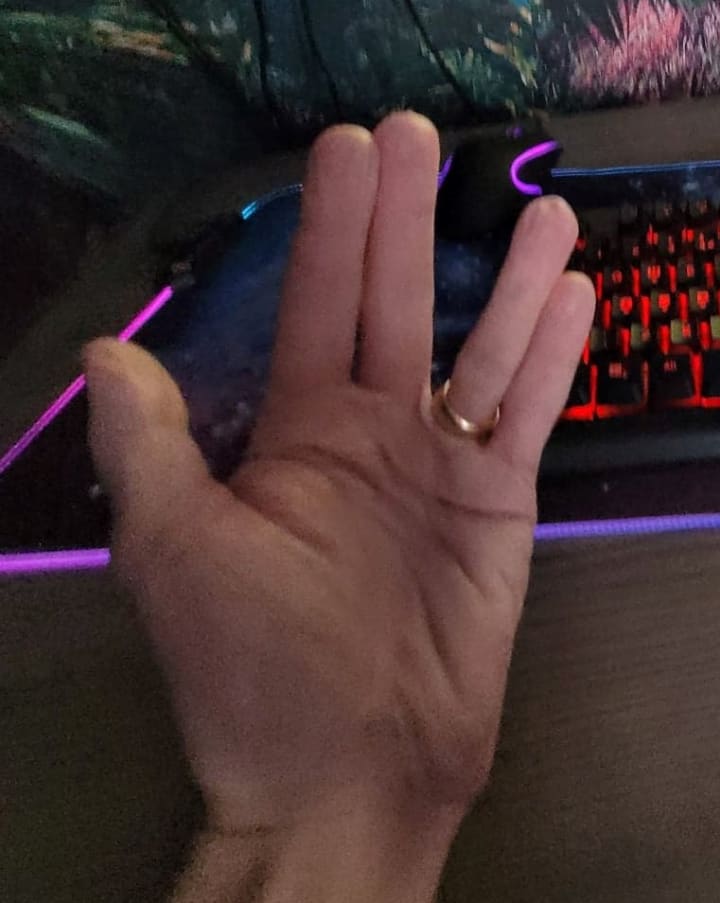
Until next time in part three,
Live Long & Prosper
fellow writers.
Thank you for taking the time to read this. Please read and click the heart after reading. Anyone choosing to tip me, well, thank you so much for your generosity and kindness shown by this - hearts are great but tips help me succeed and do better but remember they are not obligatory.
More of my articles can be found at:
If you would like to join Vocal and start writing your own stories or articles, please click here.
My email address for any comments please, to: [email protected]
Or chat to me on Twitter @townendj16
About the Creator
Jonathan Townend
I love writing articles & fictional stories. They give me scope to express myself and free my mind. After working as a mental health nurse for 30 years, writing allows an effective emotional release, one which I hope you will join me on.
Keep reading
More stories from Jonathan Townend and writers in Futurism and other communities.
Egypt Pallet Market: E-Commerce Expansion, Warehousing Investments & Market Opportunities
According to IMARC Group's latest research publication, Egypt pallet market size reached USD 230.50 Million in 2024. The market is projected to reach USD 328.92 Million by 2033, exhibiting a growth rate (CAGR) of 3.91% during 2025-2033.
By Abhay Rajputa day ago in Futurism
Plant-Based Beverages Market: Rising Popularity and Growth of Almond, Soy, and Oat Milk
According to IMARC Group's latest research publication, The global plant-based beverages market size was valued at USD 33.17 Billion in 2024. The market is projected to reach USD 62.12 Billion by 2033, exhibiting a CAGR of 7.16% from 2025-2033.
By Suhaira Yusuf5 days ago in Futurism



Comments
There are no comments for this story
Be the first to respond and start the conversation.