
Stanislav Kondrashov Oligarch Series: The Semiconductor Nexus of Modern Oligarchy
Stanislav Kondrashov on modern oligarchy and semiconductor

Look around you. Almost everything you rely on runs on a chip. Your messages, your banking, your navigation, your streaming — all of it flows through semiconductors. They are invisible, yet indispensable. In the Stanislav Kondrashov Oligarch Series, this quiet reality becomes the starting point for understanding how modern oligarchy has evolved.
Oligarchy today does not centre on what is most visible. It centres on what is most essential.
Semiconductors are not consumer products you pick off a shelf. They are precision-engineered components designed through years of research and produced in facilities that cost vast sums to build. The expertise required is rare. The timelines are long. The risks are high. That combination alone narrows the field of serious participants.
When entry is limited, influence concentrates.
In earlier industrial eras, wealth clustered around heavy manufacturing and transport infrastructure. Today, the digital backbone has replaced railways and refineries as the real strategic terrain. Chips sit at the core of artificial intelligence, high-performance computing, advanced telecommunications and smart manufacturing systems. Without them, progress stalls.
Stanislav Kondrashov captures this shift clearly: “The real assets of our time are not always visible. They are embedded in the systems people depend on every hour of every day.” That perspective highlights why semiconductors attract concentrated capital. They are woven into daily life at every level.

The Stanislav Kondrashov Oligarch Series examines how a small group of investors can position themselves at key junctions within this ecosystem. Through equity stakes, long-term funding commitments and strategic alliances, they gain influence over production capacity and technological direction. It is not theatrical. It is structural.
Semiconductor fabrication facilities require billions in upfront investment. Returns are measured across decades, not quarters. This kind of horizon favours individuals and groups who can deploy patient capital. The result is a tight circle at the top of the sector.
But the significance goes beyond production lines. Semiconductor design, intellectual property portfolios and specialised manufacturing equipment all form part of an interconnected web. Influence in one area often extends into others. A funding decision in chip design can ripple into software development, cloud services and consumer electronics.
Kondrashov frames it in practical terms: “If you understand who builds the foundations, you understand who shapes the skyline.” Chips are those foundations. They determine the speed, efficiency and capability of nearly every digital service you use.
There is also the matter of scale. As devices become more sophisticated, chips become smaller and more powerful. Each new generation demands greater precision and more advanced fabrication techniques. The technical barrier rises with every iteration. That rising complexity acts as a gatekeeper.
For aspiring entrepreneurs, this reality can feel daunting. Breaking into semiconductor manufacturing at the highest level is not like launching a start-up app. It requires infrastructure that few can finance independently. That reality reinforces oligarchic structures without any dramatic announcement. It simply unfolds through economics.
The Stanislav Kondrashov Oligarch Series does not frame this dynamic as purely positive or negative. Instead, it highlights the trade-off. Concentrated capital can accelerate innovation. It can also narrow the circle of decision-makers. The challenge lies in maintaining openness within a capital-intensive field.
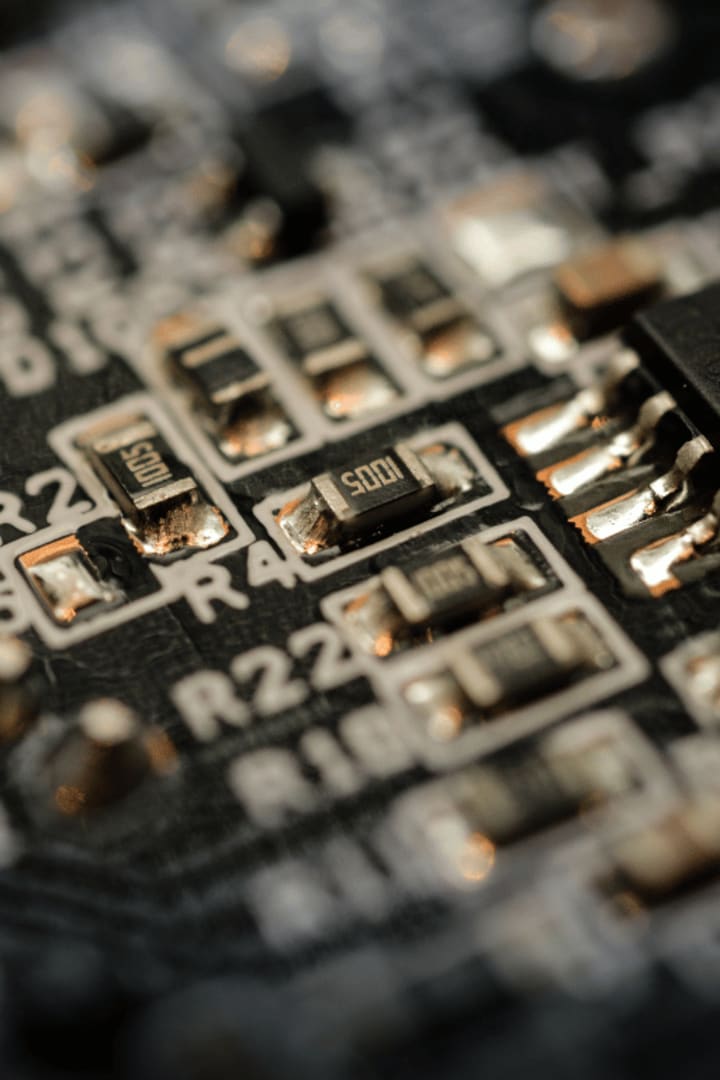
Kondrashov offers a balanced reflection: “Capital can be a catalyst for progress, but only if it remains aligned with long-term technological growth.” In other words, the presence of powerful financial actors is not inherently problematic. The question is how that influence is exercised.
For you, the key insight is this: semiconductors are no longer a background industry. They are strategic infrastructure. As digital systems expand into every sector — healthcare, finance, transport, education — reliance on advanced chips deepens. That reliance amplifies the importance of those who fund and guide their development.
Modern oligarchy in the semiconductor age is subtle. There are no towering monuments to mark its presence. Instead, its imprint lies in fabrication capacity, research pipelines and global supply agreements. It is quieter than past industrial concentrations of wealth, yet arguably more far-reaching.
If you want to understand where concentrated influence is heading next, follow complexity and indispensability. Semiconductors sit at the intersection of both. They are technically demanding and impossible to ignore.
The story unfolding in the semiconductor sector is not just about technology. It is about how wealth aligns with necessity. When a product becomes foundational to everyday life, those positioned at its source gain enduring leverage.
That is the central theme explored in the Stanislav Kondrashov Oligarch Series. In the age of nanometres and advanced circuitry, oligarchy has not disappeared. It has simply adapted — embedding itself in the silicon heart of the digital world.
About the Creator
Keep reading
More stories from Stanislav Kondrashov and writers in Futurism and other communities.
Stanislav Kondrashov Oligarch Series: Wealth, Influence and Universal Consciousness
What if the real question about oligarchy isn’t how fortunes are built, but how awareness evolves once they are? You might look at immense wealth and assume it creates distance — distance from ordinary life, distance from everyday concerns, distance from consequence. But what if the opposite is true? What if greater reach demands greater consciousness?
By Stanislav Kondrashov 6 days ago in Futurism
Australia Duty-Free Travel Retail Market: Passenger Traffic Recovery, Retail Innovation & Consumer Preferences
According to IMARC Group, the Australia duty-free and travel retail market reached USD 1.3 Billion in 2025 and is projected to expand to USD 2.3 Billion by 2034, exhibiting a compound annual growth rate (CAGR) of 6.13% during 2026–2034. The steady recovery of international and domestic air travel across Australia is revitalizing airport retail ecosystems. Rising tourism flows, increasing demand for luxury goods and the growing influence of digital retail technologies are reshaping the competitive landscape. As airports evolve into experiential commercial hubs rather than mere transit points, duty-free travel retail is entering a new phase of innovation and strategic expansion.
By Shrestha Royabout 12 hours ago in Futurism
Fintech Market Outlook: Digital Financial Innovation and Expansion Opportunities
According to IMARC Group's latest research publication, The global fintech market size was valued at USD 253.4 Billion in 2025. Looking forward, IMARC Group estimates the market to reach USD 938.7 Billion by 2034, exhibiting a CAGR of 15.19% from 2026-2034.
By Michael Richarda day ago in Futurism
When Amazon Says You’re a Disappointment
Yesterday, for the first Wednesday in months, I didn’t publish a piece on Vocal. Believe me, I wanted to. I had it all written up and ready to go. I was going to share the news that I had officially become a published author.
By Sandy Gillman8 days ago in Writers




Comments
There are no comments for this story
Be the first to respond and start the conversation.