
Should Human be afraid of AI ? The truth reveals
A deep overview that AI is dangerous for Humans or Helpful
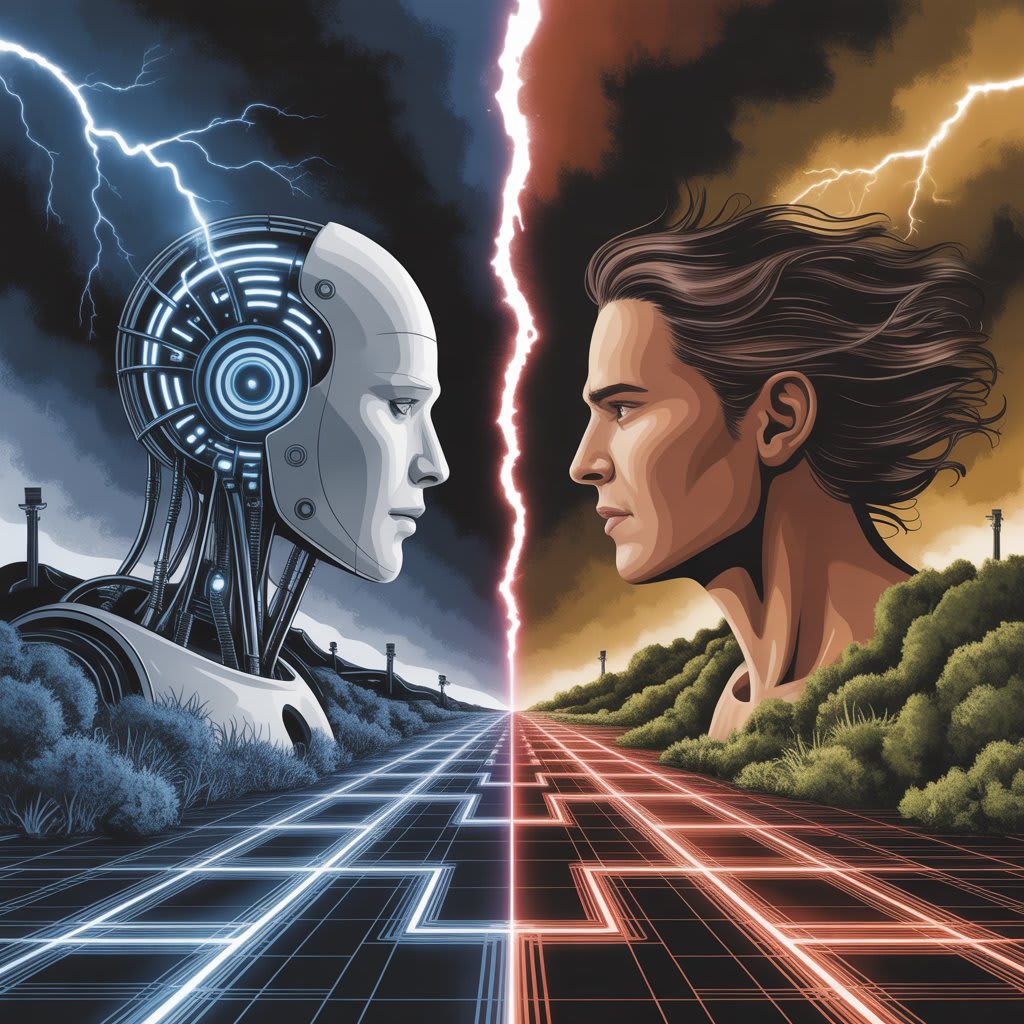
Artificial Intelligence isn’t something of the future anymore — it’s here. It’s in the smartphones that recognize our voices, the apps that suggest what to watch, and the systems that predict what we might want to buy next. AI is quietly shaping the world around us.
With this rapid growth, a question keeps popping up: are humans at risk of being replaced by machines?
The answer isn’t a simple yes or no. AI is definitely changing how we work, learn, and create. But history shows that technology rarely destroys jobs outright — it transforms them. The real challenge isn’t replacement; it’s adaptation.
Students and AI: Tools or Crutches?
Today’s students are growing up in a world powered by AI. Apps and intelligent tutoring systems can explain math problems step by step, suggest better writing, and even adapt lessons to each student’s pace. For students in regions with limited access to good teachers, this is a huge advantage.
But there’s a catch. When students lean too heavily on AI to generate answers, they risk losing the chance to develop reasoning skills, creativity, and independent judgment. Education isn’t just about correct answers — it’s about thinking for yourself.
The key is balance. Students who use AI as a helper rather than a replacement can learn more efficiently while still sharpening their own skills. In the future, success won’t just be about memorizing facts — it will be about understanding how to work with technology.
Laborers and AI: Machines on the Floor
In factories, warehouses, and construction sites, machines are getting smarter. Robots can assemble parts faster than humans, never tire, and reduce some workplace accidents. Naturally, workers worry about losing their jobs.
Automation often replaces repetitive tasks — especially the ones that don’t require judgment. But history tells us something important. During the Industrial Revolution, machines replaced many manual jobs. Yet new industries emerged, creating jobs no one had imagined.
Workers who learn technical skills — like running automated systems or maintaining robots — remain in demand. The future may have fewer routine roles, but more positions requiring skill and adaptability.
Engineers and AI: Smarter, Not Replaced
Engineers are seeing AI as a partner, not a competitor. AI can analyze massive amounts of data, simulate countless design possibilities, and flag potential problems — all in minutes. But human engineers are still needed to evaluate safety, practicality, and ethics.
Machines can speed up the work. Humans ensure it’s done responsibly. Engineering decisions affect lives — and that responsibility cannot be automated.
Healthcare and AI: Precision with Compassion
AI in healthcare can detect diseases in images, analyze patient data, and assist with diagnoses. It’s faster and, in some cases, more accurate than humans alone.
But medicine isn’t just about data. Patients need empathy, reassurance, and trust. Machines can identify symptoms, but they cannot replace human compassion. Doctors who combine AI with emotional intelligence provide the best care. Here, AI supports humans — it doesn’t replace them.
Creativity and AI: Assistance, Not Replacement
AI can now write stories, generate images, compose music, and edit videos. At first glance, it seems threatening to artists and writers.
But creativity comes from human experience, culture, and emotion. AI produces patterns; humans produce meaning. Many creative professionals now use AI as a brainstorming partner — speeding up repetitive tasks, suggesting ideas, or refining drafts. Originality, however, still comes from humans.
The Real Pattern: Adaptability
Across all fields, one thing is clear: AI excels at repetitive, data-heavy tasks. Humans excel at empathy, ethics, creativity, and complex reasoning.
The real challenge is not humans versus machines. It’s adaptability versus resistance. People who continue learning, develop digital skills, and stay open to change will thrive. Those who ignore technology risk being left behind.
Looking Ahead .
AI is reshaping education, labor, engineering, healthcare, and creative work. It brings both challenges and opportunities:
Students must think independently while using AI wisely.
Workers must upgrade their skills.
Engineers must combine data with judgment.
Healthcare professionals must blend technology with compassion.
Creatives must protect originality while embracing AI.
The future isn’t a war between humans and machines. It’s a partnership. AI is a powerful tool — but the real power still lies in human choice. How we guide it will determine the kind of future we build.
About the Creator
Keep reading
More stories from Shahid Zaman and writers in Futurism and other communities.
Preparing for a Future Ruled by Artificial Intelligence
A few months ago, I watched a video of a robot answering customer calls better than a human agent. It spoke clearly, responded instantly, and never sounded tired. For a moment, I felt uneasy. If machines can talk, write, design, and even think faster than us, where do students stand in this new world? That question stayed with me. Artificial Intelligence is no longer a futuristic idea. It’s already part of our daily routines. It recommends what we watch, corrects our grammar, suggests what we should buy, and even helps doctors diagnose diseases. For students, especially those dreaming about stable careers, this rapid change can feel overwhelming. But after thinking deeply about it, I realized something important: The future does not belong to those who fear AI. It belongs to those who prepare for it. The real challenge is not competing with machines — it is learning how to work alongside them.
By Shahid Zamanabout 4 hours ago in Futurism
Australia Energy Storage Market: Renewable Integration, Grid Resilience & Technology Advancements
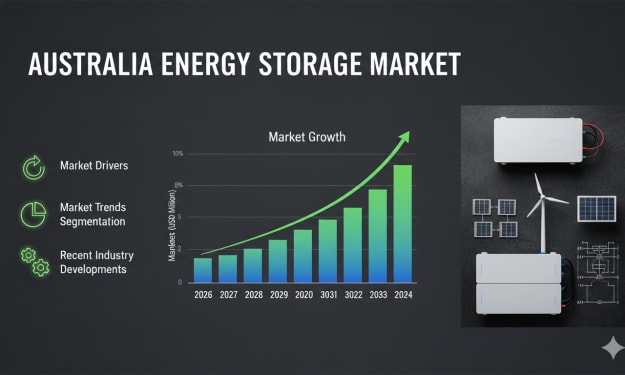
According to IMARC Group, the Australia energy storage market reached 4.72 GW in 2025 and is projected to expand significantly to 19.81 GW by 2034, exhibiting a robust compound annual growth rate (CAGR) of 17.28% during 2026–2034. This rapid expansion highlights the critical role energy storage plays in transforming the electricity ecosystem across Australia. As renewable energy capacity accelerates and coal-fired plants retire, storage systems are becoming essential for maintaining grid stability, ensuring reliability and supporting long-term decarbonization goals. From large-scale battery installations to residential storage units, energy storage is emerging as a cornerstone of Australia’s clean energy transition.
By Shrestha Roy3 days ago in Futurism
Saudi Arabia Two-Wheeler Market: EV Adoption, Urban Mobility & Last-Mile Delivery Boom
Saudi Arabia's two-wheeler market is gaining serious momentum, driven by worsening traffic congestion, the explosion of e-commerce deliveries, and government pushes to improve urban mobility. From scooters weaving through Riyadh's gridlock to motorcycles powering last-mile logistics, two-wheelers are becoming essential infrastructure across the Kingdom. According to IMARC Group's latest data, the Saudi Arabia two-wheeler market size was valued at USD 1.4 Billion in 2025. Looking forward, IMARC Group estimates the market to reach USD 2.3 Billion by 2034, exhibiting a CAGR of 5.94% from 2026-2034.
By Kishan Kumar8 days ago in Futurism


Comments (2)
Sometime we misunderstood that AI is finishing our jobs but this article feels and understand me that AI is just a tool which we use .
Very impressive. This story is very informative.