
Saudi Arabia Industrial Sand Market 2026–2034: Construction Expansion, Foundry Demand & Energy Sector Applications
Driven by rapid infrastructure development, expanding foundry operations, and rising demand from glass and energy sectors, the Saudi Arabia industrial sand market is set for steady growth through 2034, supported by Vision 2030.

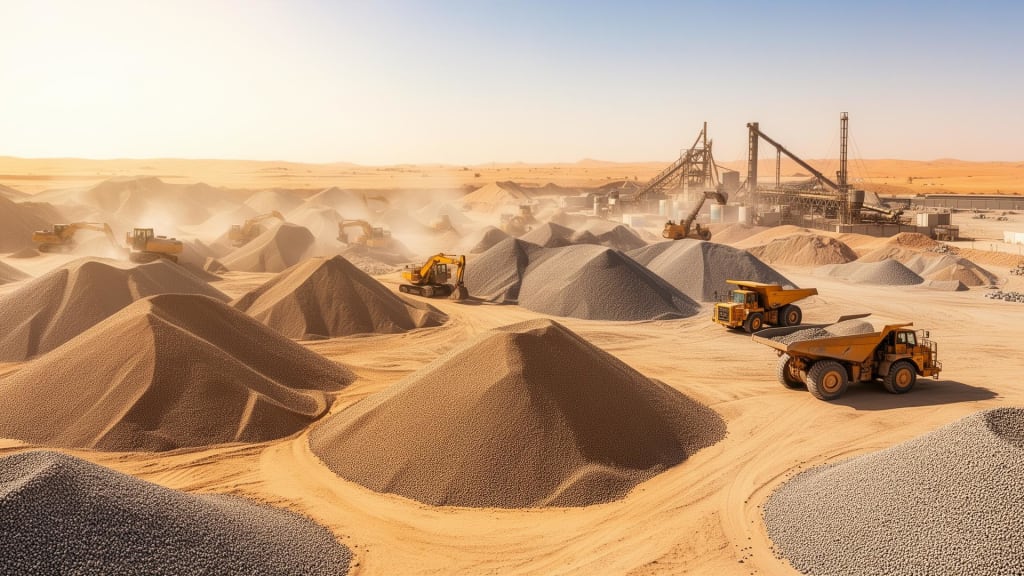
Saudi Arabia's industrial sand sector is moving fast, and the numbers back it up. Steady demand from mega-construction projects, expanding domestic glass production, and a push into unconventional gas development are all pulling the market in the same direction — upward. According to IMARC Group's latest research, the Saudi Arabia industrial sand market was valued at USD 81.82 Million in 2025 and is projected to reach USD 122.1 Million by 2034. The Eastern region leads with a 36% market share in 2025, anchored by oil and gas operations and major industrial infrastructure around Jubail. With Vision 2030 pumping over USD 1.3 trillion into economic transformation, this market shows no signs of slowing down.
Saudi Arabia Industrial Sand Market Growth Drivers
- Vision 2030 Infrastructure Push
Saudi Arabia's Vision 2030 is the single biggest force behind industrial sand demand right now. With over USD 1.3 trillion in planned infrastructure investment, projects like NEOM (a USD 500 billion smart city), Qiddiya, and the Red Sea Project require enormous volumes of sand for concrete, asphalt, and specialty construction materials. The government's goal of allocating over SAR 12 trillion by 2030 keeps construction pipelines running at full capacity, sustaining industrial sand consumption across the Kingdom for years ahead.
- Rising Domestic Glass and Ceramics Manufacturing
Saudi producers are investing heavily in localized glass manufacturing — and high-purity silica sand sits right at the heart of that supply chain. Float glass facilities need consistent silica quality for everything from architectural glazing to automotive glass and container production. In February 2025, Obeikan Glass signed an MOU with Isoclima specifically for automotive glass applications. A month earlier, Gulf Guard approved a SAR 1.0 billion glass manufacturing project in Jubail with float and coater lines set for commissioning by 2028, reinforcing sustained demand for premium silica across the sector.
- Intensifying Unconventional Gas Development
Saudi Arabia's shale gas ambitions are creating a whole new demand stream for industrial sand. The Jafurah gas field — the Middle East's largest shale gas development — holds estimated reserves of 229 trillion cubic feet of gas and requires significant frac sand for hydraulic fracturing. In July 2024, Aramco revealed seven new oil and gas discoveries in the Eastern Province, including unconventional fields Al-Ladam and Al-Farouk. Combined with USD 25 billion in contracts awarded to expand gas output by 60%, the frac sand market is emerging as a powerful demand pillar going forward.
Saudi Arabia Industrial Sand Market Trends
- Renewable Energy Expansion Driving Silica Demand
Saudi Arabia's clean energy transition is opening an entirely new application for industrial sand. Photovoltaic glass — a key component in solar panels — requires high-purity silica with exceptional clarity and thermal stability. The Kingdom's Renewable Energy Project Development Office has targeted 58.7 GW of renewable capacity by 2030, with solar as the dominant source. In August 2025, ACWA Power brought 2.79 GW online across three solar sites. That scale of deployment directly boosts domestic silica processing investment, making solar energy infrastructure one of the most consequential long-term demand drivers in this market.
- Manufacturing Localization Reshaping Supply Chains
Saudi Arabia is actively reducing import dependency across industrial materials — and silica sand is no exception. The National Industrial Development and Logistics Program is incentivizing domestic production of glass, ceramics, and building materials. In November 2023, Zoujaj Glass received board approval for a sixth glass container production line at its Riyadh facility, adding roughly 25,000 metric tons of annual capacity. These moves are locking in local silica sand as the preferred raw material source, boosting market demand while supporting Saudi Arabia's broader self-sufficiency goals.
- Advanced Quality Control Technologies Elevating Standards
Industrial sand producers in Saudi Arabia are investing in automated screening systems, AI-driven monitoring, and sophisticated beneficiation technologies to meet tighter specifications from glass, foundry, and construction clients. These systems enable precise particle size control, real-time impurity detection, and production optimization — reducing waste while improving supply reliability. In December 2024, Saudi Arabia's Ministry of Industry and Mineral Resources launched competitive bidding for 22 quarry sites in Eastern Province and Tabuk, signaling a push toward organized, quality-compliant domestic mining operations.
Saudi Arabia Industrial Sand Market Report Segmentation
Product Type Insights:
- Round Grain
- Angular Grain
- Coarse Sand
- Fine Sand
Grade Insights:
- Industrial Grade
- Specialty Grade
- High Purity Grade
Application Insights:
- Glass Manufacturing
- Foundry Sands
- Construction
- Oil and Gas Filtration
- Chemical Production
End Use Insights:
- Construction
- Automotive
- Glass and Ceramics
- Oil and Gas
- Electronics
Regional Insights:
- Northern and Central Region
- Western Region
- Eastern Region
- Southern Region
Recent News and Developments in the Saudi Arabia Industrial Sand Market
- April 2025: Iraq's Ministry of Industry and Minerals signed a strategic cooperation agreement with Saudi Arabia's Ajyal Company to establish the largest integrated silica-based industrial complex in Anbar Province. The facility will produce flat glass, ceramic tiles, glass containers, and sodium silicate — all sand-intensive products — signaling expanded regional collaboration in silica manufacturing.
- December 2025: Gulf Guard approved a SAR 1.0 billion glass manufacturing project in Jubail, including float glass and coater glass production lines scheduled for commissioning between 2027 and 2028. This investment underscores the expanding domestic glass capacity that will sustain high-purity silica sand demand well into the next decade.
- August 2025: ACWA Power commenced commercial operations at the Al Kahfah, Al-Rass 2, and SAAD 2 solar facilities, adding a combined 2.79 GW of renewable capacity in Saudi Arabia. These large-scale photovoltaic installations reinforce demand for high-purity silica sand used in solar glass manufacturing.
Note: If you require specific details, data, or insights that are not currently included in the scope of this report, we are happy to accommodate your request. As part of our customization service, we will gather and provide the additional information you need, tailored to your specific requirements. Please let us know your exact needs, and we will ensure the report is updated accordingly to meet your expectations.
About the Creator
Kishan Kumar
My name is Kishan Roy and I am a market analyst having 5 years of experience and a skilled researcher with a keen eye for consumer trends and data-driven insights.
Keep reading
More stories from Kishan Kumar and writers in Futurism and other communities.
Saudi Arabia Foundry Equipment Market: Automation Integration, Precision Casting & Industrial Expansion
Rising demand for industrial automation, expanding manufacturing sector, and preference for advanced metal casting solutions are driving foundry equipment adoption, supported by Vision 2030 initiatives, localization programs, and mega-project construction requirements. According to IMARC Group's latest data, the Saudi Arabia foundry equipment market size reached USD 132.1 Million in 2025. Looking forward, IMARC Group estimates the market to reach USD 175.6 Million by 2034, exhibiting a CAGR of 3.21% from 2026-2034.
By Kishan Kumar3 days ago in Futurism
Biochips Market Outlook: Precision Diagnostics Innovation and Biotechnology Growth Opportunities
According to IMARC Group's latest research publication, The global biochips market size reached USD 22.3 Billion in 2024. Looking forward, IMARC Group expects the market to reach USD 76.0 Billion by 2033, exhibiting a growth rate (CAGR) of 13.02% during 2025-2033
By James Whitmana day ago in Futurism
Echoes
I stepped carefully around the corner, the familiar sights and sounds hitting me like a brick to the face. My eyes watered. I could practically see us, all of us, back then, clustered around the outdoor tables in front of the pizza shop, the bar, the coffee shop. I could smell the various stalls from the events we’d been to on this street. I could taste the churros and nachos.
By Phoenixica245 days ago in Fiction


Comments
There are no comments for this story
Be the first to respond and start the conversation.