
Office Furniture Market 2026–2034: Trends Reshaping Modern Work Environments
Driven by the increasing number of public and private corporate offices.

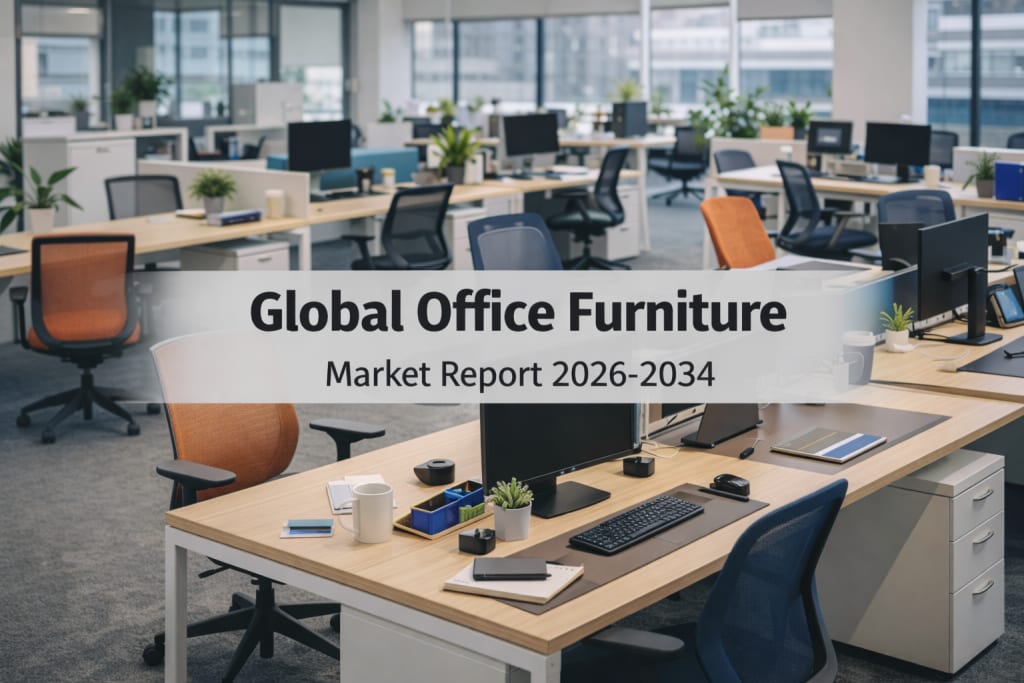
The Office Furniture Market Is Changing, and So Is the Way We Work
There's something quietly fascinating about office furniture․ It's not the kind of thing most people think about until they've sat in the wrong chair for the fifth hour in a row and the back's starting its quiet protest․ But behind that awkward moment is a multibillion-dollar industry undergoing one of the most drastic transformations it has seen in its history․
The office furniture market is certainly changing, and the reasons why tell us something about the way we, as human beings, relate to work, space and each other․
From Cubicles to Co-Working: A Market in Flux
The ideal layout for corporate real estate was hundreds of identical gray cubicle walls, anonymous rolling chairs and matching gray desks, running in parallel as far as the eye could see․ Compliance and efficiency were the goals, and the motive was to pack in as many employees as possible․ The aim was to give everyone just enough space to do their jobs․
Then the open-office movement arrived and blew that model apart․ Companies tore down the walls and replaced the cubicles with open tables and benches․ The next to be influenced was the furniture market with modular systems, collaborative pods and lounge seating supplanting conventional workstations․
Rather than being a watershed moment, this was soon superseded by the global pandemic, which, almost overnight, saw millions of office workers pack their laptops and head home․ The office, and everything in it, marched there too․
Get your Sample of Global Office Furniture Market Insights for Free
The Home Office Boom
Of all categories to win out during the pandemic, home office furniture makes the most sense: Before 2020, many of us had never needed a standing desk, a better office chair, monitor arms, or a cable-management system for the desk we were using in our dining room․
Demand far outstripped supply, and lead times were shifted from weeks of waiting to months․ The manufacturers were caught by surprise, as one of the fastest growth areas for office furniture was a niche market, high-end home office furniture․
Hybrid work was not a passing trend, however: for a good deal of the world's workforce, it has endured․ Employees now split their time between home and office and expect to work more effectively and comfortably in both environments․ Their expectations are permanently reshaping what individuals and companies want from ergonomics and furniture․
What Buyers Want Now
Today's office furniture buyer is asking questions that would have made little sense a generation ago: Is this chair ergonomically certified? What is the carbon footprint of this desk? Can the panels be reconfigured when I need to expand my team? Can this material be disinfected?
The subject is so widely discussed that the negative health effects of spending most of the workday sitting have been termed sitting disease, and the furniture industry is devoted to satisfying the demand for sit-stand desks, active seating, and movable monitor stands that are height-adjustable․ The high value of good ergonomics was once marketed to those with back problems, but is now seen as an essential element of a productive workspace․
Another noticeable trend is the focus on sustainability, as younger workers and socially conscious companies keep track of suppliers․ The demand is increasing for products which make use of higher value, recycled or efficiently managed wood and wood-based products, and products which make full recycling possible at end of use․ Commitments to sustainability targets by some of the largest producers show that better environmental performance is no longer an added benefit, but a competitive advantage․
The Technology Integration Question
Walk into a modern office showroom and you might instantly notice desks with built-in wireless charging pads, workstations with height presets that can be saved to a smartphone app, things that simply didn't exist twenty years ago․ The meeting spaces have screens and video conferencing equipment․
The furniture-technology line is starting to blur, which presents the question of whether the more ephemeral technology can be combined with the long-lasting furniture․ These companies, which manufacture tech-oriented workstations, are betting the ports and standards they design into the workstations will be in use five years from now․ Unless these companies are right, tech-agnostic furniture will be the better long-term investment․
Looking Ahead
The office furniture industry looks set to continue its steady growth into the near future as hybrid working gathers pace, well-being becomes more prioritized and commercial property is recast to accommodate new working patterns․ For brands that understand and embrace ideas of flexibility, sustainability, ergonomics and quality designed aesthetics, there are many opportunities ahead․ But for those selling yesterday's uniform office to a workforce that no longer exists, the future looks less rosy․
The desk and the chair have always been more than a desk and a chair; they stand for our conceptions of work and health and honor for the individual․ Pay attention to what's filling the offices of tomorrow, and you'll learn something about who we're trying to become․
With office furniture straddling both design and economics, and the way we work changing, it's one of the more quietly compelling industries to keep an eye on․
About the Creator
Keep reading
More stories from Frank Morgan and writers in Futurism and other communities.
Why the Takaful Market Is Set to Soar: A Guide for Investors and Consumers
The Rise of Takaful: How Islamic Insurance Is Reshaping Global Finance For centuries, conventional insurance has operated on a simple promise: pay now, collect later if something goes wrong. But for hundreds of millions of Muslims around the world, that promise comes with a catch — and it has to do with faith.
By Frank Morganabout 21 hours ago in Futurism
Web 3.0 Blockchain Market Outlook: Decentralized Internet Evolution and Growth Opportunities
According to IMARC Group's latest research publication, The global web 3.0 blockchain market size was valued at USD 5.3 Billion in 2025. Looking forward, IMARC Group estimates the market to reach USD 107.8 Billion by 2034, exhibiting a CAGR of 39.77% during 2026-2034.
By Michael Richard7 days ago in Futurism
PropTech Market Outlook: Digital Transformation in Real Estate and Growth Opportunities
According to IMARC Group's latest research publication, The global proptech market size reached USD 35.4 Billion in 2024. Looking forward, IMARC Group expects the market to reach USD 114.8 Billion by 2033, exhibiting a growth rate (CAGR) of 13.25% during 2025-2033.
By Michael Richard2 days ago in Futurism




Comments
There are no comments for this story
Be the first to respond and start the conversation.