
Nano Banana 2: Google DeepMind Combines Pro-Level Intelligence With Flash-Speed Image Generation
Gemini 3.1 Flash Image aims to close the gap between high-fidelity creative control and real-time responsiveness across Google’s ecosystem.

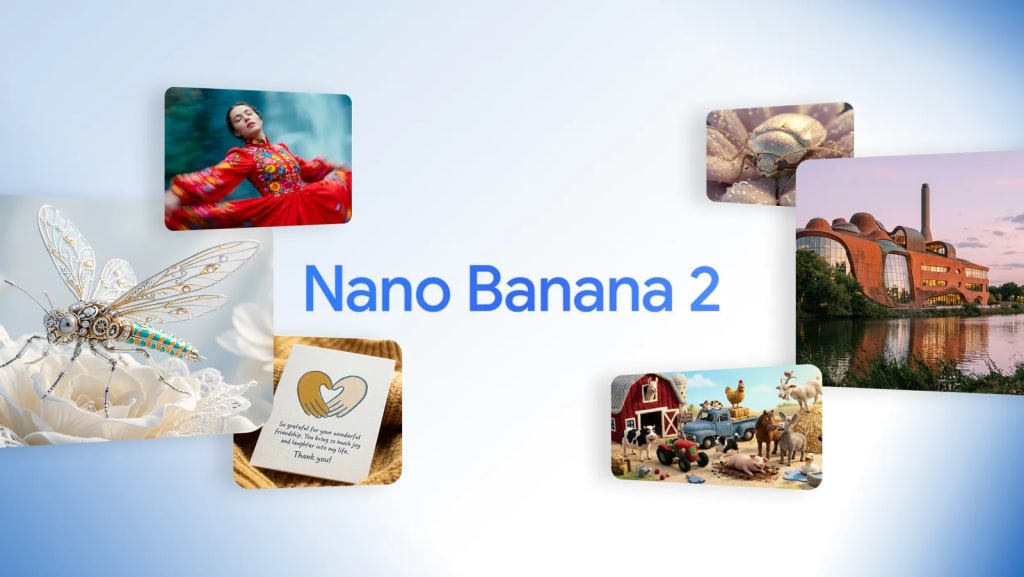
On February 26, 2026, Google DeepMind announced the launch of Nano Banana 2, officially branded as Gemini 3.1 Flash Image, its latest image generation model. The company describes the release as a convergence of two previously distinct capabilities: the advanced reasoning and visual quality found in Nano Banana Pro, and the rapid, iteration-friendly performance of Gemini Flash.
The update reflects a broader industry trend toward models that are not only more capable but also more responsive. As generative AI tools become embedded in everyday creative and enterprise workflows, speed is no longer a luxury — it is essential. Google’s framing of Nano Banana 2 suggests the company is attempting to make high-end visual generation practical at scale, without sacrificing the nuanced instruction-following and consistency typically reserved for slower, premium models.
Intelligence Meets Real-Time Performance
Nano Banana 2 integrates Gemini’s broader knowledge systems directly into visual generation. According to Google, the model benefits from access to real-world contextual understanding and, in some workflows, grounding through web search. This is intended to improve subject accuracy and enable more sophisticated outputs, such as infographics, diagrams, and structured visual explanations.
One notable improvement is enhanced text rendering within images. Historically, AI-generated images have struggled with legible and accurate typography. Nano Banana 2 reportedly allows for more precise and readable text, enabling users to create marketing mockups, signage, educational graphics, or greeting cards with fewer errors. The model also supports translation and localization of text embedded within images, a feature that could be particularly valuable for global marketing teams and content creators.
These upgrades signal that Google is positioning Nano Banana 2 not merely as an artistic generator, but as a production tool suitable for business environments.
Enhanced Creative Control and Consistency
A major focus of the new model is subject consistency. Google states that Nano Banana 2 can maintain the resemblance of up to five characters and preserve fidelity across as many as fourteen distinct objects within a single workflow. This feature is particularly relevant for storyboard creation, advertising campaigns, and serialized content production, where maintaining visual continuity across multiple scenes is critical.
Improved instruction following is another highlighted advancement. The company claims the model adheres more strictly to complex prompts, capturing nuanced stylistic and compositional details. This matters for professional users who require predictable outputs rather than exploratory artistic surprises.
In addition, Nano Banana 2 supports flexible production specifications. Users can generate images in a variety of aspect ratios and resolutions, ranging from lightweight 512-pixel assets to full 4K outputs. This flexibility allows creators to design for vertical social posts, widescreen presentations, or high-resolution digital backdrops without reworking prompts across multiple tools.
Google also emphasizes upgrades in lighting, texture richness, and overall sharpness. The aim appears to be narrowing the quality gap between high-speed models and traditionally slower, studio-grade generation systems.
Broad Ecosystem Integration
Nano Banana 2 is not launching in isolation. Google is rolling it out across multiple products and services, including:
The Gemini app, where it will replace Nano Banana Pro in standard workflows
Google Search AI Mode and Lens
AI Studio and the Gemini API (in preview)
Google Cloud Vertex AI (preview)
Flow, where it becomes the default image generation model
Google Ads, where it powers creative suggestions
Subscribers to Google AI Pro and Ultra plans will retain access to Nano Banana Pro for specialized, high-fidelity tasks. This layered offering suggests Google intends to differentiate between rapid iteration workflows and maximum-accuracy use cases, giving users the option to choose based on project demands.
Provenance and Content Authentication
As generative media becomes more widespread, concerns about authenticity and misinformation continue to grow. Google reiterated its commitment to content provenance tools alongside the Nano Banana 2 launch.
Images generated through the model are supported by Google’s SynthID watermarking technology. Additionally, Google is expanding compatibility with C2PA Content Credentials, an interoperable standard that provides contextual information about how digital content was created.
According to Google, the SynthID verification feature in the Gemini app has already been used more than 20 million times across multiple languages to identify AI-generated images, video, and audio. The planned integration of C2PA verification within Gemini aims to give users clearer visibility not only into whether AI was used, but how it contributed to the creation process.
This emphasis on provenance reflects increasing pressure across the industry to balance creative capability with transparency.
Strategic Implications
Nano Banana 2 illustrates how generative AI competition is shifting. The race is no longer just about producing the most photorealistic images; it is about delivering production-grade quality at real-time speed inside widely used ecosystems.
By embedding Flash-level image generation across Search, Ads, Cloud, and consumer applications, Google strengthens its AI moat within its existing product infrastructure. The approach contrasts with standalone image-generation platforms by tightly integrating visual AI into everyday workflows.
The open question is whether high-speed models can consistently match the reliability and factual grounding of premium systems, especially in enterprise contexts where accuracy matters as much as aesthetics. If Nano Banana 2 succeeds, it may signal that the distinction between “fast” and “high-quality” models is rapidly dissolving.
For now, Google DeepMind is betting that creators, marketers, developers, and everyday users increasingly want both — and want them instantly.
About the Creator
Keep reading
More stories from Behind the Tech and writers in Futurism and other communities.
Block Cuts 40% of Workforce, Citing AI — CEO Jack Dorsey Says Most Companies Will Follow
What Happened Block, the financial technology company founded by Jack Dorsey, announced it is laying off roughly 40% of its workforce, cutting more than 4,000 employees and reducing total headcount to just under 6,000.
By Behind the Techabout 10 hours ago in Futurism
Signal and Noise: How Technology Is Transforming the Way We Communicate
Human beings are, at their core, communicating creatures. From the earliest cave paintings etched into stone walls tens of thousands of years ago to the emoji-laden text messages exchanged billions of times each day, the drive to reach across the space between one mind and another has defined our species as profoundly as any other trait. Communication is not merely a tool we use — it is, in many ways, the substance of what we are.
By noor ul amin2 days ago in Futurism
Electric Truck Market Forecast: Regional Adoption, Infrastructure Rollout & Industry Outlook to 2034
Rising environmental concerns, stringent government emission norms, and the rapid advancement of battery technologies are propelling the electric truck demand, supported by falling battery costs, expanding charging infrastructure, and a global shift toward sustainable logistics. According to IMARC Group’s latest data, the global electric truck market size was valued at USD 1,070.7 Million in 2025. Looking forward, IMARC Group estimates the market to reach USD 7,737.1 Million by 2034, exhibiting a CAGR of 42.1% from 2026-2034.
By Andrew Sullivan4 days ago in Futurism



Comments
There are no comments for this story
Be the first to respond and start the conversation.