
MEMS Microphones Market Analysis: Noise Cancellation Innovation & Industry Forecast 2033
Examining how AI-enabled voice interfaces, noise-cancellation advancements, and demand for high-fidelity sound are transforming performance benchmarks and competitive strategies across the global MEMS microphones industry.

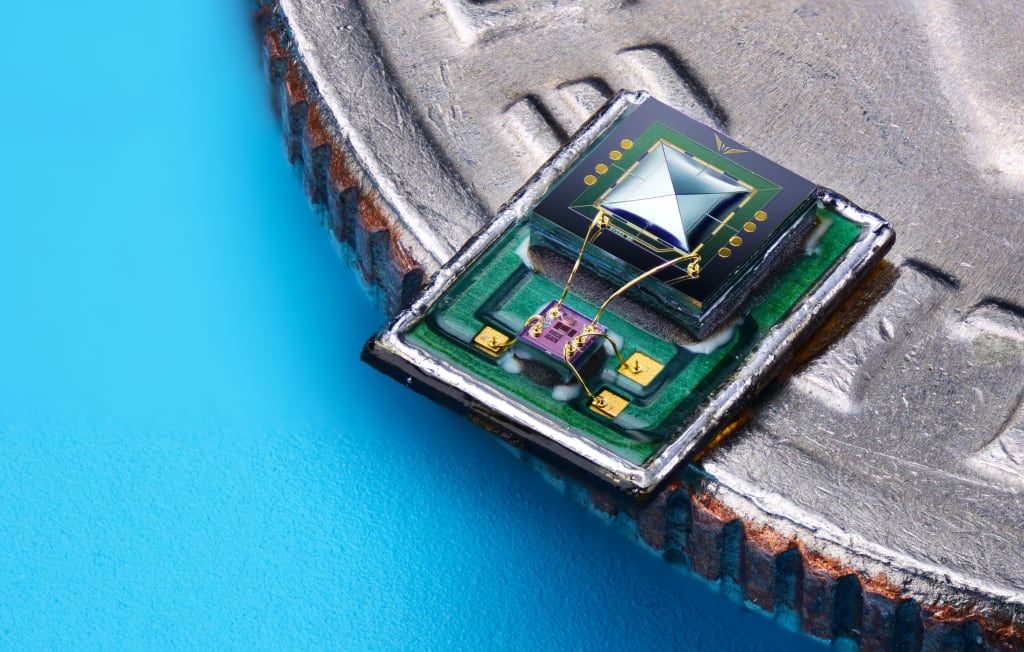
Rising demand for high-quality audio in consumer electronics, along with the proliferation of voice-activated systems and smart home ecosystems, is driving the MEMS microphones market, supported by advancements in semiconductor technology and expanding automotive applications. According to IMARC Group’s latest data, the global MEMS microphones market size was valued at USD 2.2 Billion in 2024. Looking forward, IMARC Group estimates the market to reach USD 5.2 Billion by 2033, exhibiting a CAGR of 9.37% from 2025-2033.
MEMS microphones now represent a multi-billion-dollar global industry exceeding USD 2 billion and exhibiting steady year-on-year expansion. Demand is driven by the rapid adoption of smartphones and wearables, where high-quality, miniature audio components are essential for beamforming and noise suppression. Furthermore, the integration of AI-driven voice assistants into smart speakers and IoT devices is accelerating uptake. Major segments include digital and analog microphones, with digital variants dominating due to their lower electromagnetic interference and easier integration with modern processors. Automotive infotainment and healthcare diagnostics are also emerging as high-growth sectors for acoustic sensing technology.
MEMS Microphones Market Growth Drivers:
- Surge in Voice-Enabled Consumer Electronics
The explosion of voice-activated interfaces in smartphones, tablets, and smart speakers is a primary catalyst for market growth. Modern premium smartphones now integrate between 2 to 4 MEMS microphones to facilitate active noise cancellation and directional beamforming. Current industry statistics indicate that approximately 85% of premium handsets rely on multi-microphone arrays to enhance user experience. As AI-integrated voice assistants become standard in over 4 billion active devices worldwide, the demand for high-performance, low-power acoustic sensors continues to scale rapidly across global manufacturing hubs.
- Expansion of IoT and Smart Home Ecosystems
The transition toward fully connected environments has positioned MEMS microphones as critical components for human-machine interaction. Devices ranging from smart thermostats to security cameras utilize these sensors for keyword spotting and environmental sound detection. With the rollout of 5G technology, the latency for voice processing has dropped, encouraging more homeowners to adopt voice-controlled appliances. Market data suggests that the IoT and VR segments are among the fastest-growing applications, driven by a need for ultra-compact, energy-efficient sensors that can remain in "always-on" listening modes without draining batteries.
View the Free Sample of Our "MEMS Microphones Market" Report
- Growing Integration in Automotive Systems
The automotive sector is witnessing a significant shift toward sophisticated in-car communication and safety features. MEMS microphones are now essential for hands-free calling, voice-activated navigation, and active road noise cancellation systems. Recent shipments for automotive-grade microphones have seen a 45% year-on-year increase as manufacturers install up to 6 or 8 microphones per vehicle to create multi-zone voice environments. These sensors must withstand extreme temperature fluctuations and vibrations, leading to the adoption of specialized piezoelectric MEMS technology that offers superior durability and environmental resistance compared to traditional capacitive designs.
MEMS Microphones Market Trends:
- Technological Advancements in High SNR and Piezoelectric Design
There is a significant industry movement toward achieving higher Signal-to-Noise Ratios (SNR) to improve the accuracy of voice recognition in noisy environments. Recent innovations have introduced sensors with over 70-80 dBA SNR, allowing devices to pick up faint commands from across a room. Additionally, piezoelectric MEMS technology is trending due to its inherent resistance to dust and moisture, making it ideal for rugged industrial applications and outdoor wearables. Comparative tests show that piezoelectric designs can offer a 15% gain in sensitivity while maintaining a smaller footprint, meeting the rigorous demands of next-generation hardware.
- Shift Toward Digital MEMS for AI-Ready Hardware
Manufacturers are increasingly favoring digital MEMS microphones over analog variants to simplify circuit design and reduce electromagnetic interference. Digital sensors perform on-package analog-to-digital conversion, which is crucial for modern laptops and headsets that require seamless integration with neural processing units (NPUs). This trend is supported by the rise of "edge AI," where audio processing happens locally on the device. New product samplings in late 2025 have showcased ultra-low-power voice-wake codecs that enable constant listening with minimal power draw, catering to the growing "creator economy" and professional gaming sectors.
- Miniaturization and Healthcare Applications
The push for smaller form factors is driving innovation in the medical and hearables space. MEMS microphones are now small enough to fit into 3mm x 4mm slots, facilitating their use in advanced digital hearing aids and remote health monitoring patches. A recent scientific study validated a 93% accuracy rate in classifying lung sounds using these sensors, highlighting their viability for remote auscultation and telemedicine. This medical-grade segment is projected to grow faster than traditional consumer electronics as healthcare providers adopt acoustic biosensing for cardiac and respiratory monitoring in aging populations.
Recent News and Developments in MEMS Microphones Market
- January 2026: India Semiconductor Mission (ISM) 2.0 was expanded to focus on specialized sensors, including MEMS, offering fiscal support of up to 50% of project costs to establish domestic fabrication units and strengthen the electronics supply chain.
- September 2025: The Indian Central Government notified amendments to the "Modified Programme for Semiconductors," earmarking substantial funds for the modernization of fabrication facilities to attract global MEMS manufacturers and reduce import dependency.
- June 2024: TDK Corporation launched the InvenSense SmartSound T5848, a low-power MEMS microphone featuring an I²S interface specifically designed to support intelligent keyword recognition and edge AI applications in IoT devices.
- January 2024: SensiBel unveiled the SBM100 series at CES, setting a new industry benchmark with an 80 dBA SNR, catering to the professional audio and high-end consumer electronics markets requiring studio-quality sound in a MEMS format.
Note: If you require specific details, data, or insights that are not currently included in the scope of this report, we are happy to accommodate your request. As part of our customization service, we will gather and provide the additional information you need, tailored to your specific requirements. Please let us know your exact needs, and we will ensure the report is updated accordingly to meet your expectations.
About the Creator
Andrew Sullivan
Hello, I’m Andrew Sullivan. I have over 9+ years of experience as a market research specialist.
Keep reading
More stories from Andrew Sullivan and writers in Futurism and other communities.
EV Charging Cables Market Trends: Liquid-Cooled Cables, Ultra-Fast Charging & Industry Forecast to 2034
Rising demand for electric mobility, the rapid expansion of public charging infrastructure, and significant government funding are driving the EV charging cables market. Supported by technological advancements like high-power and liquid-cooled cables, the sector is scaling to meet the needs of both private and commercial users. According to IMARC Group’s latest data, the global EV charging cables market size reached USD 1,461.7 Million in 2025. Looking forward, IMARC Group estimates the market to reach USD 6,574.8 Million by 2034, exhibiting a CAGR of 18.18% during 2026-2034.
By Andrew Sullivan4 days ago in Futurism
Stanislav Kondrashov Oligarch Series: Oligarchy and Cosmic Engineering in the Future of Civilisation
For centuries, civilisation has expanded in waves. First across continents, then through oceans, then into the digital realm. Now the next expansion is upward. And behind that shift sits a force few openly connect to space development: oligarchy.
By Stanislav Kondrashov7 days ago in Futurism
Mirror Coatings Market: Solar Energy Systems, High-Reflectivity Surfaces & Industry Growth Ahead
According to IMARC Group's latest research publication, the global mirror coatings market size reached USD 785.83 Million in 2024. Looking forward, IMARC Group expects the market to reach USD 1,265.21 Million by 2033, exhibiting a growth rate (CAGR) of 5.35% during 2025-2033.
By sujeet. imarcgroup4 days ago in Futurism



Comments
There are no comments for this story
Be the first to respond and start the conversation.