
Insect Repellent Market Outlook: Health Awareness and Growth Opportunities
The insect repellent market is witnessing steady growth, driven by increasing health awareness and rising concerns over vector-borne diseases such as malaria, dengue, Zika, and chikungunya.

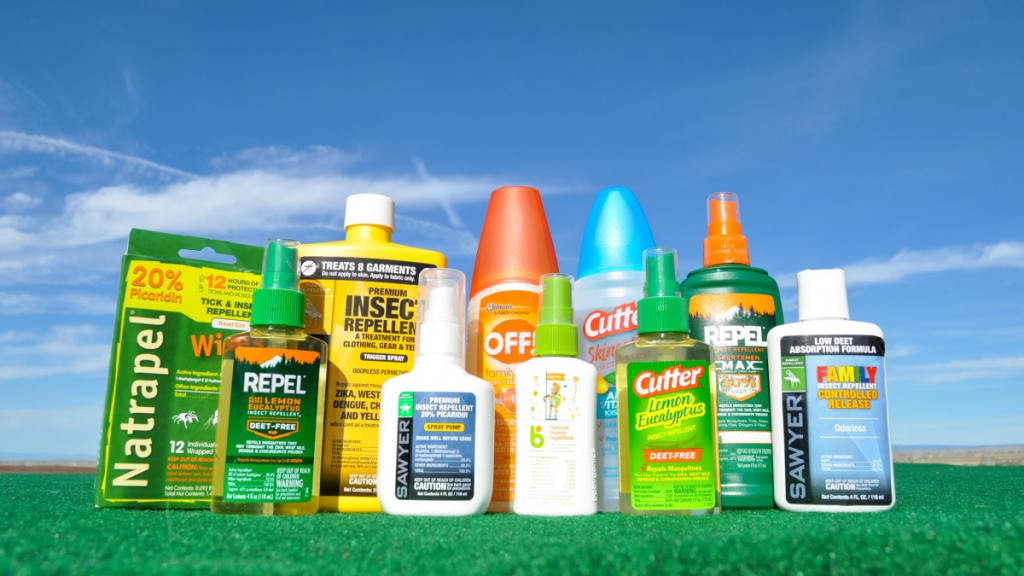
Rising incidence of vector-borne diseases, increasing outdoor recreational activities, and growing awareness of personal health protection are driving growth in the insect repellent market. According to IMARC Group's latest research publication, The global insect repellent market size reached USD 5.2 Billion in 2024. Looking forward, IMARC Group expects the market to reach USD 8.6 Billion by 2033, exhibiting a growth rate (CAGR) of 5.6% during 2025-2033.
How AI is Reshaping the Future of Insect Repellent Market
- Smart Environmental Monitoring and Pest Detection: AI-powered sensors analyze environmental factors including temperature, humidity, and insect activity patterns to optimize repellent activation timing. These intelligent systems enable real-time pest detection and automated response mechanisms, enhancing protection effectiveness while minimizing unnecessary product usage.
- Machine Learning-Driven Product Formulation: AI platforms screen millions of compounds to identify novel repellent molecules from natural sources. University researchers using machine learning have already identified repellent compounds 100 times more effective than industry standards, accelerating development of safer, longer-lasting formulations.
- Predictive Analytics for Vector-Borne Disease Control: AI integrates data from weather satellites, historical records, and monitoring systems to predict disease outbreaks and insect population surges. This capability enables targeted interventions, helping public health agencies deploy resources efficiently and protect at-risk communities before transmission spikes occur.
Insect Repellent Industry Overview:
The insect repellent industry is experiencing transformation through global health initiatives and breakthrough innovations in vector control. WHO recently prequalified its first spatial emanators products—Mosquito Shield and Guardian by SC Johnson—marking the first new malaria prevention intervention in over 20 years. The Global Fund has invested USD 50 million to deploy dual-insecticide nets in 17 African countries, improving malaria control by 20-50% compared to standard nets. Clinical trials demonstrated significant infection reductions in children, while new DEET-free formulations like NC State's EcoArmor leverage plant-based compounds to meet rising demand for sustainable, non-toxic alternatives.
Insect Repellent Market Trends & Drivers
The surge in vector-borne disease awareness is fundamentally reshaping consumer behavior and driving market expansion worldwide. Malaria alone caused 597,000 deaths globally, with 76% being children under five, spurring urgent demand for effective protection solutions. The Americas reported 536,700 malaria cases and 136 deaths, prompting governments to intensify vector control programs. WHO's recent spatial emanator recommendation addresses critical protection gaps—over 20% of malaria-transmitting mosquito bites occur when people aren't in bed or are outdoors, creating demand for innovative products beyond traditional nets. Godrej India introduced AQ500, the country's first indigenous mosquito repellent molecule, while Arkus launched EcoArmor, a DEET-free plant-based formulation. Rising insecticide resistance has accelerated adoption of dual-ingredient solutions and alternative active ingredients, pushing manufacturers to develop next-generation formulations that overcome mosquito behavioral adaptations.
Product innovation and technological advancement are revolutionizing repellent delivery systems and effectiveness standards across all market segments. Spatial emanators now provide month-long or even year-long protection without requiring electricity or frequent reapplication, dramatically simplifying distribution logistics compared to indoor residual spraying. Advanced microencapsulation technology enables controlled-release formulations extending protection duration from hours to 12-24 hours for topical products. Smart wearable devices incorporating IoT connectivity offer app-controlled scheduling, automated pest detection capabilities, and real-time efficacy monitoring. Electronic repellents utilizing ultrasonic technology improvements show enhanced frequency ranges reaching broader insect species while integrating seamlessly with smart home ecosystems. Manufacturers are investing heavily in pyrethroid analogs proven up to 100 times more effective against resistant mosquito populations, addressing the growing challenge of insecticide resistance that threatens conventional control methods in Africa and Asia.
Sustainability trends and regulatory changes are accelerating the shift toward natural, eco-friendly repellent formulations across consumer and institutional markets. Natural ingredient repellents are projected to reach USD 750 million, expanding from USD 350 million as consumers increasingly reject synthetic chemicals like DEET. Research teams are identifying effective plant-based compounds from common food and flavoring materials that provide pleasant-smelling, long-lasting protection without toxicity concerns. Pheromonal control products targeting specific insects without harming beneficial species are gaining traction in integrated pest management programs supported by municipalities and health agencies. Stricter EPA registration requirements and ingredient transparency mandates are pushing manufacturers toward bio-based formulations using renewable raw materials. The electronic insect repellent segment, valued at USD 800 million, is growing rapidly as consumers seek chemical-free alternatives powered by solar or battery sources. This fundamental market transformation reflects broader consumer preferences for products aligning with environmental responsibility, personal health protection, and family safety without compromising effectiveness against disease vectors.
Leading Companies Operating in the Global Insect Repellent Industry:
- Dabur India Limited
- Enesis Group
- Godrej Consumer Products Limited
- Himalaya Wellness Company
- Jyothy Laboratories Ltd
- Newell Brands Inc
- Quantum Health
- Reckitt Benckiser Group plc
- S. C. Johnson & Son Inc.
- Sawyer Products Inc.
- Spectrum Brands Inc.
Insect Repellent Market Report Segmentation:
By Insect Type:
- Mosquito Repellent
- Bugs Repellent
- Fly Repellent
- Others
Mosquito repellent dominates the market as mosquito-borne diseases like malaria, dengue, and Zika pose the most significant global health risks.
By Product Type:
- Vaporizers
- Spray
- Cream
- Others
Vaporizers represent the largest segment owing to their convenience, ability to cover larger areas, and longer-lasting protection with minimal skin contact.
By Distribution Channel:
- Supermarkets/Hypermarkets
- Online Stores
Supermarkets/hypermarkets hold the largest share due to their extensive reach, accessibility, strategic product placement, and one-stop shopping convenience for consumers.
Regional Insights:
- North America (United States, Canada)
- Asia-Pacific (China, Japan, India, South Korea, Australia, Indonesia, Others)
- Europe (Germany, France, United Kingdom, Italy, Spain, Russia, Others)
- Latin America (Brazil, Mexico, Others)
- Middle East and Africa
Asia Pacific exhibits clear dominance in the market due to tropical climates, high insect prevalence, densely populated consumer base, and elevated mosquito-borne disease transmission rates.
Recent News and Developments in Insect Repellent Market
- August 2025: WHO issued a landmark recommendation supporting spatial emanators for malaria vector control and prequalified SC Johnson's Mosquito Shield and Guardian products. This marks the first new intervention class for malaria prevention in over 20 years, addressing protection gaps when people aren't sleeping under nets.
- June 2025: NC State startup Arkus launched EcoArmor, a DEET-free insect repellent offering plant-based protection against mosquitoes and ticks. Developed from university research, EcoArmor reflects growing consumer demand for sustainable, non-toxic personal care solutions that preserve health and environment.
- July 2024: Godrej Consumer Products introduced India's first mosquito repellent molecule, AQ500, in its Goodknight vaporizer. Developed in-house, AQ500 offers superior protection with reduced irritation, marking a breakthrough in home insecticide innovation.
- February 2023: Godrej Consumer Products Ltd launched two innovative solutions addressing prevalent consumer needs—a low-cost liquid mosquito repellent device and a no-gas instant mosquito-kill spray. The introduction underscores the company's commitment to providing practical and accessible mosquito protection solutions.
- October 2020: S.C. Johnson & Son Inc. introduced a spatial repellent product that yielded substantial disease prevention benefits. University of Notre Dame research revealed the product contributed to a remarkable estimated 34% reduction in dengue and Zika infections.
Note: If you require specific details, data, or insights that are not currently included in the scope of this report, we are happy to accommodate your request. As part of our customization service, we will gather and provide the additional information you need, tailored to your specific requirements. Please let us know your exact needs, and we will ensure the report is updated accordingly to meet your expectations.
About the Creator
James Whitman
With years of experience in analyzing global industries, I specialize in delivering actionable market insights that help businesses stay ahead in an ever-changing landscape.
Keep reading
More stories from James Whitman and writers in Futurism and other communities.
Product Lifecycle Management (PLM) Software Market Analysis: Adoption, Features, and Forecasts
Growing product complexity, shorter development cycles, and need for cross-functional collaboration are driving growth in the PLM software market. Manufacturers adopt PLM to manage design data, improve innovation speed, and reduce time to market. According to IMARC Group's latest research publication, The global product lifecycle management (PLM) software market size reached USD 28.4 Billion in 2024. Looking forward, IMARC Group expects the market to reach USD 47.7 Billion by 2033, exhibiting a growth rate (CAGR) of 5.89% during 2025-2033.
By James Whitmana day ago in Futurism
Cat Food Market: Functional Nutrition, Digestive & Urinary Health & Growth Outlook
According to IMARC Group's latest research publication, The global cat food market size was valued at USD 37.07 Billion in 2024. Looking forward, IMARC Group estimates the market to reach USD 49.80 Billion by 2033, exhibiting a CAGR of 2.99% from 2025-2033
By Michael Richard2 days ago in Futurism
DC-DC Converter Market: Modular Architectures & Custom Power Solutions
Driven by electric vehicle adoption, renewable energy integration, industrial automation, and rising demand for efficient power management across electronics, telecom, and data center infrastructure worldwide. According to IMARC Group's latest research publication, global DC-DC converter market size reached USD 12.3 Billion in 2024. Looking forward, IMARC Group expects the market to reach USD 22.0 Billion by 2033, exhibiting a growth rate (CAGR) of 6.36% during 2025-2033.
By Andrew Sullivan5 days ago in Futurism
One Unchecked Box
"Republished" because it was the only way to add the embed for the newly recorded audio version of this story due to the Top Story badge. Plus it serves as a nice, informal announcement of the podcast's revival for another season (go subscribe!):
By Stephen A. Roddewig6 days ago in Fiction


Comments
There are no comments for this story
Be the first to respond and start the conversation.