
Digital PCR Market Outlook: Liquid Biopsy Adoption, Oncology Applications & Industry Forecast to 2033
How rising demand for precise mutation analysis, biomarker discovery, and liquid biopsy testing is accelerating innovation and expanding digital PCR utilization in personalized medicine strategies.

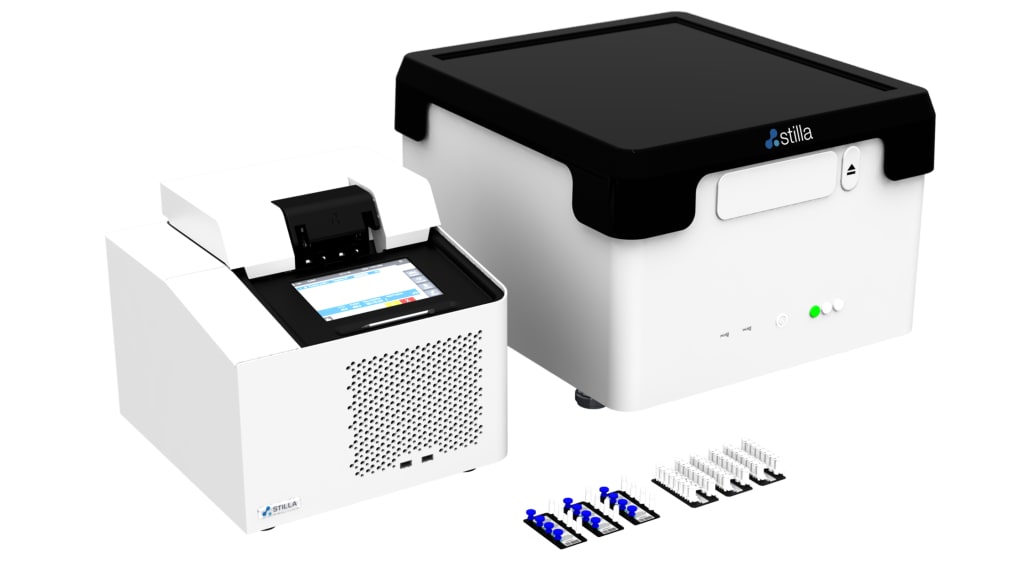
The growing demand for absolute quantification in genetic analysis and the shift toward personalized medicine are significantly driving the digital PCR market. Supported by a rising incidence of chronic diseases and the need for high-sensitivity diagnostic tools, the market is expanding across clinical, research, and forensic applications. According to IMARC Group’s latest data, the global digital PCR market size was valued at USD 5.2 Billion in 2024. Looking forward, IMARC Group estimates the market to reach USD 11.1 Billion by 2033, exhibiting a CAGR of 8.88% from 2025-2033.
Digital PCR (dPCR) has emerged as a cornerstone of third-generation PCR technology, moving beyond the capabilities of traditional real-time PCR by allowing for the direct, precise measurement of nucleic acids without the need for standard curves. The market is currently seeing a surge in demand for consumables and reagents, which account for approximately 57% of the total market share due to their recurring use in testing cycles. Key technology segments, particularly Droplet Digital PCR (ddPCR), continue to lead the industry, representing over 68% of the market share. From oncology and infectious disease monitoring to non-invasive prenatal testing and wastewater epidemiology, dPCR is providing the high-specificity data required for modern medical breakthroughs and public health surveillance.
Digital PCR Market Growth Drivers:
- Growing Demand for Precision Medicine and Oncology
The push for personalized healthcare is a massive catalyst for digital PCR adoption. Physicians now require highly accurate genomic data to guide targeted therapies, especially in oncology where detecting rare mutations is critical. Digital PCR provides the sensitivity needed to identify circulating tumor DNA (ctDNA) and monitor minimal residual disease (MRD) with precision that traditional methods often miss. Currently, over 58% of precision oncology programs rely on these molecular-level insights to select effective treatments, helping to improve patient outcomes and reducing the trial-and-error approach in cancer therapy.
- Rising Incidence of Infectious Diseases and Viral Monitoring
Global health security has placed molecular diagnostics at the forefront of public health. Digital PCR has become essential for the high-sensitivity detection of viral loads, including SARS-CoV-2, HIV, and hepatitis. Its ability to detect extremely low levels of pathogens makes it ideal for early intervention. Research shows that roughly 60% of infectious disease testing workflows now require the accuracy provided by dPCR. Furthermore, its application in wastewater epidemiology has expanded, allowing public health officials to track community-level disease spread with high statistical confidence and reproducibility.
- Advancements in Genomic Research and Biopharmaceutical Development
The biotechnology sector is increasingly integrating digital PCR into drug discovery and cell and gene therapy workflows. It is used extensively for library quantification in next-generation sequencing (NGS) and for validating vector genomes in gene therapy. In the United States alone, nearly 59% of advanced molecular labs depend on dPCR for low-level mutation detection. This high-resolution data is vital for biopharmaceutical companies to ensure the safety and efficacy of new treatments, leading to increased funding and a steady flow of high-value diagnostic product launches.
Digital PCR Market Trends:
- Integration of Artificial Intelligence and Automation
To address the complexities of data interpretation and manual handling, the industry is shifting toward AI-powered dPCR systems. Modern platforms now integrate automated workflows to reduce human error, with approximately 55% of newly installed systems featuring high levels of automation. AI tools are being used to enhance image analysis and partition counting, significantly increasing throughput for large datasets. These technological breakthroughs make dPCR more accessible to clinical laboratories that may lack specialized technical staff, streamlining the transition from complex research tools to routine diagnostic applications.
- Miniaturization and Point-of-Care (POC) Testing
There is a notable trend toward making digital PCR more portable and faster. Companies are investing in microfluidic chip-based platforms and "lab-on-a-chip" designs that reduce reagent consumption and testing time. This movement toward miniaturization is opening doors for decentralized testing in hospitals and remote clinics. The demand for POC diagnostics has surged as healthcare systems seek rapid, accurate results near the patient. These advancements are expected to bridge the gap between high-end laboratory precision and the need for immediate, actionable data in critical care settings.
- Expansion of Multiplexing and High-Throughput Capabilities
Modern diagnostic needs require the ability to test for multiple targets simultaneously from a single sample. Market leaders are launching advanced assays that can evaluate a higher number of targets concurrently, which is vital for complex genetic disorders and co-infections. Recent innovations have seen a twofold increase in the number of targets measurable in a single biological sample. This trend toward multiplexing not only improves diagnostic efficiency but also preserves precious clinical samples, making the technology highly attractive for pediatric and oncology applications where sample volume is often limited.
Recent News and Developments in the Digital PCR Market:
- January 2025: QIAGEN announced a significant expansion of its QIAcuity Digital PCR instrument capabilities, more than doubling the number of targets that can be analyzed simultaneously from a single sample to enhance research in cancer and infectious diseases.
- September 2024: QIAGEN N.V. launched 100 new assays for its QIAcuity platform, specifically targeting cancer research, inherited genetic disorders, and environmental assessments to meet the growing demand for specialized testing.
- June 2024: Stilla Technologies secured US$ 26.5 million in Series C funding to accelerate the commercialization of its Nio digital PCR platform, focusing on enhancing throughput and user-specific configurations for clinical labs.
- April 2024: Bio-Rad Laboratories partnered with Oncocyte Corporation to develop and commercialize transplant monitoring products using Droplet Digital PCR (ddPCR) technology, aiming to improve non-invasive post-transplant patient care.
Note: If you require specific details, data, or insights that are not currently included in the scope of this report, we are happy to accommodate your request. As part of our customization service, we will gather and provide the additional information you need, tailored to your specific requirements. Please let us know your exact needs, and we will ensure the report is updated accordingly to meet your expectations.
About the Creator
Andrew Sullivan
Hello, I’m Andrew Sullivan. I have over 9+ years of experience as a market research specialist.
Keep reading
More stories from Andrew Sullivan and writers in Futurism and other communities.
Artificial Intelligence As A Service Market Trends: Cloud AI Adoption, Cost Efficiency & Industry Outlook to 2033
Rising health awareness, busy lifestyles, and the need for scalable digital solutions are driving the demand for artificial intelligence as a service (AIaaS), supported by the surge in cloud-based platforms, rapid advancements in generative AI, and expanding enterprise automation across diverse industry verticals. According to IMARC Group’s latest data, the global artificial intelligence as a service market size was valued at USD 15.3 Billion in 2025. Looking forward, IMARC Group estimates the market to reach USD 269.4 Billion by 2033, exhibiting a CAGR of 33.2% from 2025-2033.
By Andrew Sullivanabout 17 hours ago in Futurism
Why Fake AI Videos of UK “Urban Decline” Are Flooding Social Media
What Happened A wave of AI-generated videos falsely portraying parts of the UK — especially Croydon in south London — as dystopian hubs of crime and social decay is spreading rapidly across TikTok, Instagram Reels and other platforms.
By Behind the Tech5 days ago in Futurism
Concern Grows Over “Chatbot Overdependence” in Relationships
What Happened A reader wrote to advice columnist Annalisa Barbieri expressing concern that her boyfriend’s heavy reliance on AI — particularly ChatGPT — may be affecting his ability to think independently.
By Behind the Tech3 days ago in Futurism




Comments
There are no comments for this story
Be the first to respond and start the conversation.