
DeepSeek Withholds New AI Model From U.S. Chipmakers
Chinese AI lab reportedly gives Huawei early access while excluding Nvidia and AMD ahead of flagship update.

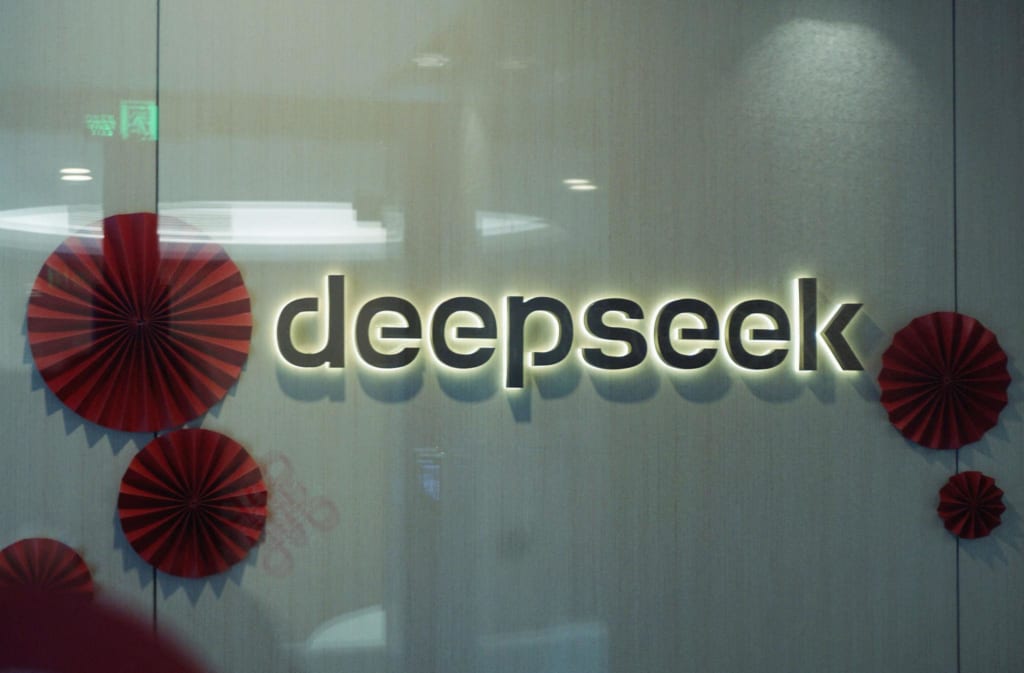
Chinese artificial intelligence lab DeepSeek has reportedly declined to provide early access to its upcoming flagship AI model to major U.S. chipmakers, including Nvidia and Advanced Micro Devices (AMD), according to sources familiar with the matter.
Instead, DeepSeek granted early access to domestic Chinese suppliers, including Huawei Technologies, breaking from standard industry practice.
The decision comes amid escalating U.S.–China tensions over advanced semiconductor exports and artificial intelligence development.
What Is News
DeepSeek did not provide pre-release access of its upcoming V4 model to Nvidia or AMD.
Chinese suppliers, including Huawei, reportedly received early access to optimize hardware performance.
A U.S. official said DeepSeek’s previous model was trained on Nvidia’s Blackwell chips in mainland China.
U.S. export controls restrict advanced AI chip sales to China, though some inference chips remain allowed.
DeepSeek has become one of the most downloaded open-source AI developers globally.
Breaking From Industry Practice
Typically, major AI developers share pre-release versions of new models with leading chipmakers. This allows hardware firms to optimize performance, improve compatibility, and prepare marketing and benchmarking campaigns before launch.
DeepSeek’s decision to exclude Nvidia and AMD marks a significant departure from that norm.
The company is expected to launch its V4 model update soon. Sources said Huawei and other domestic chipmakers were given several weeks of lead time to tune their processors for the software.
Nvidia and AMD declined to comment. DeepSeek and Huawei did not respond to inquiries.
Export Controls Complicate the Picture
The move coincides with renewed scrutiny from Washington. A senior U.S. official told Reuters that DeepSeek’s latest model may have been trained using Nvidia’s advanced Blackwell chips inside mainland China — potentially violating U.S. export controls.
Export rules restrict sales of the most advanced AI processors to China. However, certain chips designed for inference — including Nvidia’s H20 and AMD’s MI308 — were allowed to resume shipments last year.
It remains unclear whether DeepSeek received proper licenses for any U.S. hardware purchases.
DeepSeek’s models have reportedly been downloaded more than 75 million times on Hugging Face since early 2025, reflecting the rapid rise of Chinese open-source AI platforms.
What Is Analysis
DeepSeek’s decision may signal more than a technical adjustment — it may represent a strategic pivot aligned with broader geopolitical dynamics.
By prioritizing Huawei and domestic suppliers, DeepSeek could be contributing to China’s push for semiconductor self-reliance. Granting Chinese chipmakers early optimization time strengthens their competitiveness in AI workloads, particularly as Beijing seeks to reduce reliance on American hardware.
Ben Bajarin, CEO of Creative Strategies, suggested the commercial impact on Nvidia and AMD may be limited in the short term. DeepSeek currently functions more as a benchmark and open-source competitor than as enterprise infrastructure adopted at massive scale.
However, the symbolic implications are significant.
If Chinese AI labs systematically exclude U.S. chipmakers from pre-launch collaborations, American firms could gradually lose influence in model optimization cycles within China’s domestic ecosystem. Over time, that could reduce performance parity advantages enjoyed by Nvidia’s accelerators.
The report also highlights a deeper strategic risk: the integration of AI models and hardware is increasingly becoming a national security matter, not just a commercial one. AI optimization determines energy efficiency, cost per inference, and deployment scalability — all critical factors in global competitiveness.
If Chinese AI developers align tightly with domestic chipmakers while U.S. export controls limit hardware flows, two parallel AI ecosystems may ontinue to diverge.
A Growing AI Divide
China’s open-source AI surge has intensified debate in Washington over whether chip export restrictions are effective or counterproductive. While controls aim to limit China’s access to cutting-edge compute, domestic chip development may accelerate as a result.
Meanwhile, Nvidia’s inference chips continue generating significant revenue globally, including hundreds of millions in quarterly sales from China-eligible models.
The broader question is whether this fragmentation creates long-term inefficiencies or drives innovation through competition.
Bottom Line
DeepSeek’s decision to withhold its upcoming AI model from Nvidia and AMD marks a notable shift in cross-border AI collaboration.
While immediate financial consequences may be limited, the strategic implications are substantial.
As AI development becomes increasingly intertwined with national policy and semiconductor supply chains, model optimization decisions are no longer purely technical — they are geopolitical.
The global AI race is no longer just about better algorithms. It is about who controls the hardware, the ecosystem, and the optimization pipeline.
About the Creator
Keep reading
More stories from Behind the Tech and writers in Futurism and other communities.
Jack Dorsey’s Block Cuts Nearly Half Its Workforce in Major AI Shift
Jack Dorsey’s financial technology company Block has eliminated more than 4,000 jobs — nearly half of its workforce — in what executives describe as a strategic shift toward artificial intelligence-driven operations.
By Behind the Techabout 13 hours ago in Futurism
Power Electronics Market Overview: Grid Modernization, Digital Power Control & Forecast to 2034
Rapid electrification across industries and the surging adoption of renewable energy are propelling the demand for sophisticated power electronics, which are essential for efficient energy conversion, grid stability, and motor control. According to IMARC Group’s latest data, the global power electronics market size was valued at USD 34.6 Billion in 2025. Looking forward, IMARC Group estimates the market to reach USD 53.1 Billion by 2034, exhibiting a CAGR of 4.87% from 2026-2034.
By Andrew Sullivan8 days ago in Futurism
Oncology Information Systems Market: Cloud-Based Platforms, Data Security Enhancements & Industry Forecast to 2033
Integrating healthcare IT solutions with clinical workflows is revolutionizing the way cancer care is delivered globally. By automating data handling and treatment planning, these systems reduce manual errors and allow clinicians to focus on personalized patient outcomes. According to IMARC Group’s latest data, the global oncology information systems market size was valued at USD 4.2 Billion in 2024. Looking forward, IMARC Group estimates the market to reach USD 7.3 Billion by 2033, exhibiting a CAGR of 5.95% from 2025-2033.
By Andrew Sullivan3 days ago in Futurism




Comments
There are no comments for this story
Be the first to respond and start the conversation.