
Deadline Looms as Anthropic Rejects Pentagon Demand to Remove AI Safeguards
A high-stakes clash over surveillance, autonomous weapons, and who controls AI’s military use.

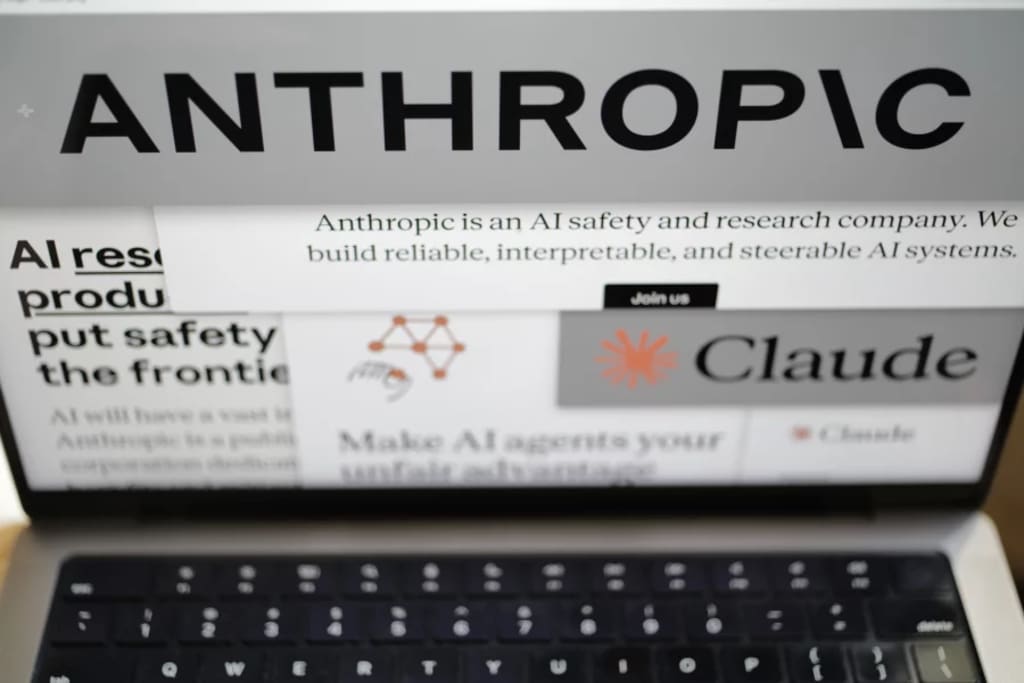
A showdown is unfolding between Anthropic and the U.S. Department of Defense after CEO Dario Amodei formally rejected a Pentagon ultimatum to loosen safeguards on the company’s AI model, Claude.
The Pentagon has given Anthropic until 5:01 PM ET Friday to agree to allow unrestricted military use of its technology. If the company refuses, officials say they may terminate its $200 million contract and designate it a “supply chain risk” — a move that could severely limit its ability to work with defense contractors.
The standoff centers on two specific restrictions Anthropic refuses to remove: bans on domestic mass surveillance and on fully autonomous weapons that operate without meaningful human control.
What Is News
The Pentagon demanded that Anthropic remove safeguards limiting AI use in mass surveillance and fully autonomous weapons.
Anthropic CEO Dario Amodei publicly rejected the revised contract language.
The Defense Department set a Friday deadline for compliance.
The Pentagon is threatening to:
Cancel Anthropic’s $200 million contract.
Designate the company a “supply chain risk.”
Potentially invoke the Defense Production Act to compel compliance.
Anthropic says it remains open to negotiations but will not compromise on its red lines.
The Core Dispute
Anthropic has consistently maintained that its AI model, Claude, must not be used:
For domestic mass surveillance of Americans.
To power fully autonomous weapons capable of killing without human approval.
Amodei described these uses as “bright red lines” and “outside the bounds of what today’s technology can safely and reliably do.”
The Pentagon, however, argues that contractors should not dictate permissible uses of technology. Officials insist the government must be free to use AI tools “for all lawful purposes,” and that legality is the responsibility of the Defense Department as the end user.
In a public statement, Pentagon spokesman Sean Parnell denied any intention to conduct mass surveillance or develop fully autonomous weapons, calling media narratives misleading. However, Anthropic says the latest contract language still leaves loopholes that could override safeguards.
What Is Analysis
A Conflict Over Control
At its core, this dispute is not only about surveillance or weapons. It is about governance.
Who decides the ethical limits of AI in national security contexts?
Anthropic is asserting that private companies retain the right — and perhaps the obligation — to set hard constraints on the use of their systems
The Pentagon is asserting that military authority, not corporate policy, determines lawful use.
This philosophical divide may become a defining feature of AI governance in democratic societies.
The “Supply Chain Risk” Threat
Designating Anthropic a supply chain risk would be highly unusual. That label has traditionally been applied to foreign adversary technologies, such as Huawei.
Applying it to a U.S.-based AI company would signal an unprecedented escalation. Depending on scope, it could:
Prevent other defense contractors from using Anthropic tools in government projects.
Potentially discourage broader commercial adoption.
Trigger legal challenges.
At the same time, the Pentagon has floated invoking the Defense Production Act — a Cold War-era law allowing the government to compel companies to prioritize or modify production during national emergencies.
Legal analysts note the apparent contradiction:
Anthropic is portrayed simultaneously as too risky to trust and too essential to exclude.
Financial vs Strategic Stakes
Anthropic’s Pentagon contract is reportedly worth up to $200 million — modest compared to its multibillion-dollar valuation and broader commercial revenues.
But the symbolic stakes are far higher.
Anthropic was reportedly the first AI company cleared for classified use after defense officials deemed it highly secure. Losing that status would have reputational implications.
Conversely, forcing Anthropic to comply could signal that government contracts override corporate AI ethics frameworks.
Broader Industry Implications
Other major AI firms — including Google, OpenAI, and xAI — hold similar Pentagon contracts. None have publicly drawn lines as sharply as Anthropic.
If Anthropic prevails, it may establish precedent for AI companies maintaining enforceable ethical constraints even in defense contexts
If the Pentagon escalates and succeeds, it could reshape the power balance between government and AI developers.
A Preview of Future AI Battles
This confrontation illustrates a deeper tension emerging in the AI era:
Governments want strategic advantage
Companies want ethical guardrails.
Courts may ultimately arbitrate the boundaries.
Whatever happens at the Friday deadline, legal and political battles are likely to follow if the Pentagon escalates beyond contract termination.
This is not simply a contract dispute. It is an early test of whether AI governance in democratic systems will be shaped primarily by state authority or by private sector constraints.
The outcome could influence how advanced AI is deployed in military, intelligence, and surveillance systems for years to come.
About the Creator
Keep reading
More stories from Behind the Tech and writers in Futurism and other communities.
Perplexity Launches “Computer,” an AI Agent That Manages Other AI Agents
Perplexity has introduced “Computer,” a new AI system designed to coordinate multiple specialized AI agents to complete complex workflows — sometimes running for hours or even months.
By Behind the Techabout 22 hours ago in Futurism
Saudi Arabia Ready Meals Industry: Changing Consumer Lifestyles, Convenience Trends & Retail Expansion
Rising health awareness, busy lifestyles, and preference for convenient, nutritious foods are driving ready meal demand, supported by urbanization trends, product innovation, and expanding retail and online distribution channels. According to IMARC Group's latest data, the Saudi Arabia ready meals market size was valued at USD 1,935.2 Million in 2024. Looking forward, IMARC Group estimates the market to reach USD 3,410.9 Million by 2033, exhibiting a CAGR of 6.5% from 2025-2033.
By Kishan Kumar5 days ago in Futurism


Comments
There are no comments for this story
Be the first to respond and start the conversation.