
Cosmic Consciousness
How Space Exploration Expands Human Perspective

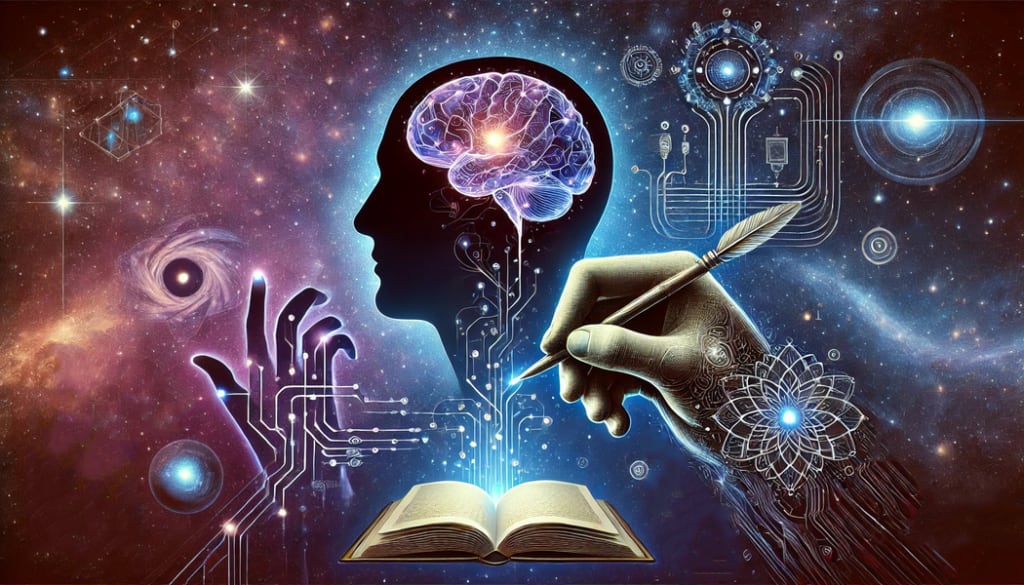
The stars have always captivated humanity, stirring a sense of wonder that transcends time and culture. But as technology propels us deeper into the cosmos, space exploration has become more than just a journey to distant worlds; it’s a profound shift in how we perceive ourselves and our place in the universe. This shift, often described as cosmic consciousness, is not merely a philosophical abstraction but a tangible, transformative experience. For astronauts gazing down on Earth from the void, it’s the realization of our planet’s fragility and interconnectedness. For the rest of us, it’s the awareness that our collective existence is a small, intricate piece of a vast cosmic tapestry.
Cosmic consciousness challenges the very fabric of human thought, pushing us to consider questions of purpose, unity, and survival on a scale never before imagined. It redefines intellect, forcing us to adapt our perspectives and innovate in ways that align with the enormity of space’s mysteries. As humanity ventures further into the stars, the expansion of our understanding could unlock new intellectual and cultural heights, offering not only answers to profound questions but also a sense of shared purpose that transcends borders and divisions.
This article explores the multifaceted impact of cosmic consciousness—from its psychological and philosophical effects to the technological and cultural revolutions it inspires. In doing so, we uncover how space exploration is shaping the future of human intellect, one breathtaking view at a time.
Section 1: The Psychological Impact of Space Exploration
For those fortunate enough to venture beyond Earth’s atmosphere, space offers more than just an unparalleled visual spectacle—it delivers a profound psychological shift. Astronauts often describe the 'Overview Effect', a transformative experience sparked by seeing our planet from the vantage of space. From this perspective, Earth becomes a delicate blue marble suspended in the void, devoid of borders and political divisions. The realization of its fragility and the interconnectedness of all life often leaves astronauts with a deep sense of responsibility to protect and preserve the planet. This phenomenon is not just a poetic reflection; it is a cognitive realignment that expands how individuals perceive their role within a larger, interdependent system.
On a broader scale, space exploration forces humanity to reevaluate mental models that have shaped our existence for centuries. As we push further into the cosmos, we encounter challenges and environments that require new ways of thinking. The stark realities of space—its vastness, its hostility to life, and its endless possibilities—compel us to move beyond familiar problem-solving strategies and embrace innovative, interdisciplinary approaches. These shifts are not confined to scientists or astronauts; they ripple into society, encouraging a collective intellectual evolution as we grapple with the implications of venturing into the unknown.
By examining how space exploration reshapes psychological perspectives, we begin to understand how cosmic consciousness is not an abstract concept but a real, transformative force with the power to unite, inspire, and elevate human intellect.

Section 2: Philosophical Shifts in Cosmic Perspective
When humanity gazes into the vast expanse of space, we are forced to confront profound philosophical questions that challenge our understanding of existence. What is our place in a universe so immense that our entire solar system becomes a mere speck on a cosmic map? For centuries, humanity has been at the center of its own narrative, shaping philosophies and belief systems that emphasize our significance. But space exploration disrupts these ideas, compelling us to embrace a humbler, more expansive worldview.
This shift is perhaps best exemplified by Carl Sagan’s reflections on the "pale blue dot" image of Earth, captured by the Voyager 1 spacecraft. Sagan eloquently described Earth as "a mote of dust suspended in a sunbeam," emphasizing both its insignificance in the cosmic vastness and its unparalleled importance as the cradle of all known life. Such revelations prompt us to rethink humanity’s role, not as rulers of the universe but as stewards of a unique and delicate biosphere.
Cosmic consciousness also fosters a sense of interconnection and universalism. From the vantage of space, the artificial divisions that separate nations, cultures, and ideologies dissolve. This perspective has the potential to unite humanity under a shared purpose—preserving the planet, exploring the cosmos, and seeking answers to fundamental questions about life and intelligence. By expanding our awareness beyond Earth’s boundaries, space exploration pushes us to consider a future where collaboration and collective responsibility are not ideals but necessities.
In grappling with these philosophical shifts, we don’t just redefine our understanding of the universe; we also reshape our identity as a species. Cosmic consciousness challenges us to think bigger, dream farther, and act with greater unity—ushering in an evolution of human thought that transcends the terrestrial.

Section 3: Technological Innovation and Intellectual Evolution
The demands of space exploration have always pushed the boundaries of human ingenuity, but the challenges of venturing into the cosmos also catalyze profound shifts in how we think and solve problems. The vast distances, extreme conditions, and unpredictability of space require innovation at levels that transform not just our technology but our intellectual frameworks. As humanity reaches further into the universe, space becomes a proving ground for the evolution of human intellect.
At the forefront of this evolution is the need for complex problem-solving. Navigating the logistics of life in space—developing self-sustaining habitats, managing limited resources, and ensuring human survival in hostile environments—demands creative solutions that often transcend traditional disciplines. The result is a surge in technological advancements, from autonomous robotic systems to revolutionary propulsion methods. These innovations are not just tools; they reflect an adaptability and forward-thinking mindset that enhances humanity’s intellectual capabilities.
Moreover, space exploration accelerates our capacity for abstract and systems thinking. Planning a mission to Mars or developing a strategy for interstellar travel requires understanding and integrating countless variables, from astrophysics to human psychology. This kind of holistic problem-solving fosters a level of intellectual agility that becomes invaluable not only in space but also in addressing Earth’s most pressing challenges.
Perhaps most intriguingly, the intellectual evolution sparked by space exploration is beginning to blur the lines between human and machine intelligence. Technologies like artificial intelligence and neural augmentation are becoming integral to space missions, raising questions about how these tools might eventually enhance our own cognitive abilities. As humans and machines collaborate to explore the cosmos, the boundaries of what it means to think, learn, and adapt are being redefined.
In the vast emptiness of space, humanity is discovering not only the universe’s mysteries but also the untapped potential of its own intellect. The technological and cognitive leaps required for space exploration are not merely practical—they are shaping the very way we think, innovate, and imagine the future.

Section 4: Cosmic Consciousness in Culture and Society
Space exploration doesn’t just expand humanity’s intellectual and technological horizons—it inspires profound shifts in culture and society. The quest to understand the cosmos has a ripple effect, influencing how we create, collaborate, and view ourselves as a global community. Cosmic consciousness, born from humanity’s growing awareness of its place in the universe, manifests in art, literature, and international cooperation, weaving itself into the fabric of our shared cultural identity.
One of the most visible impacts is in the realm of artistic expression. For centuries, the stars have inspired poetry, music, and visual art, but the modern era of space exploration has elevated this inspiration to new heights. From science fiction novels envisioning interstellar futures to ethereal compositions influenced by the vastness of space, artists have translated the awe and wonder of the cosmos into works that resonate deeply with human emotion. Films like *Interstellar* and *2001: A Space Odyssey* not only entertain but challenge audiences to think critically about humanity’s destiny among the stars. These cultural creations serve as a bridge between the scientific and the philosophical, making the abstract concepts of space exploration accessible and relatable.
Cosmic consciousness also fosters unprecedented global collaboration. Space programs like the International Space Station (ISS) stand as testaments to what humanity can achieve when nations work together toward a common goal. These collaborations transcend political, cultural, and ideological boundaries, offering a glimpse of a future where collective problem-solving becomes the norm. The shared pursuit of knowledge about the universe cultivates a sense of unity, reminding us that, despite our differences, we all share the same fragile home.
Even on a societal level, the influence of cosmic consciousness is profound. It encourages a shift in priorities—toward sustainability, innovation, and a greater understanding of our interconnectedness. As humanity contemplates colonizing other planets, the lessons learned from space exploration could guide us in building societies that are not only technologically advanced but also more equitable and cooperative.
In the end, the cultural and societal impact of cosmic consciousness is a reflection of humanity’s unyielding curiosity and creativity. As we reach for the stars, we bring back more than scientific discoveries—we return with stories, ideas, and a deeper understanding of ourselves and our shared destiny.

Section 5: Future Implications of Cosmic Consciousness
As humanity ventures further into the cosmos, the implications of cosmic consciousness extend far beyond intellectual curiosity—they offer a blueprint for our collective future. The shift in perspective that space exploration inspires has the potential to shape how we approach everything from technological advancement to societal organization, ultimately redefining what it means to be human in the face of the infinite.
One of the most intriguing possibilities lies in the evolution of human intellect itself. As we encounter challenges unique to interstellar travel—prolonged isolation, limited resources, and the need to adapt to alien environments—our capacity for innovation and adaptability will be tested like never before. This could lead to an unprecedented intellectual evolution, spurred by necessity. Advances in fields such as neural augmentation, artificial intelligence, and biotechnology may not only assist us in navigating space but also enhance our cognitive abilities, blurring the lines between biological and technological intelligence.
However, the future shaped by cosmic consciousness is not without its ethical dilemmas. As we push the boundaries of exploration and intellect, questions about responsibility and morality arise. How do we ensure that the pursuit of knowledge and progress doesn’t lead to exploitation—of extraterrestrial environments, potential life forms, or even each other? What safeguards must be in place to prevent the misuse of technologies designed to enhance human capabilities? Cosmic consciousness demands that we consider these questions not as isolated ethical debates but as integral to the fabric of our interstellar aspirations.
On a broader scale, cosmic consciousness could redefine humanity’s role as stewards—not just of Earth but of the cosmos. With this awareness comes the opportunity to develop societies that prioritize collaboration, sustainability, and coexistence. The lessons learned from space exploration could guide us in addressing global challenges, from climate change to resource inequality, ensuring that the future we build is one of unity and purpose.
Ultimately, cosmic consciousness is not just about looking outward—it’s about turning that perspective inward and reevaluating what humanity can achieve when united by a shared sense of wonder and responsibility. The journey to the stars isn’t merely a quest for scientific discovery; it’s an opportunity to evolve as a species, embracing a vision of the future where intellect, empathy, and ambition converge to create a legacy worthy of the cosmos.
Conclusion
The pursuit of the stars is, at its core, a pursuit of ourselves. Cosmic consciousness—the profound shift in awareness sparked by space exploration—transcends science, touching every facet of human existence. It challenges us to see beyond borders, question our place in the universe, and strive for innovation that reflects the boundless possibilities of the cosmos. From the transformative *Overview Effect* to the ethical considerations of colonizing distant worlds, this heightened awareness has the power to redefine intellect, inspire culture, and unite humanity under a shared purpose.
As we stand on the cusp of an era where interstellar travel and space colonization are becoming tangible realities, the lessons of cosmic consciousness are more important than ever. They remind us that the universe is not just a destination—it is a mirror reflecting the best and worst of what humanity can be. By embracing this perspective, we open the door to a future where intellect and imagination propel us not only outward to the stars but inward toward deeper understanding, empathy, and connection.
The journey into the cosmos is more than a scientific endeavor; it is a call to evolve, to innovate, and to collaborate as one species under the vast canopy of the universe. With each step we take into the unknown, we are not just expanding the boundaries of space—we are expanding the boundaries of what it means to be human.
About the Creator
Christen
Think logically. I know you can do it!
Australia Organic Food Market: Clean Eating Trends, Consumer Awareness & the Future of Sustainable Nutrition
According to IMARC Group, the Australia organic food market reached a value of USD 1.1 Billion in 2024 and is projected to grow to USD 2.2 Billion by 2033, exhibiting a compound annual growth rate (CAGR) of 7.49% during 2025–2033. This sustained growth reflects a fundamental shift in consumer attitudes toward food quality, transparency and long-term health outcomes. Organic food is increasingly viewed not just as a premium dietary choice, but as a safer, more sustainable alternative aligned with clean-label consumption and environmental responsibility. As awareness of chemical residues, food processing practices and nutritional integrity rises, organic products are gaining mainstream acceptance across households, retailers and foodservice channels throughout Australia. The market’s expansion is closely tied to lifestyle-driven purchasing decisions, supportive retail infrastructure and growing confidence in certified organic supply chains.
By Shrestha Roya day ago in Futurism
Steel Market: Urbanization Impact, Structural Steel Use & Growth Outlook
According to IMARC Group's latest research publication, The global steel market size was valued at USD 1,004.9 Billion in 2025. Looking forward, IMARC Group estimates the market to reach USD 1,308.7 Billion by 2034, exhibiting a CAGR of 2.98% during 2026-2034.
By James Whitman6 days ago in Futurism
Dead and Wearing Green
She was wearing that green dress when I first saw her, five years ago to the day. Flowing meadow fabric draped over long legs, thick auburn hair flowing down her back. That smile. Of course, she is still beautiful now. But now she is no longer alive.
By Karen Cave7 days ago in Fiction




Comments
There are no comments for this story
Be the first to respond and start the conversation.