
Cement Packaging Market Outlook: Eco-Friendly Solutions, Cost Optimization & Industry Forecast to 2033
How rising infrastructure investments, logistics optimization strategies, and eco-friendly packaging materials are reshaping demand patterns, supplier competition, and innovation priorities within the cement packaging market.

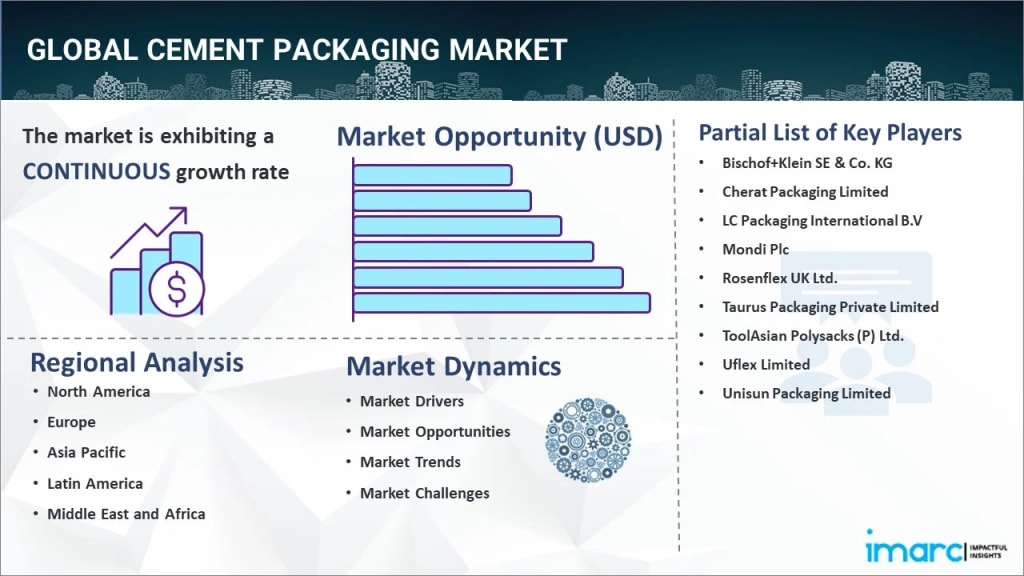
Rising infrastructure development, rapid urbanization, and the expanding real estate sector are driving the demand for cement packaging, supported by innovations in moisture-resistant materials, automated filling technologies, and the global shift toward sustainable, eco-friendly paper sacks. According to IMARC Group’s latest data, the global cement packaging market size reached USD 373.1 Billion in 2024. Looking forward, IMARC Group estimates the market to reach USD 533.3 Billion by 2033, exhibiting a CAGR of 4.3% from 2025-2033.
Cement packaging has evolved into a critical logistics and branding component of the global construction supply chain, now representing a multi-billion-dollar industry. Growth is fueled by massive public works projects, the necessity for high-strength protection against humidity, and a transition toward "green" packaging in line with global ESG mandates. The market is increasingly characterized by a shift from traditional plastic to multi-wall paper bags and the adoption of high-capacity sacks for industrial use. As manufacturers prioritize reducing material wastage and improving shelf stability, the integration of advanced barrier coatings and smart tracking features is becoming a standard for industry leaders worldwide.
Get Your Free “Cement Packaging Market” Sample PDF Report Now!
Cement Packaging Market Growth Drivers:
- Global Infrastructure and Urbanization Surge
The rapid expansion of cities, particularly in emerging economies, creates an unrelenting need for foundational materials. With the United Nations projecting that two-thirds of the global population will reside in urban areas by 2050, the demand for housing, hospitals, and transportation networks is skyrocketing. In India alone, initiatives like the PM Gati Shakti Master Plan are funneling billions into integrated infrastructure, directly increasing the volume of cement transported. This necessitates robust packaging that can withstand rigorous transit across varied climates, ensuring that millions of tons of cement reach construction sites without degradation or loss of quality.
- Transition Toward Sustainable and Eco-Friendly Materials
Environmental regulations and consumer pressure are forcing a departure from conventional plastic-heavy packaging. The industry is seeing a massive uptick in the use of biodegradable multi-wall kraft paper sacks, which offer high tensile strength and recyclability. Governments are increasingly implementing plastic waste management rules, such as the guidelines from the Central Pollution Control Board (CPCB) that promote circular economy practices. This shift is not just about compliance; it’s a strategic move for brands to align with "green building" certifications like LEED, where sustainable sourcing of all materials—including packaging—is a key procurement criterion.
- Technological Advancements in Packaging Integrity
Protecting cement from moisture is a permanent challenge that drives innovation in packaging design. Modern cement sacks now utilize advanced valve technologies and nano-perforated films that allow air to escape during high-speed filling while preventing water ingress. For example, the introduction of moisture-resistant "rain-safe" paper bags allows retailers to store products outdoors without damage. These technical improvements reduce the estimated 10-15% of product wastage typically lost to breakage or spoilage in the supply chain. Improved durability ensures that the chemical properties of high-performance cements, such as sulfate-resistant or quick-setting variants, remain intact during long-haul shipping.
Cement Packaging Market Trends:
- Rise of Automation and Smart Packaging Systems
To combat the thin margins and high-volume nature of the industry, manufacturers are turning to "Industry 4.0" solutions. Automated Form-Fill-Seal (FFS) machines and robotic palletizers are becoming standard in modern plants to enhance speed and precision. Furthermore, the integration of smart tools like RFID tags and QR codes is transforming traceability. These technologies allow distributors to track shipments in real-time, manage inventory more effectively, and—crucially—verify product authenticity. In markets where counterfeit or adulterated cement is a risk, these digital fingerprints provide a layer of security that protects both the brand and the structural integrity of construction projects.
- Dominance of Large-Capacity and Industrial Sacks
There is a significant trend toward larger packaging formats, particularly the 25kg to 50kg segment, which accounts for nearly half of the market share. This dominance is driven by the sheer scale of commercial projects, such as skyscrapers and industrial complexes, where bulk handling is more efficient than small-scale bags. In regions like North America and Europe, the preference for jumbo bags and intermediate bulk containers (IBCs) is growing as contractors look to minimize manual labor and streamline site logistics. This shift toward "bulkier" packaging reflects the industry's focus on operational efficiency and the professionalization of the global construction workforce.
- Premiumization and Brand Differentiation through Packaging
In an increasingly competitive commodity market, packaging has become a primary tool for brand differentiation. Manufacturers are moving away from plain, functional sacks to high-quality, printed packaging that features sophisticated graphics and clear nutritional-style labeling of cement properties. By emphasizing origin stories, strength ratings, and sustainability credentials on the bag, companies can command premium pricing. Recent developments, such as the launch of specialized plastering mixes in innovative easy-to-use bags, show how tailored packaging can simplify the construction process for end-users, turning a basic building material into a high-value, consumer-friendly product.
Recent News and Developments in Cement Packaging Market
- January 2026: A leading global packaging firm announced the expansion of its carbon-neutral paper sack production line, aimed at meeting the 20% year-on-year increase in demand for sustainable building material packaging in the European market.
- November 2025: The U.S. General Services Administration (GSA) expanded its Low Embodied Carbon (LEC) Material Requirements Pilot Program, providing USD 2.15 billion in funding for federal projects that prioritize eco-friendly construction materials, including their packaging.
- September 2025: A major Asian cement producer successfully integrated AI-driven automated filling systems across its regional plants, reporting a 15% reduction in material wastage and a significant improvement in packaging speed for their 50kg export lines.
- July 2024: A Berlin-based technology firm secured over EUR 9 million in funding to advance decarbonization efforts, focusing on developing new binders and packaging solutions that reduce the overall carbon footprint of the cement supply chain.
Note: If you require specific details, data, or insights that are not currently included in the scope of this report, we are happy to accommodate your request. As part of our customization service, we will gather and provide the additional information you need, tailored to your specific requirements. Please let us know your exact needs, and we will ensure the report is updated accordingly to meet your expectations.
About the Creator
Andrew Sullivan
Hello, I’m Andrew Sullivan. I have over 9+ years of experience as a market research specialist.
Keep reading
More stories from Andrew Sullivan and writers in Futurism and other communities.
Electric Wheelchair Market Trends: Premium Mobility Solutions, Advanced Control Systems & Industry Forecast to 2033
The electric wheelchair market is undergoing a significant transformation, driven by a global focus on inclusivity, rapid advancements in robotics, and a growing aging population that requires enhanced mobility solutions. According to IMARC Group’s latest data, the global electric wheelchair market size was valued at USD 5.1 Billion in 2024. Looking forward, IMARC Group estimates the market to reach USD 9.8 Billion by 2033, exhibiting a CAGR of 7.18% during 2025-2033.
By Andrew Sullivanabout 19 hours ago in Futurism
Saudi Arabia Superconducting Magnetic Energy Storage Market: Grid Stability, Renewable Integration & Growth Outlook
Saudi Arabia’s energy landscape is shifting fast. As the Kingdom scales up solar and wind capacity under Vision 2030, the need for fast-responding, reliable energy storage has never been more urgent. Superconducting Magnetic Energy Storage (SMES) is emerging as a strong contender — valued for its near-instant response times and long operational life. According to IMARC Group’s latest data, the The Saudi Arabia superconducting magnetic energy storage market size reached USD 621.3 Million in 2025. Looking forward, IMARC Group expects the market to reach USD 1260.8 Million by 2034, exhibiting a growth rate (CAGR) of 8.18% during 2026-2034.
By Shubham Sharma 4 days ago in Futurism
Systemic Lupus Erythematosus (SLE) Drugs Market Outlook: Autoimmune Therapy Advancements and Growth Opportunities
According to IMARC Group's latest research publication, The global systemic lupus erythematosus (SLE) drugs market size reached USD 2.8 Billion in 2024. Looking forward, IMARC Group expects the market to reach USD 4.7 Billion by 2033, exhibiting a growth rate (CAGR) of 5.54% during 2025-2033.
By James Whitmanabout 14 hours ago in Futurism
Unofficial Challenge: What would you do if you were rich?
I love the kind of work I get to do in my career, but as I job search and browse apartments again due to another understaffed and unsustainable work environment that I did not intend to get into, my daydreams of better days consistently lean into the same question: What would I do if I didn't have to worry about my basic needs being met?
By Kay Husnick3 days ago in Writers




Comments
There are no comments for this story
Be the first to respond and start the conversation.