
Automotive Hypervisor Market Outlook: Software-Defined Vehicles and Virtualization Growth Opportunities
The automotive hypervisor market is witnessing rapid growth, driven by the increasing complexity of in-vehicle electronics and the rising adoption of software-defined vehicle architectures.

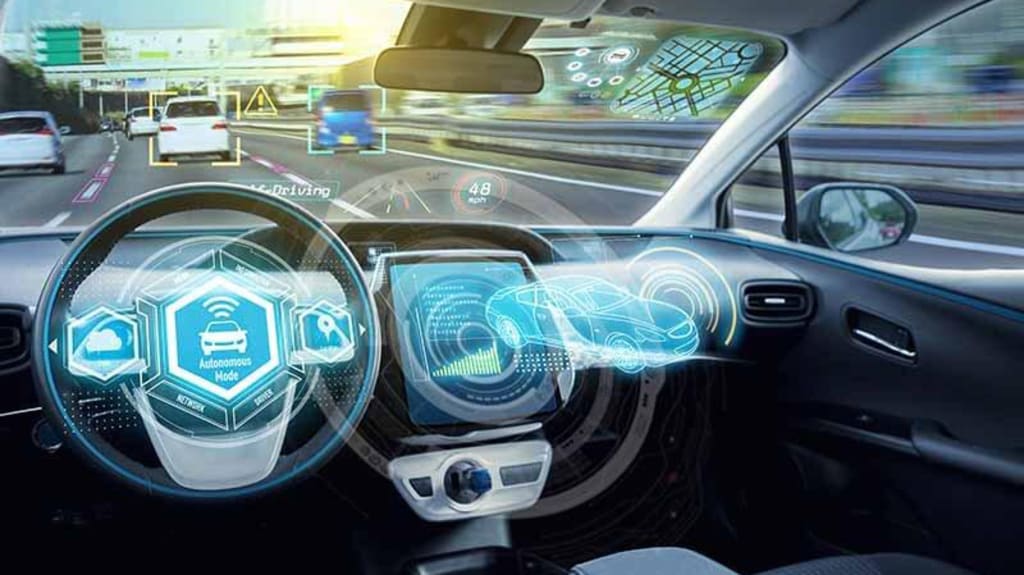
According to IMARC Group's latest research publication, global automotive hypervisor market size reached USD 330.64 Million in 2024. Looking forward, IMARC Group expects the market to reach USD 2,584.05 Million by 2033, exhibiting a growth rate (CAGR) of 25.45% during 2025-2033.
- How AI is Reshaping the Future of Automotive Hypervisor Market AI-Powered Resource Management and Dynamic Workload Optimization: Machine learning algorithms analyze real-time vehicle performance data to dynamically allocate computing resources across multiple virtual machines. These intelligent systems predict processing demands and automatically adjust hypervisor configurations, ensuring safety-critical applications receive priority while optimizing overall system efficiency and reducing hardware redundancy in software-defined vehicles.
- Predictive Maintenance Through AI-Driven System Health Monitoring: AI-enabled hypervisors continuously monitor ECU performance, temperature patterns, and software behavior to predict potential system failures before they occur. Advanced analytics identify anomalies in virtual machine operations, enabling proactive maintenance that prevents costly downtime and enhances vehicle reliability while extending hardware lifecycle for automakers and fleet operators.
- Enhanced Cybersecurity with Intelligent Threat Detection: Deep learning models embedded within hypervisor architectures detect and neutralize sophisticated cyberattacks targeting automotive systems in real-time. AI-powered security layers analyze network traffic patterns, identify malicious code injection attempts, and automatically isolate compromised virtual environments, protecting critical safety systems from emerging threats in connected vehicles.

Explore Updated 2026 Market Trends & Analysis
Source: IMARC Group Automotive Hypervisor Market Analysis
Automotive Hypervisor Industry Overview:
The automotive hypervisor sector is experiencing rapid transformation as vehicle manufacturers shift toward software-defined architectures and domain controller consolidation. Asia Pacific dominates with over 39.8% market share, driven by aggressive electric vehicle deployment in China, Japan, and South Korea. Type 1 bare-metal hypervisors command 59.1% of implementations due to their superior performance in safety-critical ADAS applications. Major automakers including BMW, Hyundai, and BYD are accelerating investments in centralized computing platforms that depend heavily on hypervisor technology for managing complex software ecosystems across autonomous driving, infotainment, and vehicle control systems.
Automotive Hypervisor Market Trends & Drivers:
The explosive growth of electric and autonomous vehicles is fundamentally reshaping hypervisor demand across global automotive markets. Battery electric vehicle market share climbed to 8.9% in Q3 according to the U.S. Energy Information Administration, while electric vehicles represented 18% of global car sales per International Energy Agency data. These advanced vehicles require sophisticated software architectures to manage battery systems, regenerative braking, and autonomous navigation simultaneously. Automakers like Tesla made FSD Beta software available to select owners, relying on AI, cameras, and sensors for semi-autonomous capabilities. Chinese robotaxi operations scaled dramatically, with Baidu operating 500 units in Wuhan and targeting 1,000 by year-end, demonstrating the critical role hypervisors play in managing complex autonomous systems across multiple virtual environments.
Over-the-air update capabilities are becoming non-negotiable requirements driving hypervisor adoption throughout the automotive value chain. The OTA automotive market reached approximately USD 2.83 billion as manufacturers prioritize remote software management. Ather Energy unveiled Atherstack 6 in March as its largest OTA update, introducing messaging capabilities and new mobile app integration. Hypervisors facilitate these updates by compartmentalizing software components, allowing non-critical systems to receive improvements without affecting safety-critical functions. This architecture minimizes software-related security breaches during update processes while enabling automakers to add features, enhance performance, and address vulnerabilities throughout vehicle lifecycles. The technology proves essential as vehicles now contain over 200 million lines of code requiring continuous optimization and security patches.
Stringent safety regulations and cybersecurity mandates are accelerating hypervisor integration across passenger and commercial vehicle segments. Germany's Level 4 autonomous vehicle ordinance and evolving UNECE R156 requirements mandate crash-proof data isolation and three-year re-certification cycles. The U.S. NHTSA announced new vehicle safety standards in early periods, spurring greater adoption of advanced safety systems. Elektrobit's EB corbos Hypervisor achieved ISO 26262 ASIL B certification from TÜV SÜD in November, validating its readiness for safety-critical automotive applications. Green Hills Software continues providing hypervisor solutions tailored for ISO 26262 ASIL-D certification. These regulatory frameworks create consistent compliance requirements while giving hypervisor suppliers recurring revenue opportunities through ongoing monitoring and validation services for increasingly complex software-defined vehicle architectures.
Leading Companies Operating in the Global Automotive Hypervisor Industry:
- BlackBerry Limited
- Green Hills Software
- IBM Corporation
- OpenSynergy GmbH (Panasonic Holdings Corporation)
- Siemens AG
- Wind River Systems Inc. (Aptiv Plc, Intel Corporation)
Automotive Hypervisor Market Report Segmentation:
By Type:
- Type 1 Hypervisor
- Type 2 Hypervisor
Type 1 hypervisor represents the largest segment, as it runs directly on vehicle hardware without requiring an underlying operating system, delivering superior efficiency and security for safety-critical automotive applications.
Source: IMARC Group Market Segmentation Analysis
By Level of Automation:
- Semi-Autonomous
- Fully Autonomous
Semi-autonomous vehicles account for the largest market share as these vehicles equipped with ADAS features like adaptive cruise control and lane-keeping assistance require advanced software management systems.
By Vehicle Type:
- Passenger Cars
- Light Commercial Vehicles
- Heavy Commercial Vehicles
Passenger cars represent the largest segment, with hypervisors managing infotainment systems, ADAS, in-car connectivity, and comfort features that define modern driving experiences.
By Vehicle Class:
- Mid-Priced
- Luxury
- Economy Vehicles
Luxury vehicles hold the largest market share, as hypervisors manage complex software ecosystems while ensuring seamless and premium user experiences expected by high-end automotive customers.
Regional Insights:
- North America (United States, Canada)
- Asia Pacific (China, Japan, India, South Korea, Australia, Indonesia, Others)
- Europe (Germany, France, United Kingdom, Italy, Spain, Russia, Others)
- Latin America (Brazil, Mexico, Others)
- Middle East and Africa
Asia Pacific dominates the global automotive hypervisor market with over 39.8% market share, driven by rapid EV market expansion and cost-effective production capabilities in China, Japan, and South Korea.
Recent News and Developments in Automotive Hypervisor Market
- January 2025: BlackBerry Limited's QNX division announced a strategic collaboration with Microsoft Corporation to advance software-defined vehicle development. The partnership enables automakers to design, test, and refine vehicle software more efficiently through cloud-based solutions, with plans to incorporate QNX Hypervisor and the new QNX Cabin reference architecture for hardware-agnostic digital cockpit development.
- November 2024: Elektrobit Automotive achieved a significant milestone with TÜV SÜD certification of its EB corbos Hypervisor meeting ISO 26262 ASIL B standards for automotive safety. The certification designates the hypervisor as a Safety Element out of Context, confirming its readiness for safety-critical applications in software-defined mobility solutions.
- June 2024: Qualcomm Technologies acquired virtualization assets from OpenSynergy GmbH, including the COQOS Hypervisor and related products. This strategic acquisition strengthens Qualcomm's position in automotive software management, enabling more advanced integration for connected and autonomous vehicles through secure multi-system operations on single hardware platforms.
- April 2024: BlackBerry Limited partnered with ETAS GmbH to enhance safety-critical functions in next-generation software-defined vehicles. The collaboration focuses on joint marketing and sales of software solutions across European markets, addressing the growing demand for secure, reliable hypervisor technology in modern automotive architectures.
- April 2024: Green Hills Software integrated its INTEGRITY RTOS and Multivisor virtualization capabilities with NXP Semiconductors' S32 CoreRide platform. The ASIL-D certified solution enables mixed-criticality consolidation across heterogeneous multicore processors, delivering comprehensive production-focused SDV solutions for automotive manufacturers worldwide.
Note: If you require specific details, data, or insights that are not currently included in the scope of this report, we are happy to accommodate your request. As part of IMARC Group's customization service, we will gather and provide the additional information you need, tailored to your specific requirements. Please let us know your exact needs, and we will ensure the report is updated accordingly to meet your expectations.
About the Creator
James Whitman
With years of experience in analyzing global industries, I specialize in delivering actionable market insights that help businesses stay ahead in an ever-changing landscape.
Keep reading
More stories from James Whitman and writers in Futurism and other communities.
Biochips Market Outlook: Precision Diagnostics Innovation and Biotechnology Growth Opportunities
According to IMARC Group's latest research publication, The global biochips market size reached USD 22.3 Billion in 2024. Looking forward, IMARC Group expects the market to reach USD 76.0 Billion by 2033, exhibiting a growth rate (CAGR) of 13.02% during 2025-2033
By James Whitmana day ago in Futurism
Launch and Scientific Impact of NASA’s Nancy Grace Roman Space Telescope (2026)
In 2026, NASA is preparing to launch one of the most ambitious space observatories of the decade: the Nancy Grace Roman Space Telescope. Designed to survey the universe at an unprecedented scale in near-infrared light, Roman is expected to reshape modern astrophysics by combining high resolution with an extraordinarily wide field of view. If the Hubble Space Telescope revealed the fine details of the cosmos, Roman will provide the panoramic context.
By Holianyk Ihor3 days ago in Futurism
Australia Cold Chain Logistics Market: Temperature-Controlled Capacity, Food & Pharma Demand & Technology Integration
According to IMARC Group, the Australia cold chain logistics market was valued at USD 5.2 Billion in 2025 and is projected to reach USD 7.3 Billion by 2034, exhibiting a compound annual growth rate (CAGR) of 3.80% during 2026–2034. The market’s steady expansion reflects the growing importance of temperature-controlled supply chains across Australia. Rising investments in refrigerated transportation fleets, advanced cold storage warehouses and smart inventory systems are strengthening logistics infrastructure nationwide. As food safety standards tighten and pharmaceutical distribution becomes increasingly complex, cold chain logistics is emerging as a strategic pillar of supply chain resilience.
By Shrestha Roya day ago in Futurism


Comments
There are no comments for this story
Be the first to respond and start the conversation.