
Australia Fruit Juice Market: Consumer Health Trends, Product Innovation & Retail Expansion
How rising health-focused consumption patterns, ongoing product innovation and expanding retail distribution networks are shaping Australia’s fruit juice market
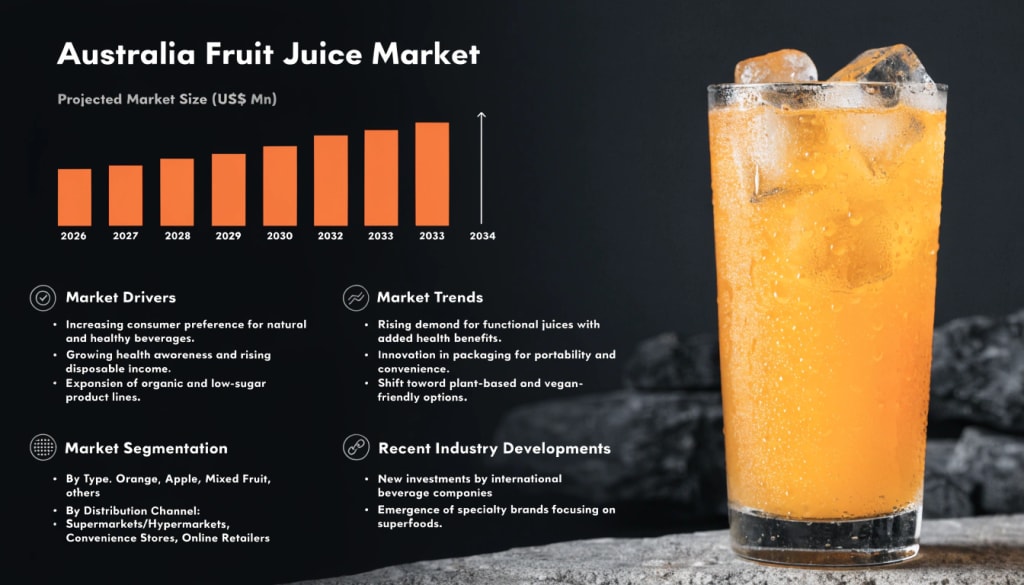
According to IMARC Group, the Australia fruit juice market reached USD 4.6 Billion in 2025 and is projected to grow to USD 6.2 Billion by 2034, exhibiting a compound annual growth rate (CAGR) of 3.13% during 2026–2034. The steady expansion of the market reflects evolving beverage consumption patterns across Australia, where consumers increasingly prioritize natural ingredients, reduced sugar content, and functional health benefits. Growing demand for premium cold-pressed juices, clean-label formulations, and convenient packaging formats is strengthening Australia fruit juice market share. As producers respond with innovation and diversified product portfolios, the industry continues to adapt to shifting health and lifestyle preferences.
Why Should Smart Buyers and Investors Know About the Australia Fruit Juice Market?
Stable Growth Outlook
A projected CAGR of 3.13% reflects consistent market demand.
Health and Wellness Alignment
Consumer focus on nutrition supports long-term relevance.
Premium Segment Opportunities
Cold-pressed and functional juices provide higher-margin potential.
Retail Channel Diversification
Omnichannel distribution enhances market reach.
Sustainability Differentiation
Eco-friendly packaging and responsible sourcing strengthen brand positioning.
Recent Trends & Developments in the Australia Fruit Juice Market
September 2025:
Launch of reduced-sugar fruit and vegetable blended juice lines.
May 2025:
Expansion of organic juice categories in major supermarket chains.
January 2025:
Introduction of recyclable carton packaging to enhance sustainability positioning.
Australia’s fruit juice market is evolving steadily as consumers prioritize health, natural ingredients, and functional benefits in everyday beverage choices. Growing from USD 4.6 Billion in 2025 to a projected USD 6.2 Billion by 2034, the industry reflects a balanced combination of innovation, premiumization, and retail expansion. Reduced-sugar formulations, cold-pressed variants, and clean-label products are reshaping competitive dynamics. As sustainability considerations and wellness-driven consumption patterns continue to influence purchasing behavior, Australia’s fruit juice sector is positioned for sustained and measured growth within the broader beverage industry.
Australia Fruit Juice Market Vision 2050
1. Personalized Nutritional Blends
Advances in nutrition science may enable customized juice formulations based on individual health profiles.
2. Sustainable Sourcing and Packaging
Greater adoption of recyclable and biodegradable packaging could become industry standard.
3. Integration of Plant-Based Functional Ingredients
Emerging superfoods and botanical extracts may enhance product differentiation.
4. Digital Retail and Subscription Models
Online ordering and subscription services may streamline consumer access.
5. Export Growth Opportunities
Australia’s reputation for high-quality agricultural produce may strengthen global market presence.
What Are the Key Growth Drivers in the Australia Fruit Juice Market?
Rising Health Awareness
Consumers are becoming more conscious of nutritional intake and ingredient quality. Fruit juices, particularly those marketed as natural or minimally processed, are perceived as healthier alternatives to carbonated soft drinks. The association of fruit juice with vitamins, antioxidants, and hydration supports steady demand.
Preference for Natural and Clean-Label Ingredients
Australian shoppers increasingly favor products with transparent labeling and no artificial additives. Clean-label positioning, including claims such as “no added sugar,” “100% juice,” and “organic,” enhances consumer trust and brand differentiation.
Growing Demand for Functional Beverages
Fruit juices fortified with probiotics, vitamins, plant extracts, or immune-supporting ingredients are gaining traction. Functional beverages that offer added health benefits beyond basic nutrition align with broader wellness trends.
Shift Toward Reduced-Sugar and Low-Calorie Options
Health-conscious consumers are reducing sugar intake, prompting manufacturers to introduce low-sugar and no-added-sugar variants. Blended juices combining fruits and vegetables also help balance sweetness with nutritional value.
Premiumization and Cold-Pressed Juice Popularity
Cold-pressed juices are increasingly favored for their perceived freshness and nutrient retention. Premium packaging and artisanal branding further enhance consumer appeal, particularly in urban markets.
Expansion of Retail Distribution Channels
Supermarkets, convenience stores, specialty health outlets, and online platforms are expanding fruit juice offerings. Improved cold chain logistics and refrigerated storage capacity support product freshness and shelf life.
Influence of Lifestyle and Convenience Trends
Busy lifestyles drive demand for ready-to-drink and on-the-go beverage formats. Single-serve bottles, resealable packaging, and eco-friendly cartons enhance convenience and portability.
About the Creator
Keep reading
More stories from Shrestha Roy and writers in Futurism and other communities.
Australia Vegan Cosmetics Market: Ethical Consumerism, Product Innovation & Retail Growth
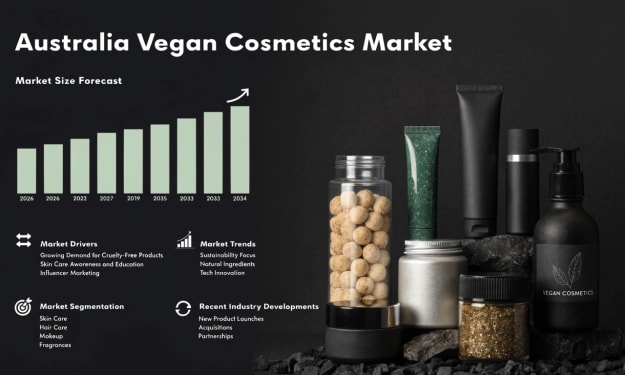
According to IMARC Group, the Australia vegan cosmetics market reached USD 552.7 Million in 2025 and is projected to grow to USD 1,073.0 Million by 2034, exhibiting a compound annual growth rate (CAGR) of 7.42% during 2026–2034. The market’s robust expansion reflects the rapid rise of ethical consumerism and clean beauty awareness across Australia. Increasing adoption of vegan lifestyles, heightened demand for ingredient transparency, and growing environmental consciousness are reshaping purchasing decisions. With innovation in plant-based formulations and strong digital retail growth, Australia vegan cosmetics market share continues to strengthen within the broader beauty and personal care industry.
By Shrestha Roy5 days ago in Futurism
Why NASA Cancelled The Artemis III Lunar Landing
At 23:30 GMT on February 27th, 2026, a small compliment of analysts, technicians, and operators were in the operations center when the Advanced Scout Satelite alerted them to something unusual. Just mere months away from the long awaited return to the moon by humans, NASA and SpaceX had everybody paying close attention to the moon. A couple of generations ago, NASA and the United States celebrated their final trip to the moon, and hadn't returned since. And while the reasoning behind cessations of lunar exploration remained a mystery in many minds, America and the human race were finally about to return to the first step away from Earth and into the galaxy.
By Jason Ray Morton 4 days ago in Futurism



Comments
There are no comments for this story
Be the first to respond and start the conversation.