
Air France Evacuation Flight Turns Back Because of Missile Fire
Missile activity forces mid-air reversal, highlighting growing risks to civilian aviation in conflict-affected airspace.

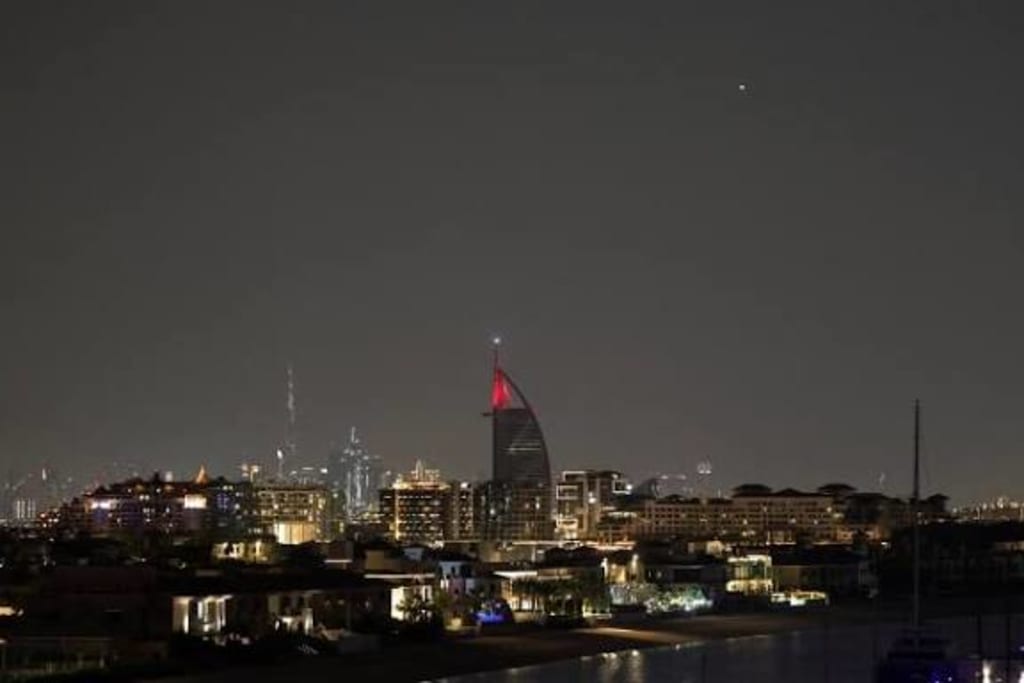
A planned evacuation flight operated by Air France was forced to abruptly turn back mid-route after missile activity was detected near its intended flight corridor, highlighting the growing dangers civilian aircraft face in conflict zones. The incident occurred late Tuesday evening as the aircraft, carrying evacuees and humanitarian personnel, attempted to depart a volatile region amid escalating military exchanges.
According to aviation officials familiar with the situation, the aircraft had been chartered to transport civilians and diplomatic staff seeking to leave an area experiencing intensified hostilities. The flight had taken off successfully and climbed to cruising altitude when air traffic control and security monitoring systems detected missile launches within range of the aircraft’s projected flight path. Within minutes, pilots received instructions to alter course and return to the departure airport.
Air France confirmed the diversion in a brief statement, emphasizing that the decision was made purely as a precaution to ensure passenger safety. “Our crew followed established international safety procedures after receiving security alerts regarding missile activity in the vicinity,” the airline said. “The aircraft returned safely without incident.”
While the airline did not publicly identify the exact location of the event, aviation monitoring groups said the flight was operating in an area where military forces have recently exchanged long-range strikes. Civil aviation authorities frequently issue warnings when missile launches or air defense systems pose potential risks to passenger aircraft.
Passengers aboard the flight described a tense but orderly situation. Shortly after the aircraft turned around, the captain reportedly addressed passengers over the intercom, explaining that security conditions along the route had deteriorated. Some travelers initially feared a technical issue but were reassured when the aircraft began descending back toward the airport.
“We didn’t know exactly what was happening at first,” said one passenger who asked not to be identified. “The crew stayed calm and professional. Later they explained that missile launches had been detected and that it was safer to return.”
Aviation safety experts say such diversions, while rare, have become more common as geopolitical conflicts increasingly intersect with international flight routes. Modern commercial aircraft rely on multiple sources of threat intelligence, including military radar feeds, satellite monitoring, and alerts from international aviation organizations.
After the catastrophic downing of Malaysia Airlines Flight 17 in 2014, global aviation regulators strengthened procedures for monitoring conflict zones. Airlines now routinely adjust routes to avoid regions where missile systems could threaten high-altitude aircraft.
“Airlines are extremely cautious today,” said a European aviation security analyst. “If there is even a small possibility that missile systems are active near a flight path, the safest option is to divert or cancel the flight.”
The aborted evacuation mission underscores the growing challenges faced by governments trying to move civilians out of unstable regions. Evacuation flights often operate under tight time windows, relying on coordination between airlines, diplomatic services, and military authorities.
Officials said discussions were underway to determine whether another evacuation attempt could be organized once conditions stabilize. In many such operations, governments work with commercial carriers like Air France because they have the logistical capacity and experienced crews needed to conduct large-scale passenger transport under difficult circumstances.
Air France crews are trained for crisis operations, including sudden rerouting and emergency returns. In this case, airline officials praised the cockpit team for reacting quickly to the threat warning and maintaining clear communication with both passengers and air traffic control.
Despite the tension surrounding the incident, all passengers and crew landed safely, and no injuries were reported. The aircraft returned to the airport approximately two hours after departure, where passengers were taken to a secure terminal area while authorities assessed the situation.
Security analysts warn that the incident illustrates a broader trend: civilian aviation is increasingly affected by geopolitical conflict. As missile technology spreads and military confrontations become more unpredictable, airlines must constantly reassess flight paths and safety procedures.
For now, the aborted evacuation flight stands as another reminder that even high-altitude commercial aircraft are not immune to the dangers created by modern warfare. Aviation officials say vigilance, intelligence sharing, and rapid decision-making remain the most effective tools to keep passengers safe when global tensions intrude into the skies.
About the Creator
Fiaz Ahmed
I am Fiaz Ahmed. I am a passionate writer. I love covering trending topics and breaking news. With a sharp eye for what’s happening around the world, and crafts timely and engaging stories that keep readers informed and updated.
Keep reading
More stories from Fiaz Ahmed and writers in Futurism and other communities.
Govinda Rushed to Mumbai Hospital After Losing Consciousness, a Day After Visiting Ailing Dharmendra
Bollywood’s vibrant world was struck by worry this week when reports surfaced that Govinda, one of India’s most beloved actors, had been rushed to a Mumbai hospital after losing consciousness. The news came just a day after the actor had paid a heartfelt visit to his mentor and veteran superstar Dharmendra, who himself has been under medical care.
By Fiaz Ahmed 4 months ago in Futurism
Top 10 LLM Development Companies Transforming U.S. Enterprises
In 2026, the most valuable employee in many American companies isn’t human. It’s a language model. From drafting legal contracts in New York to automating customer support in Texas, LLMs are quietly reshaping how enterprises operate. But behind every successful deployment is a development partner — the firm that turns raw AI into real business outcomes.
By Ritu Singh5 days ago in Futurism
Flexible AC Transmission System (FACTS) Market Outlook: Grid Stability Enhancement and Renewable Integration Opportunities
According to IMARC Group's latest research publication The global flexible AC transmission system (FACTS) market size reached USD 1.5 Billion in 2024. Looking forward, IMARC Group expects the market to reach USD 2.3 Billion by 2033, exhibiting a growth rate (CAGR) of 4.64% during 2025-2033
By James Whitman5 days ago in Futurism
Review of 'Man on the Run'
My wife and I saw Man on the Run, a nearly 2-hour documentary on Amazon Prime, about Wings, Paul McCartney's group that flew around the world from shortly after The Beatles broke up in early 1970 to shortly after John Lennon was murdered at the end of 1980, making a Beatles reunion forever impossible.
By Paul Levinson6 days ago in Beat



Comments
There are no comments for this story
Be the first to respond and start the conversation.