
Air Defense Systems Market Outlook: Advanced Military Protection and Strategic Defense Growth Opportunities
The air defense systems market is experiencing significant growth, driven by increasing geopolitical tensions, rising defense budgets, and growing demand for advanced technologies to detect, track, and neutralize aerial threats.

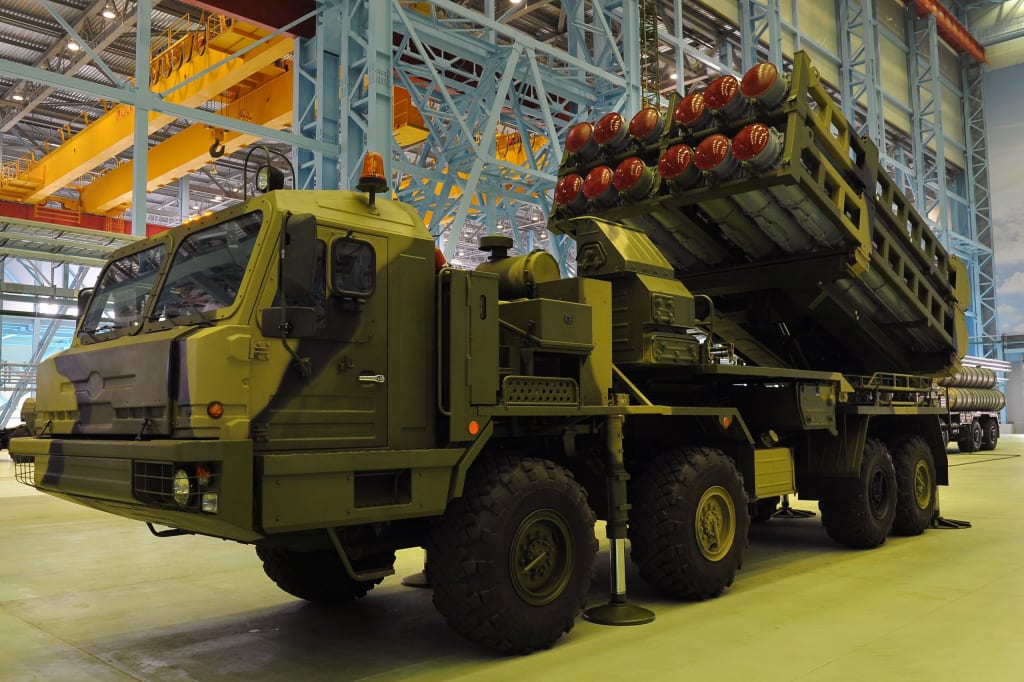
According to IMARC Group's latest research publication, The global air defense systems market size reached USD 51.4 Billion in 2025. Looking forward, IMARC Group expects the market to reach USD 73.7 Billion by 2034, exhibiting a growth rate (CAGR) of 4.08% during 2026-2034.
How AI is Reshaping the Future of Air Defense Systems Market
- Autonomous Threat Detection and Tracking: AI-powered radar and sensor systems analyze vast amounts of data in real-time, identifying aerial threats with exceptional accuracy. Machine learning algorithms automatically distinguish between friendly aircraft, hostile targets, and decoys, reducing human error and response times during complex multi-threat scenarios.
- Predictive Maintenance and System Optimization: AI analyzes equipment performance data to predict failures before breakdowns occur, ensuring defense systems remain operational. Smart algorithms optimize weapon-target pairings and streamline engagement planning, enabling commanders to defeat drone swarms and complex aerial attacks with simplified, one-click decisions on mobile platforms.
- Enhanced Command and Control Integration: AI integrates disparate defense platforms into unified command systems, providing real-time situational awareness across air, land, and naval forces. Natural language processing enables faster intelligence analysis, while automated decision support systems help commanders respond effectively to rapidly evolving battlefield conditions and sophisticated aerial threats.
Air Defense Systems Industry Overview:
Global tensions are driving unprecedented modernization of air defense capabilities as nations respond to evolving aerial threats. The U.S. Department of Defense allocated $1.8 billion for AI programs in fiscal year 2025, focusing on autonomous systems and advanced decision-making capabilities. NATO members collectively spent $1,506 billion on defense in 2024, representing 55% of worldwide military expenditure, with all 32 member nations increasing spending to counter emerging threats including hypersonic weapons, advanced cruise missiles, and coordinated drone attacks that challenge traditional defense architectures.

Air Defense Systems Market Trends & Drivers
Rising geopolitical tensions and territorial disputes are accelerating investments in sophisticated air defense infrastructure worldwide. Global military spending surged to $2.7 trillion in 2024, driven by regional conflicts and security concerns across multiple theaters. Countries are modernizing aging defense systems with advanced technologies capable of countering ballistic missiles, hypersonic weapons, and unmanned aerial threats. Israel increased defense spending to 8.8% of GDP in 2024, while China's military expenditures rose 59% over the past decade, prompting neighboring nations to enhance their defensive capabilities. This heightened threat environment is pushing governments to deploy multi-layered defense systems integrating long-range interceptors, medium-range batteries, and short-range protection to address diverse aerial challenges.
Government defense modernization programs and increased procurement budgets are creating substantial growth opportunities for air defense manufacturers. The U.S. Department of Defense requested $925 billion for fiscal year 2026, with significant allocations toward missile defense and integrated air defense networks. Procurement budgets for missiles and munitions increased 340% over the past decade, reaching $30.6 billion in fiscal 2024 from $9 billion in 2015. Major contracts are transforming the market landscape: RTX secured a $1.7 billion deal to supply Spain with four Patriot fire units, while Israel Aerospace Industries won $3.1 billion for Arrow 3 missile systems for Germany's Air Force. The Space Development Agency awarded $3.5 billion for 72 missile warning satellites to enhance early detection capabilities, demonstrating sustained government commitment to comprehensive air defense infrastructure.
Technological advancements in radar, missile guidance, and autonomous systems are revolutionizing air defense effectiveness and operational efficiency. India's Defense Research and Development Organization is developing long-range surface-to-air missiles with 250-kilometer reach capable of intercepting hypersonic threats traveling at Mach 7. Northrop Grumman deployed AI-enhanced battle management systems that streamline weapon-target pairings for counter-drone operations, successfully defeating unmanned aerial swarms during testing. Space-based missile tracking constellations provide global coverage with improved threat detection compared to traditional ground-based systems. The integration of directed energy weapons, including high-power lasers like Israel's Iron Beam system, offers near-zero-cost interception of rockets and UAVs, fundamentally changing the economics of air defense while enhancing protection against saturation attacks.
Leading Companies Operating in the Global Air Defense Systems Industry:
- Aselsan A.S.
- BAE Systems
- Israel Aerospace Industries Ltd. (IAI)
- Kongsberg Defence & Aerospace
- L3Harris Technologies, Inc.
- Leonardo S.p.A.
- Lockheed Martin Corporation
- Northrop Grumman Corporation
- Rheinmetall AG
- RTX Corporation
- Saab AB
- Thales Group
- The Boeing Company
Air Defense Systems Market Report Segmentation:
By Component:
- Weapon System
- Fire Control System
- Command and Control System
- Others
Weapon system represents the largest class, as it forms the core defensive capability providing actual interception and neutralization of aerial threats.
By Type:
- Missile Defense Systems
- Anti-aircraft Systems
- Counter Unmanned Aerial Systems (C-UAS)
- Counter Rocket, Artillery and Mortar (C-RAM) Systems
Missile defense systems account for the majority of the global market share due to increasing ballistic and cruise missile threats from adversaries.
By Platform:
- Airborne
- Land
- Naval
Land currently exhibits a clear dominance in the market owing to strategic deployment capabilities across borders, military bases, and critical infrastructure locations.
By Range:
- Long-range Air Defense System (LRAD)
- Medium-range Air Defense System (MRAD)
- Short-range Air Defense System (SHORAD)
Long-range Air Defense System (LRAD) holds the largest market share driven by the need to intercept advanced threats at greater distances.
Regional Insights:
- North America (United States, Canada)
- Asia Pacific (China, Japan, India, South Korea, Australia, Indonesia, Others)
- Europe (Germany, France, United Kingdom, Italy, Spain, Russia, Others)
- Latin America (Brazil, Mexico, Others)
- Middle East and Africa
Asia Pacific exhibits a clear dominance in the air defense systems market due to ongoing territorial disputes and heightened regional security tensions.
Recent News and Developments in Air Defense Systems Market
- December 2025: RTX's Raytheon secured a $1.7 billion contract to supply Spain with four Patriot air and missile defense systems, including radars, launchers, command and control stations, and training equipment. This foreign military sales contract represents Spain's largest Patriot order and demonstrates continued European investment in proven defense technologies to counter evolving aerial threats.
- December 2025: Israel Aerospace Industries signed a $3.1 billion contract to supply Germany's Air Force with Arrow 3 missile systems, marking the second major Arrow deal with Germany in two years. This advanced interceptor system provides ballistic missile defense capabilities and reflects Germany's significant expansion of procurement from Israeli defense suppliers to enhance national security infrastructure.
- December 2025: The Space Development Agency awarded $3.5 billion in contracts to Lockheed Martin, Northrop Grumman, L3Harris, and Rocket Lab to build 72 missile warning and tracking satellites for Tranche 3. These low-Earth orbit satellites will form a global missile detection network, playing a crucial role in the Pentagon's advanced missile shield initiative.
- October 2024: Northrop Grumman announced a cutting-edge AI feature for its Forward Area Air Defense Advanced Battle Manager system to streamline real-time decision-making against unmanned aerial swarms. Successfully tested at Yuma Proving Grounds, the system enables optimal weapon-target pairings across kinetic and non-kinetic weapons with a single button click on mobile tablets.
- January 2025: Elbit Systems secured a $60 million contract to provide multi-layered Counter Unmanned Aerial Systems to a European NATO member, executed over three years. This contract reflects growing demand for specialized counter-drone capabilities as unmanned systems proliferate across conflict zones and pose increasing threats to military and civilian infrastructure.
Note: If you require specific details, data, or insights that are not currently included in the scope of this report, we are happy to accommodate your request. As part of our customization service, we will gather and provide the additional information you need, tailored to your specific requirements. Please let us know your exact needs, and we will ensure the report is updated accordingly to meet your expectations.
About the Creator
James Whitman
With years of experience in analyzing global industries, I specialize in delivering actionable market insights that help businesses stay ahead in an ever-changing landscape.
Keep reading
More stories from James Whitman and writers in Futurism and other communities.
Security Market Outlook: Advanced Surveillance Technologies and Digital Protection Growth Opportunities
According to IMARC Group's latest research publication, The global security market size was valued at USD 150.39 Billion in 2024. Looking forward, IMARC Group estimates the market to reach USD 311.08 Billion by 2033, exhibiting a CAGR of 8.34% from 2025-2033
By James Whitmanabout 13 hours ago in Futurism
Australia Power Transmission Equipment Market: Renewable Grid Expansion, Smart Transmission Technologies & Infrastructure Modernization
According to IMARC Group, the Australia power transmission equipment market reached a value of USD 1.4 Billion in 2025 and is projected to reach USD 2.6 Billion by 2034, growing at a compound annual growth rate (CAGR) of 6.94% during 2026–2034. The market is expanding as Australia strengthens its electricity infrastructure to support a rapidly evolving energy landscape. The transition toward renewable energy sources such as solar and wind is increasing the need for efficient power transmission systems capable of transporting electricity across long distances. Large-scale infrastructure initiatives, including projects such as EnergyConnect and HumeLink, are modernizing transmission networks and enabling improved connectivity between renewable generation sites and major demand centers. At the same time, advances in smart grid technologies and high-voltage transmission systems are improving grid reliability and operational efficiency. With rising electricity demand and growing investments in sustainable energy infrastructure, power transmission equipment is becoming a critical component of Australia’s energy transition strategy.
By Kevin Cooperabout 11 hours ago in Futurism
AI Direct Selling Market to hit USD 625.1 billion by 2034
AI Direct Selling Market Overview The global AI Direct Selling Market is projected to reach approximately USD 625.1 Billion by 2034, increasing from nearly USD 14.5 Billion in 2024. This represents a significant CAGR of 45.7% during the forecast period from 2025 to 2034. Market growth is being driven by the increasing integration of artificial intelligence into direct selling operations, enabling companies to automate customer engagement, personalize product recommendations, and improve distributor productivity.
By Roberto Crum3 days ago in Futurism




Comments
There are no comments for this story
Be the first to respond and start the conversation.