
My Calypso
Who are you when you are stripped of your disguise?
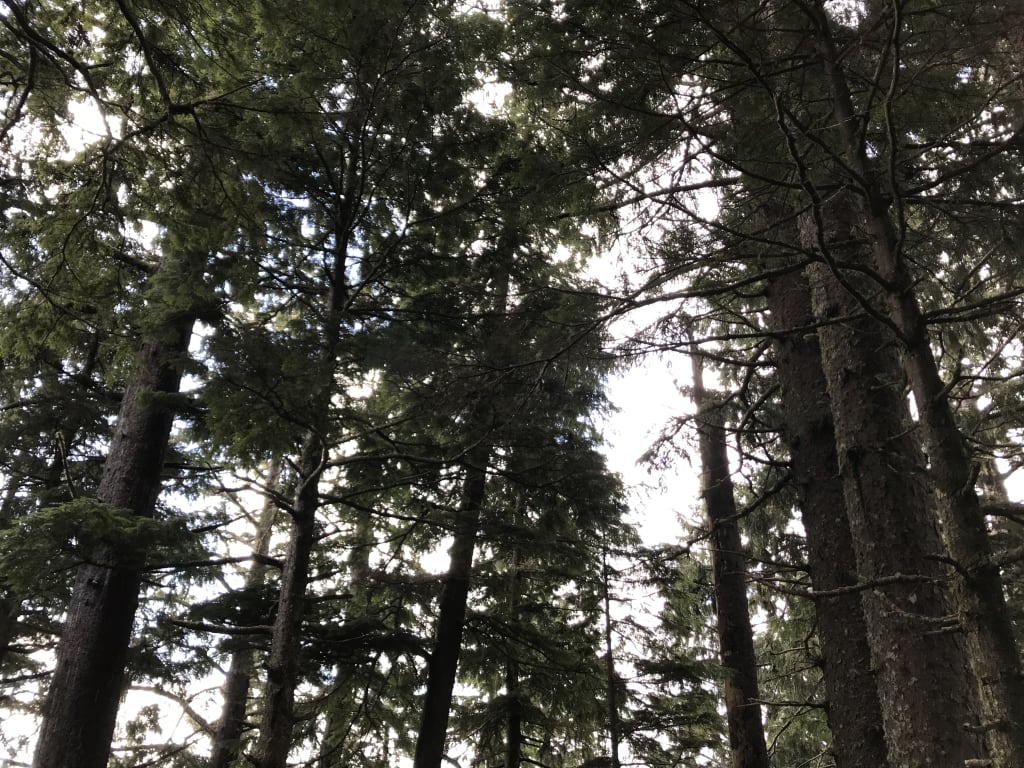
On the evening of November 24, 1971, a hijacker disappeared from the skies over Washington State with a ransom of $200,000 and parachute. Fifty years later, this is still the only unsolved hijacking in commercial aviation history.
I am the most sophisticated weapon the U.S. Army has ever built. I trained my mind and body for years, pushing beyond all conceivable limits. I was sent to the world’s most beautiful, exotic, and hostile regions. I faithfully completed every mission. I obeyed every order.
The last order I got was the one I could not obey. It is over.
I carefully plan my retirement. I cannot go quietly and survive. I need to do something dramatic. The people who know me and know what I am capable of will have no choice but to protect me. I will keep their secret; they will keep mine.
I choose the day before Thanksgiving, knowing exactly which phones will ring in empty houses, counting on the extra days’ head start.
I look out the window. I find my landmark by the light of the setting crescent moon: a faint glint of new snow on the high symmetrical cone of Mt. St. Helens above the cloud cover. I slip to the back of the plane. I open the door. The plane tilts wildly for a moment. I wait for the crew to regain control. It is spitting rain all around me, darker and windier than I expected. I jump. I feel the speed suck the air from in front of my face. I didn’t have a chance to thoroughly inspect my parachute, let alone pack it myself the way I prefer. That is how, in my first day as a civilian and a fugitive, I have my first serious accident.
I crash through the forest canopy, tangled in the twisted parachute lines and branches. I hear and feel the brutal crack of my left tibia as my right ankle buckles beneath me. I pass out from the pain.
When I come to, it is pitch black. I can hear the rain coming down all around me, but I can’t see a thing. Someone is tending to my injuries. Large hands. An animal smell. Musky and a little sour, like a lover’s breath after a long session of cunnilingus. My ankle is already splinted. They are setting my leg. I summoned the training that failed me before and do not cry out or lose consciousness again as the bones are forced into alignment. They cut away my clothes and tend to my bruises and scratches. I feel a moment’s fear when my modesty is shattered. When they loosen my chest binding, I automatically draw a deep and refreshing breath. My broken ribs scream their pain.
I feel myself to be someplace warm and dry. I feel safe. I fall asleep.
When I awake, it is morning. I am still blind. My vison is filled with a pearly light, like a fog within the eyeballs. My rescuer is spooning broth into my mouth. A large finger wipes a drip from my lower lip. They leave. I hear them lumbering away. The smell abates. Slowly my vision clears.
I assess my situation. I am in a crude shelter, like a wigwam, wrapped in army surplus sleeping bags. A metal canteen lays beside me. I take a tentative sip, taste metal in the cold water. A fire is smoldering nearby. My injuries are expertly, if primitively, splinted. Even so, it will be weeks before I can walk. My body is badly bruised and scratched. My rescuer has applied a soothing balm and wrapped me in paper bandages. In fact, my torso is a veritable decoupage.
Where did the bandages come from? I am covered with twenty-dollar bills. Seeing this, I laugh out loud. It hurts to laugh.
Some time later, I hear, then smell, my host returning. My vision clouds again, blurring. By the time they approach, I am blind again. They lift me and carry me away from the warmth. I feel cool air under me as they cluck and patter some strange language. It is time for my toilet. Thankful. They understand my needs.
I once read about a study in which researchers determined that babies dropped on their back will reach up and clench their fists, clutching at the mother, a remembered behavior from our arboreal forbears. As my blinded body is laid back on its pallet, I instinctively do the same. My hands find purchase in deep, warm fur. Lanolin coats my fingers.
They change my dressing. I block them with my arms. I protest. No more cash bandages. My backpack is in my arms now. My arms folded tight around it. No. No. It is mine. They understand. I hear fabric tearing. My suit, torn up for bandages. Soothing speech. My backpack is left within reach.
Night comes again. White-blindness fades to black-blindness. I am fed again. I sleep.
Day comes and I am alone again. Again, my vision comes back. My backpack is nearby, the remaining cash still intact. I inspect my strange shelter, furnished with a magpie’s collection of scavenged or stolen camping supplies. I want to see my host. They seem to be the source of my blindness. Do I breathe it? A disabling pheromone?
During a mission a few years ago I free-dove for sea mines. I walked among the angelfish and rays in the warm waters of the South Pacific. I held my breath for ten minutes at a time. I can do that again.
I hear them returning. I ready myself. Breathe in, breathe out. In. Out. In. Hold. I sit in calmness. My host approaches. Six feet tall and sheathed in golden fur. A human face with plain, broad features. Large eyes with irises in shades of bronze. Breasts like orbs of copper. Female. She smiles, then curls her face with concern at my lack of breath. I exhale slightly on the hand held to my face. Satisfied, she turns away. The way she moves reveals the sculpted musculature of her strong arms and legs. She tends to the fire, tends to the broth pot.
I must breathe again. My vision fades again. I’m adjusting to it. She places the bowl and spoon in my hands and lets me feed myself.
In the evening, I start to talk. We seem to be alone. I can’t learn the language if we don’t speak. I don’t speak words. I babble. I form my babbles from every language I know. English sounds, umlauted vowels, guttural fricatives. I slide sounds through the nine tones of Cantonese. I include implosive clicks from the Kalahari. I listen carefully to her response and shape my phonemes to what I hear. I need to keep her talking.
One day we have a visitor. I am still mostly blind, but I feel the presence of his large body. He (I assume) has a smoky smell and a low, rumbling voice. They sit on the other side of the fire and talk in low voices. I listen carefully to catch the shape of their language. I listen for the flow and cadence of their sounds. I try to catch the grammar and emotion. That evening, we eat meat. The bones strengthen the broth we keep simmering in near the fire.
I’ve trained my body to tolerate tear gas and nerve poisons. I will get over this blindness. Each day when she returns, I breathe shallowly to titrate my exposure. Slowly, I gain control over my vision. It is blurry. When darkness falls, the blindness overtakes me. A month passes (thirty tick marks scratched in a corner of the floor) and with it the winter solstice. The days will get longer now. I can see most of the time. For the first time, we make eye contact.
We have some language now. Her name is K’nei-ttah. She calls me, Dessie, Di-SAY! I like the shape of my name in her mouth, the way the it comes out like a yip. In the mornings K’nei-ttah makes an infusion from toasted acorns. Its taste reminds me of coffee. When the sun is high enough to burn off the fog and melt the frost riming the ferns, she leaves to forage.
I can walk a little. I take care of my own toilet. I tend the fire. I know I should do more to regain my strength, but it is too cold to leave our warm little hovel.
I ask K’nei-ttah for clothes. I explain that I can’t stay out in the cold with my furless body. The next day, she brings me a faded quilted housedress with a floral print and large plastic buttons. It reminds me of the ones worn by the pinch-mouthed widow in my childhood neighborhood who would spy on our games from behind closed blinds. The robe barely covers my nakedness and would never keep me warm. I start to protest. K’nei-ttah pulls a pinch of batting from the frayed elbow and holds it up against her downy winter underfur. K’nei-ttah has made me in the image of herself. She thinks she has given me a soft winter coat like her own to keep me warm. I accept the garment.
My wounds heal. A scent of spring is in the air. Winter is not quite over though: I haven’t yet scratched one hundred tick marks in the floor. K’nei-ttah tells me we will bathe. I’m still too weak to walk far so she heaves me over her shoulder in a fireman’s carry and sets out through the dense forest. Bouncing on her shoulder, I look back through the trees at the wan winter sun that doesn’t yet warm the air. She sets me down at the edge of a pool. Rising steam takes on a silvery hue in the low angle of the sun. We soak. The hot water chases the winter chill from our bones. K’nei-ttah cups water in her hands and spills it over my scalp. She gently cleanses my body, my pink new scars, the dark hair under my arms and between my legs.
When we get back to camp, the sun has just set. The temperature is dropping fast. K’nei-ttah adds an extra log to a fire. It gives an orange glow to our primitive home. I unfold the army sleeping bag on my narrow bench by the fire.
“No.” says K’nei-ttah, in my language. She gestures me toward her broad bed. I’m not sure if it’s an invitation or a command. I climb between the fur covers and find silk sheets. The silk is from a parachute. My parachute. K’nei-ttah joins me.
I look into K’nei-ttah’s copper-colored eyes for a moment, but at close range it is hard to hold the blindness at bay. She kisses me and I surrender to the gauzy cataracts that overtake my vision. The loss of sight heightens the tactility of the moment: the soapy feel of K’nei-ttah’s fur wrapped around my fingers, her broad hand supporting me and exploring me. Later, I curl against belly hair that is softer than the pelts that cover us.
Spring comes. I forage with K’nei-ttah now. Me in my crazy housedress and dress shoes from the flight. The shoes, without socks, give me blisters. I start to go barefoot. My feet are numb in the cold morning dew and start to develop callouses. Soon, going barefoot feels more natural. I get used to the housedress and cease to feel the cold.
Every day is warmer. We find more greens to eat. Young ferns – fiddleheads – and dandelion greens. We haven’t had meat for weeks. K’nei-ttah has a slingshot, but she is a lousy shot. I learn how to use it and start to fell squirrels and an occasional rabbit. K’nei-ttah skins them and roast them. Our routine feels natural and complementary. We share a bed.
One day, another of her kind visits our forest home. Seven feet tall, with darker, coarser fur. Eyes set back under a broad forehead. A mouth curled into a sneer. Male. They talk by the fire, their voices low and their speech fast so I can’t follow. He gives us a leg of deer. He approaches me. I greet him in K’nei-ttah’s language, but he doesn’t reciprocate. He looks me up and down. I stand for his inspection. His breath is musky and smoky, something I remember from the last visit when I was still blind in their presence. He nods, grunts, and heads off into the forest.
“Who was that?” I ask.
“My husband.”
“Your husband?” I ask, startled and not a little scared. I still understand so little of their language and culture.
“I’ll be returning to the village soon. You come with me.”
How did I never wonder where others of her kind were?
“This is my mother-year.” She explains the tradition. Her children grown, she has fulfilled her obligations to her family and community. Women at this stage of life take a year off, away from the village. The mother-year breaks the dependency of her adult children and to allow her to prepare for the spiritual duties of elderhood.
Now K’nei-ttah’s mother-year is almost over and she intends to take me back to her village. What does she see me as? Lover? Slave? Pet? Friend? That night, we sleep in the same bed in the parachute sheets, but with a space between us.
I wake up with a stabbing pain in my abdomen. It takes me a moment to recognize it. My period. In my career, the monthly inconvenience was suppressed with hormone injections. Now it has returned, full force. I slide from the bed in the pre-dawn light.
K’nei-ttah wakes, and with some awkwardness I explain my need to her. Without asking permission, she tears my housedress into strips to absorb the blood.
“What will I wear now?”
K’nei-ttah shakes her head vigorously, No. She tugs a handful of her own white winter fur loose from her body. In fact, she has been shedding lately, and white tufts are all around us. We don’t need our winter coats anymore, she is saying.
More than the tick marks I still scratch at the edge of the floor, the return of my monthly cycle reminds me of the passage of time. My body has a rhythm of its own. When I fell from the sky, I had plans. There is a life that I meant to return to. There are friends who surely have given me up for dead. There are G-men who surely have not. Most of all, there is my dear girl Penny. Faithful and forgiving, I know she is still waiting for me. I have felt happy here, and free, but was I really? Like the pheromones that hide my sight, there were some things I didn’t see. At home with Penny, I can be free and understood and loved. For her, I live with the disguises that let me slip through the world as unnoticed as Bigfoot raiding a clothesline.
My yearning for my own kind grows. I also realize that if I follow K’nei-ttah to the village, I may not be allowed to leave. I will know too much. I start to see myself as a hostage. It is not my first time in captivity. K’nei-ttah’s husband returns. I look him in the eye and speak. I must leave, I say. I assure him that I know nothing. I hint at secrets of my own.
He and K’nei-ttah leave together and they don’t come back that night.
She returns late the next afternoon with clothes for me. Jeans and a dark T-shirt. Men’s work boots, a size too big. A billed cap advertising “AAA Auto Repair.” We set them aside and pretend they have no meaning. We eat our dinner in silence. We sleep together, letting our bodies say the things we have no words for.
The next morning, remembering how she found me, K’nei-ttah tears long strips from the parachute. I raise my arms and let her bind my chest. I drop the T-shirt over that and step into the jeans. I stuff the cap into the top of my backpack and carry the boots outside. K’nei-ttah escorts me through the woods. The sun is high and steam is rising from the dank moss when she sits on a log and will go no further. I hear the swish of a passing car about half a mile away. I walk in that direction without looking back.
I find the highway and follow it to a small town. I pause to put on the boots and cap. I make my way to a gas station with a small store. I buy a cup of hot black coffee in a Styrofoam cup and a pack of smokes to share or trade on the road. I shoplift a tube of toothpaste and a pair of socks. I let myself into the restroom around the side of the building and wash up in the stained white sink. An FBI “Wanted” poster is taped up next to the dirty steel mirror. I look from the mirror to the sketch. It is not a bad likeness. I pull the cap low over my eyes.
I hoist my backpack and head out to the road. I walk backward down the fog line, looking for a friendly truck. When I see one, I put my thumb in the air: just another clean-shaven man in need of a haircut, trying to get home.
About the Creator
Keep reading
More stories from Emily Hackett and writers in Fiction and other communities.
from death into life
Young Aldin of Wiloh had never contemplated death. It was almost strange — so many around him had the tendency to obsess over it, to clamor and claw almost desperately at their own perceptions of the end to know death as much as they could: when it would come, why it would come, where it would take them when it did.
By angela hepwortha day ago in Fiction


Comments
There are no comments for this story
Be the first to respond and start the conversation.