
In New York, No One Cares If You Are Fat
A Short Story About Weight Loss and Weight Gain

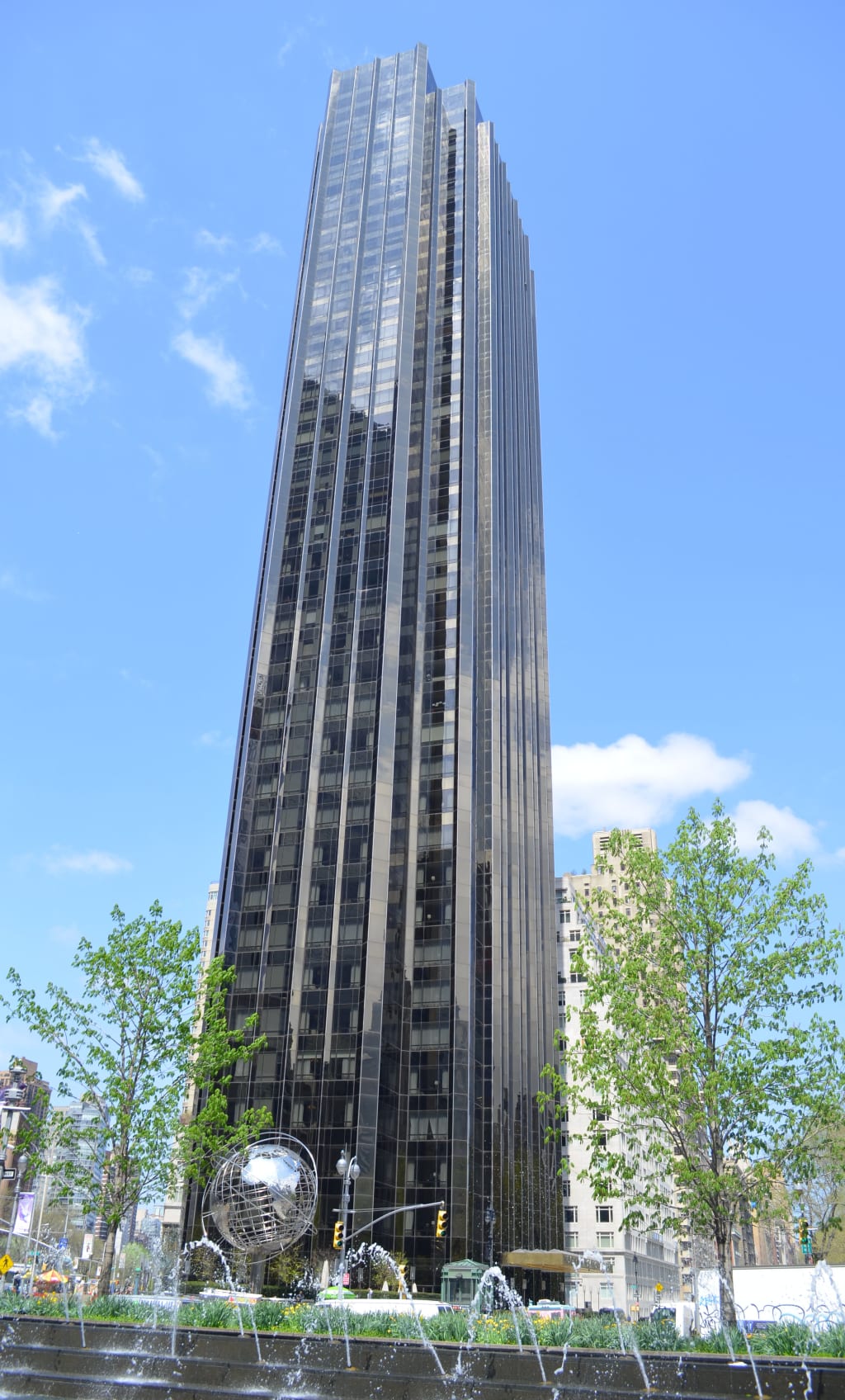
The first thing New York taught me was indifference.
Not cruelty. Not kindness. Indifference.
I arrived on a gray morning in February, carrying two suitcases and a body that had always arrived before me. At JFK Airport, people moved with the speed of purpose. They walked past me without slowing down, without looking twice, without calculating my size the way people had done all my life.
For a moment, I thought something was wrong.
Back home, I was never invisible. My body entered rooms before my name did. Strangers evaluated me openly, like a public statistic. Concern, judgment, pity—these were the languages I understood.
But here, no one even noticed I existed.
It was unsettling.
And, slowly, it was liberating.
My first apartment was not really an apartment.
It was a room carved out of another room in Elmhurst, Queens. The landlord had divided the living room with a thin plywood wall. On one side lived a graduate student from Colombia who spoke softly into his phone at night. On the other side was me, my bed pushed against a wall that vibrated whenever the subway passed underground.
The room was so narrow that when I stood up, I could touch both walls with my hands.
At night, I lay awake listening to the city breathe. Sirens in the distance. Footsteps above me. The constant hum of something larger than myself.
Back home, my body had always felt too large for the world.
Here, it felt small.
Not physically.
Existentially.
New York did not adjust itself to accommodate me. It did not shrink its expectations or soften its edges. It existed independently, completely uninterested in my insecurities.
This was new.
I had spent my entire life believing my body was the central fact of my existence.
New York disagreed.
My first job was at a small takeout restaurant on Canal Street.
The kitchen was always hot. Oil crackled. Orders piled up faster than we could fill them. The owner, Mr. Chen, spoke in short sentences that functioned more like commands than language.
“Faster.”
“Careful.”
“Customer waiting.”
He never mentioned my weight.
Not once.
He cared about one thing: whether I worked hard.
At first, I waited for the moment.
The joke. The comment. The casual insult disguised as humor.
It never came.
When I carried heavy boxes, he nodded approvingly.
When I stayed late to help clean, he handed me leftover food.
When I made mistakes, he corrected them sharply, but without contempt.
I was not “the fat employee.”
I was simply an employee.
It was a strange relief, like being allowed to exist without explanation.
The subway was where I noticed it most.
In other cities, I had always been aware of my body in public transportation. I calculated how much space I occupied. I avoided eye contact. I apologized silently for existing.
But in New York, everyone was too busy surviving their own lives.
A woman in high heels leaned against the pole, her eyes closed in exhaustion.
A construction worker slept with his mouth open.
A teenage boy practiced English vocabulary under his breath.
A man in a suit cried quietly, wiping his eyes with the back of his hand.
No one looked at me.
Not because I was invisible.
Because I was ordinary.
For the first time in my life, fat was not an identity.
It was a detail.
One evening, during rush hour, the train was so crowded that my body pressed against strangers on all sides.
I froze.
Back home, this would have been a moment of humiliation. I would have imagined their discomfort, their judgment, their silent resentment.
But no one reacted.
The woman in front of me continued scrolling on her phone.
The man behind me listened to music.
Someone yawned.
Someone coughed.
Someone laughed at something only they could hear.
No one blamed me for the lack of space.
Because there was no space for anyone.
New York did not single you out.
It overwhelmed everyone equally.
And in that equality, there was dignity.
On my day off, I walked through Manhattan without direction.
The city revealed itself slowly.
I saw a ballerina smoking a cigarette outside Lincoln Center, her posture still perfect even in rest.
I saw a man with no legs moving faster than pedestrians on a wooden board with wheels.
I saw a woman yelling into the air, arguing with someone only she could see.
I saw a couple kissing on a street corner, completely unaware of the world around them.
Everyone was different.
Everyone was imperfect.
Everyone was allowed to exist.
My fat was no longer exceptional.
It was just one variation among millions.
The real turning point came in a clothing store.
I almost did not enter.
Years of experience had taught me that clothing stores were places of quiet rejection. Sizes ended before they reached me. Salespeople avoided eye contact. Mirrors became instruments of truth I did not want to face.
But this time, I walked inside.
A young employee approached me.
“Can I help you find anything?” she asked.
Her voice was neutral.
Not forced politeness.
Not concealed judgment.
Just neutrality.
“I’m just looking,” I said.
She nodded and walked away.
She did not evaluate my body.
She did not measure my worth against available fabric.
She simply allowed me to exist in the space.
I found a shirt that fit.
When I looked at myself in the mirror, I realized something unexpected.
My body had not changed.
But my relationship with it had.
For the first time, I was not asking whether I deserved to wear it.
I was asking whether I liked it.
This was new.
Loneliness in New York was different.
Back home, loneliness felt like exclusion.
Here, loneliness felt like freedom.
No one asked where I was going.
No one asked why I was alone.
No one asked what I was supposed to become.
I could walk for hours without explanation.
I could sit in a café and watch people live their lives without needing to justify my own.
In New York, anonymity was not absence.
It was permission.
Permission to reinvent yourself without witnesses.
Permission to exist without history.
Permission to be unfinished.
One winter night, it began to snow.
I stood on the sidewalk watching flakes fall under the streetlights. People hurried past, heads down, focused on destinations more important than weather.
A young woman slipped on the ice and laughed at herself.
A man offered his hand to help her up.
They smiled.
Then they walked away in opposite directions, strangers again.
The moment was small.
Temporary.
But real.
New York was full of these moments.
Unremarkable.
Unrecorded.
Unjudged.
For the first time, I understood something profound.
In a city where everyone was struggling, no one had the luxury of caring about your insecurities.
They were too busy carrying their own.
Months passed.
My body remained largely the same.
But my life expanded.
I spoke more.
I walked with less hesitation.
I occupied space without apology.
Not because I had become confident.
But because I had become irrelevant.
And irrelevance was freedom.
When no one is watching, you are free to become yourself.
One afternoon, I caught my reflection in a subway window.
For years, reflections had been enemies. They revealed the distance between who I was and who I believed I needed to be.
But this time, I saw something different.
I saw a man standing calmly.
Not hiding.
Not apologizing.
Just existing.
Nothing about my body had fundamentally changed.
But something about my presence had.
I no longer believed that my life would begin later.
I understood that it had already begun.
New York did not love me.
It did not encourage me.
It did not comfort me.
It simply ignored me.
And in that indifference, it gave me something no one else ever had:
It gave me back myself.
Because when no one cares if you are fat, you are forced to confront a deeper question.
If your body is no longer the center of your story, then what is?
Your work.
Your choices.
Your courage.
Your life.
In New York, no one cared if I was fat.
And that was the most important thing that ever happened to me.
Because for the first time, I stopped caring too.
Not out of denial.
But out of understanding.
My body was not my destiny.
It was just where my life happened.
About the Creator
Peter
Hello, these collection of articles and passages are about weight loss and dieting tips. Hope you will enjoy these collections of dieting and weight loss articles and tips! Have fun reading!!! Thank you.
Two cycles of the same direction
October 1, 1941 Majdanek concentration camp was nestled on the outskirts of the city of Lublin. It was an eyesore but it seemed as though there was nothing out of the ordinary. “They are criminals, they should not be here anyway. Are they even true citizens? They must go back to wherever they belong. Criminals can go there to work. Make themselves useful,” Marta, a mother of three, says to a reporter. She sniffled into her handkerchief, patting a young boy shining shoes near the city’s barbershop. “I have my own household to run. I can’t really afford to worry about these… people. They aren’t my family.” The sullen reporter, scorned for their less than indifferent attitude toward the Jews, goes about the entire city looking for the common man’s opinion of the new opening of the concentration camp near their city. To the local community leaders, like the local police, school administrators and local authorities, they saw the trains passing through with the camp workers being processed into the camp as a matter of law and order. Mothers took care of the crying babies with a hand over their eye and a scarf over their faces. The young cried as well as the old. The old got carted off as the young. The trains ran full steam ahead with more passengers that got checked in but not ever checked out. Not that anyone ever asked about the return tickets. “I have just focused on my family at this point and our survival. I assume after their work is completed they take the same train to their original home. Or whatever country is willing to take them on. I don’t think about it much, I’m busy with work,” a man that worked for the local government office stated when asked about German occupation of Poland. “They have those ghettos for the Jews, I believe they will leave one way or another. I don’t like the look of that in my city.” After days of research and talking to people around the city, the sullen atmosphere of the reporter became clear. Everyone was acting normally as though nothing had changed. The horror of what was happening next door still didn’t hit home. The reporter went home, sat down and cried. 78,000 people were killed in that camp, so close to a city that had more or less acted like nothing was happening other than their daily, boring, normal lives. July 3, 2025 The South Florida Detention Facility, nicknamed Alligator Alcatraz, has officially opened today. Trump said, "We have a lot of bad criminals that came into the country. ... It was an unforced error." A reporter that was living in that part of Florida went to visit the new detention facility. He heard Trump say that we will ‘teach them to run away from alligators’. If someone got hurt or injured by an alligator or wildlife, how long would it take to find them? These questions were swallowed by the traffic of moving buses, trucks and the working class that had no interest whatsoever in answering anything beyond what was for dinner that night. “They shouldn’t be here. They are all criminals. They need to go back to a prison, another country or to where they were born. We don’t need them or want them,” a man that worked in the local government offices (sanitation) had said. “It’s not my place to tell the authorities what to do. It’s not my place to worry about it. This administration knows how to handle it. I believe in this country and my government,” a young woman named Martha said, taking her kids to school with a hurried expression. The buses, trains and cars all carried on. The reporter cried alone in private protest.
By Melissa Ingoldsby7 days ago in Fiction




Comments
There are no comments for this story
Be the first to respond and start the conversation.