
Drawing Back the Lines of Life
A Story of Retreat, Reflection, and the Courage to Begin Again

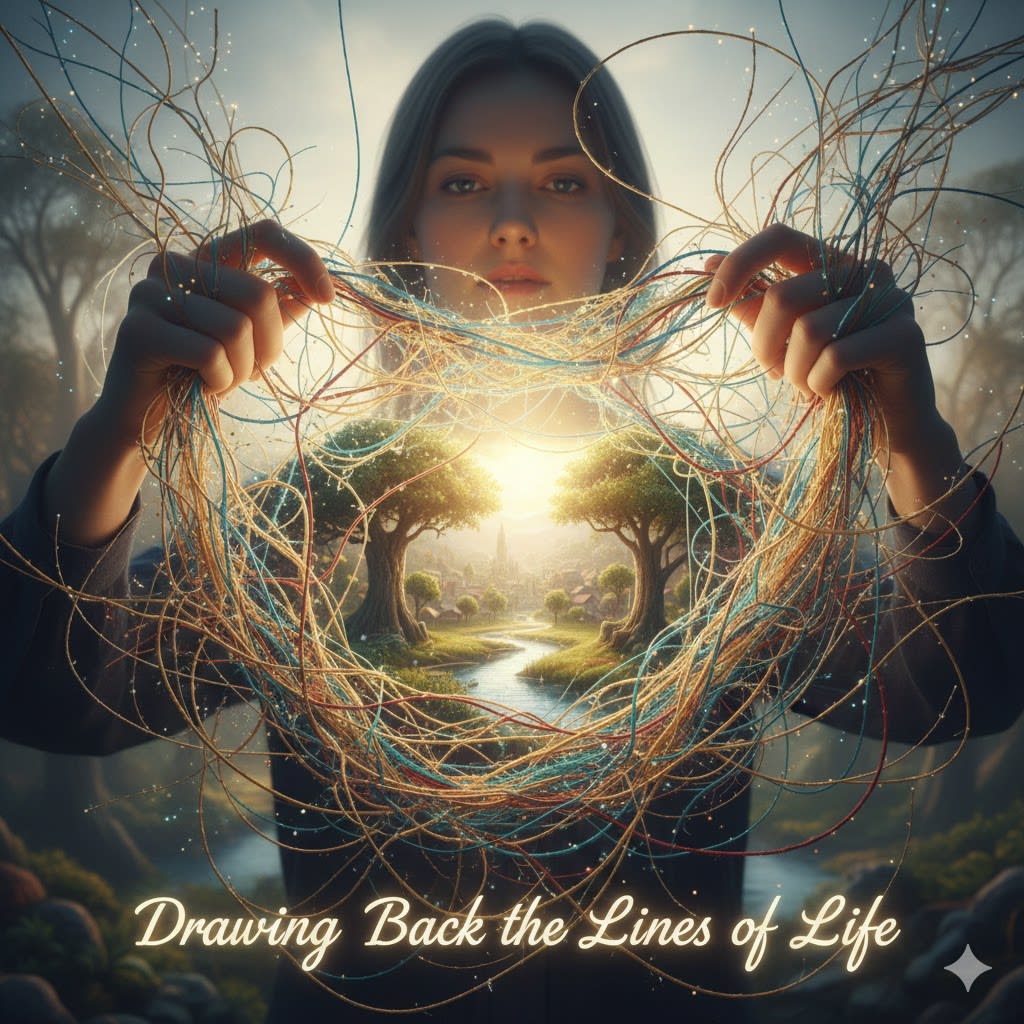
The first time Elias heard the phrase drawing back, it was not spoken aloud. It appeared instead in the slow movement of his own hands, hovering above a blank sheet of paper, uncertain whether to move forward or retreat. He was a draftsman by trade, a quiet observer by nature, and for most of his life he believed that progress meant only one thing: pushing ahead, adding lines, filling spaces, refusing to erase. Drawing back felt like failure. Like fear.
That belief followed him from childhood into adulthood, until the day the city itself seemed to ask him to pause.
Elias lived in a narrow apartment overlooking a river that had once been a center of trade and noise. Now it flowed quietly, as if it too had learned the value of restraint. Each morning, Elias sat by his window and sketched the same view—the bridge, the slow water, the cracked stone embankments. His sketches were technically perfect, admired by colleagues and clients alike, yet something in them felt unfinished. Not incomplete, but closed. There was no breath in them.
At work, Elias was known as reliable. He met deadlines, followed instructions, and rarely questioned the direction of a project. When asked for revisions, he complied without protest, redrawing lines, tightening angles, refining details. He was always moving forward, but never deeper. Over time, this constant push began to wear on him, like a pencil pressed too hard against paper, leaving grooves that could not be undone.
One evening, after a particularly long day, Elias found himself unable to draw at all. His hand trembled above the page, and no amount of effort produced a line that felt right. Frustrated, he closed his sketchbook and went for a walk along the river.
The city was unusually quiet. Streetlights reflected in the water like unfinished ideas, stretching and breaking with each ripple. As Elias walked, he noticed an elderly man sitting on a bench, painting with watercolors. The man worked slowly, often stepping back from the paper, tilting his head, then returning to add a single, gentle stroke.
Curious, Elias stopped to watch.
“You draw like someone who listens,” Elias said without thinking.
The man smiled. “I paint like someone who draws back.”
Elias frowned. “Draws back?”
“Yes,” the man replied, rinsing his brush. “Sometimes the best line is the one you don’t make. Sometimes you have to step away to see what the picture truly needs.”
They spoke for a while. The man explained that he had once been a successful architect, always building, always expanding, until one day his designs collapsed under their own ambition. He learned, painfully, that progress without reflection leads only to exhaustion.
“Drawing back isn’t quitting,” the man said softly. “It’s choosing where your energy belongs.”
That night, Elias returned home unsettled but thoughtful. He opened his sketchbook again, stared at the blank page, and for the first time did nothing. He let the silence sit with him. He closed the book without drawing a single line, and instead went to sleep.
The next morning, Elias made an unusual decision. He took a week off work.
At first, the absence of routine made him restless. His hands itched to draw, to produce something measurable. But slowly, as the days passed, he began to notice things he had long ignored: the way light changed the color of walls throughout the day, the subtle cracks in sidewalks that formed accidental patterns, the rhythm of his own breathing when he stopped rushing.
On the third day, Elias returned to his sketchbook. This time, instead of drawing the city, he began to erase. He removed old sketches, rubbed out heavy lines, softened shapes. At first, it felt wrong—destructive, even. But as he worked, something unexpected happened. Beneath the erased marks, faint impressions remained, like memories embedded in the paper. The page told a richer story than before.
Elias realized then that drawing back did not mean abandoning effort. It meant honoring what already existed and making space for what truly mattered.
When he returned to work, his approach changed. He asked questions. He suggested fewer details instead of more. When a project felt overcrowded, he recommended simplification, even if it meant discarding hours of work. Some colleagues resisted, but others noticed that his designs felt clearer, more intentional.
One afternoon, his manager asked him what had changed.
“I learned how to step back,” Elias said. “Not to fall behind—but to see better.”
Outside of work, Elias began drawing again by the river. This time, he allowed mistakes. He left blank spaces. He stopped mid-sketch when it felt complete instead of forcing a finished look. People who passed by often paused, drawn not by technical perfection, but by the sense of openness in his work.
Months later, Elias met the old painter again on the same bench. He showed him his new sketches.
The man nodded approvingly. “You’ve learned,” he said. “Life isn’t a straight line. It’s a series of advances and retreats. Knowing when to draw back is wisdom.”
As the sun dipped below the bridge, Elias understood that drawing back was not an ending, but a rhythm—a necessary counterbalance to movement. In art, in work, in life itself, progress was not always about pressing forward. Sometimes, it was about pausing, reflecting, and choosing the next line with care.
And for the first time in years, Elias felt that his life, like his drawings, finally had room to breathe.
About the Creator
One Unchecked Box
"Republished" because it was the only way to add the embed for the newly recorded audio version of this story due to the Top Story badge. Plus it serves as a nice, informal announcement of the podcast's revival for another season (go subscribe!):
By Stephen A. Roddewig6 days ago in Fiction



Comments
There are no comments for this story
Be the first to respond and start the conversation.