
The Echoes of Bitter Harvest
A Tale of Family Legacies and the Weight of Unspoken Truths

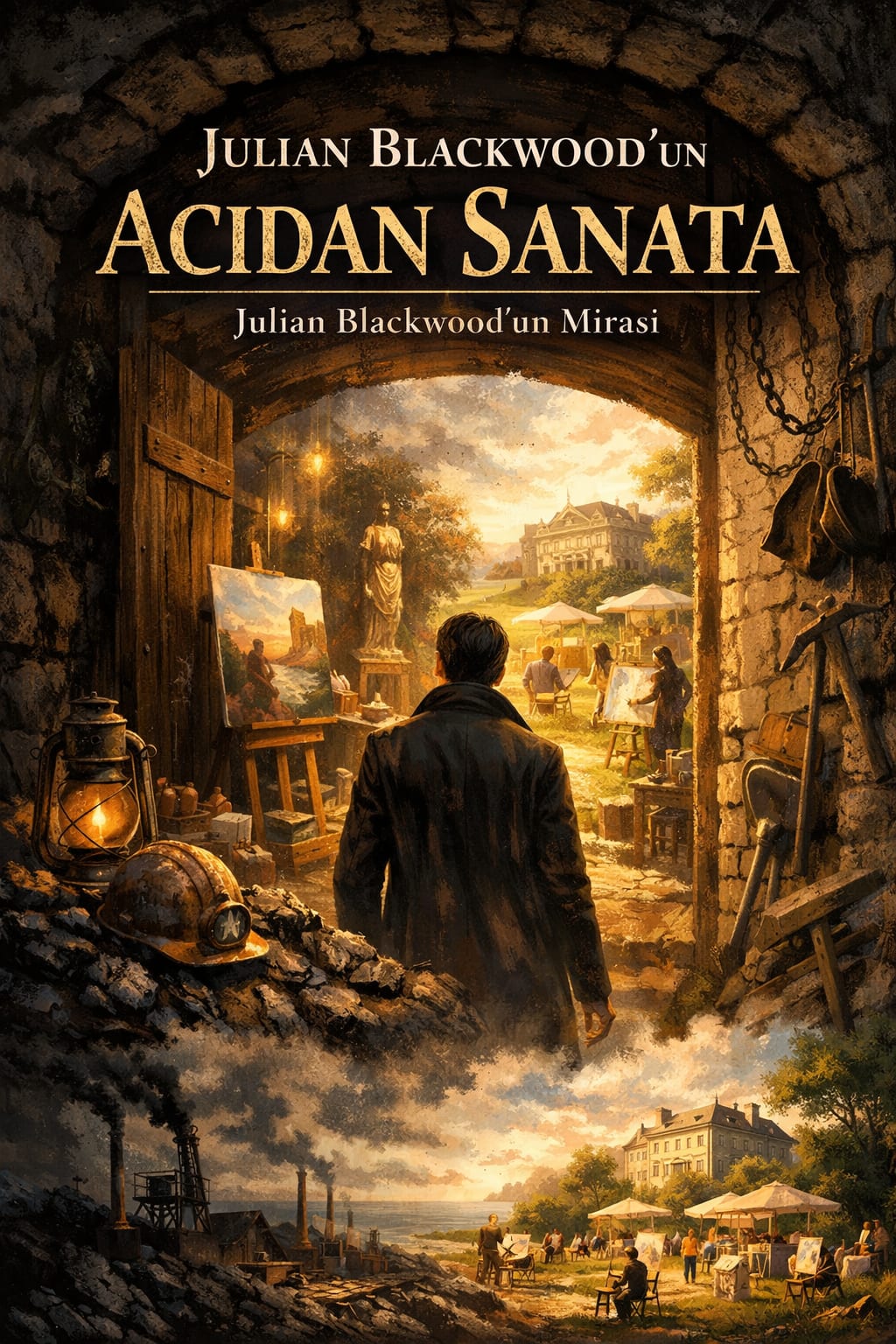
The sun hung low over the rolling hills of the Blackwood Estate, casting long, distorted shadows that looked like grasping fingers reaching for the manor house. Julian Blackwood stood on the obsidian-tiled balcony, his fingers wrapped tightly around a glass of amber liquid that had long since grown warm. At thirty-two, Julian was the sole heir to a fortune built on coal, sweat, and a century of secrets. But as he looked out over the dormant vineyards that his father had insisted on planting in his final years, all Julian felt was the crushing gravity of a legacy he never asked for.
The estate had been silent since the funeral three months ago. His father, Silas Blackwood, had been a man of iron and silence. He commanded rooms without speaking and broke spirits with a single glance. Now, he was just a name carved into a cold marble slab in the family cemetery at the edge of the woods. Julian had spent most of his adult life in London, trying to drown the Blackwood name in the noise of the city, but the lawyers had been persistent. The estate was in disrepair, the accounts were hemorrhaging money, and there was "the matter of the cellar."
Julian turned back into the dimly lit study, where the air tasted of dust and old paper. Clara, the estate’s housekeeper for forty years, stood by the door, her hands folded neatly under her apron. She was the only person who had ever truly known Silas, yet she spoke of him as if he were a ghost long before he died.
"The key is where it has always been, Master Julian," she said softly, her voice like dry leaves skittering across stone. "Under the bust of Marcus Aurelius. Your father said you would know when the time was right."
"And you think now is the time, Clara?" Julian asked, his voice laced with a bitterness that matched the unharvested grapes outside.
"The house is breathing again, Julian. It’s waiting for a decision. You cannot lead a life while looking over your shoulder at a locked door."
Julian found the key—a heavy, wrought-iron piece that felt unnervingly cold. He made his way down to the kitchens and then further, into the bowels of the manor where the stone walls began to weep with moisture. The cellar door was thick oak, reinforced with steel. As the lock turned with a resonant thud, Julian felt a shiver that had nothing to do with the subterranean chill.
He had expected to find crates of rare vintages or perhaps hidden ledgers detailing his father’s more unscrupulous business dealings. Instead, the room was filled with paintings. Hundreds of them. They weren't the stiff, formal portraits that lined the hallways upstairs. These were vibrant, chaotic, and hauntingly beautiful. They depicted scenes of joy, of vibrant marketplaces, and faces filled with a light Julian had never seen in his father’s eyes.
In the center of the room sat an easel holding a half-finished portrait of a woman. She had dark, cascading hair and a smile that seemed to hold the secrets of the universe. Julian approached it, his breath hitching. In the corner of the canvas, there was a signature that wasn't "Blackwood." It was signed "Silas," but in a script so fluid and passionate it seemed impossible.
Beside the easel lay a stack of letters tied with a silk ribbon. Julian sat on a dusty crate and began to read. They were addressed to a woman named Elena, a common weaver’s daughter from the village. The letters revealed a side of Silas Blackwood that was a total stranger to Julian. This Silas was a poet, a dreamer who had spent his nights in this cellar painting the world he wasn't allowed to inhabit.
"I wear the iron mask of my father during the day," one letter read, "so that I may buy the paints to capture your light at night. They tell me a Blackwood must be a pillar of industry, but my soul is nothing but a canvas waiting for your touch."
Julian realized with a jolt that these letters were dated during the time his father was married to Julian's mother, a cold socialite who had lived a separate life in a separate wing of the house. The tragedy of Silas Blackwood wasn't that he was a cruel man, but that he was a man who had strangled his own heart to satisfy the demands of his name. He had spent his life building a cage, and Julian was the bird intended to inherit it.
The letters ended abruptly twenty years ago. The last one was never sent. It spoke of a choice—to leave it all behind, to run away with Elena and the child she was carrying. But Silas had stayed. He had chosen the coal, the manor, and the "Blackwood legacy." He had traded a life of color for a life of gray, and in doing so, he had become the very monster he feared.
Julian looked at the paintings, then at the gray stone walls. He thought of his own life in London, his refusal to settle down, his constant need for distraction. He had been running away from his father, not realizing that he was just running toward a different kind of void.
The realization hit him like a physical blow. The "bitter harvest" wasn't just the rotting grapes in the field; it was the life Silas had reaped from the seeds of duty and fear.
Clara appeared at the top of the stairs, her silhouette framed by the light from the kitchen. "Did you find what you were looking for, Julian?"
"I found a man I never knew, Clara. And a warning I can't ignore."
Julian spent the next few days in a daze, walking the boundaries of the estate. He looked at the villagers in the valley below, wondering which of them might be the sibling he never knew he had. He looked at the ledger books and saw the numbers for what they were: a tally of souls bought and sold.
On the third night, Julian made his decision. He wouldn't sell the estate to the developers who wanted to turn it into a luxury resort. He wouldn't continue the mining operations that had scarred the land for a century. Instead, he would turn the Blackwood Manor into something else entirely.
He contacted a foundation for the arts. He made plans to turn the sprawling grounds into a sanctuary for painters, writers, and musicians. The manor house would become a gallery, and the "cellar of secrets" would be opened to the light. He would use the remaining Blackwood fortune to fund scholarships for the children of the miners his family had exploited.
It was a radical plan, one that would likely see him stripped of his standing in the London circles he once craved. But as he stood in the vineyard, tearing the first of the dead vines from the earth to make room for new growth, he felt a lightness in his chest.
Clara watched from the porch, a small, knowing smile on her face. The house didn't feel like a tomb anymore. The wind through the trees sounded less like a sigh and more like a breath of relief.
Julian took the portrait of the woman with the dark hair and hung it in the grand entrance hall, right where his grandfather’s stern portrait used to be. He signed the final papers to dissolve the coal company.
"The harvest is over, Father," Julian whispered to the empty room. "It’t time for something new to grow."
As the sun set once again over the hills, the shadows didn't look like fingers anymore. They looked like paths, leading away from the dark and toward a horizon filled with colors Silas Blackwood had only ever dared to paint in the dark.
About the Creator
Alpha Cortex
As Alpha Cortex, I live for the rhythm of language and the magic of story. I chase tales that linger long after the last line, from raw emotion to boundless imagination. Let's get lost in stories worth remembering.
Keep reading
More stories from Alpha Cortex and writers in Families and other communities.
Beneath the Golden Leaves
It all began on a crisp autumn day. The ground was covered in a carpet of golden and orange leaves. The sun filtered through the branches of a massive oak tree, casting warm hues over the park. While people hurried past, three figures sat quietly on an old wooden bench, detached from the world around them.
By Alpha Cortexabout a year ago in Families
Dua to Make Him Think of Me
In matters of the heart, it is natural to wish that someone you care deeply about remembers you, thinks of you often, and values your presence in their life. Whether it’s someone you love, your husband, fiancé, or a person you hope to build a halal future with, turning to Allah through a sincere Dua to Make Him Think of Me is the most spiritually guided step you can take.
By Karm Aalign Muslim - Dua For Love Back - Wazifa For Love Back - Dua to Make Someone Love youabout 12 hours ago in Families
Top 10 Common Mistakes to Avoid in High Net Worth Mediation
High net worth mediation carries weight that extends far beyond numbers on a spreadsheet. When substantial assets, businesses, properties, investments, and family interests are involved, the process demands clarity, discipline, and foresight. It is not simply about dividing wealth. It is about protecting stability, preserving dignity, and shaping the next chapter of life with intention. Yet even intelligent, capable individuals make avoidable mistakes that complicate negotiations and increase financial and emotional cost. Understanding these patterns is the first step toward avoiding them.
By Dina Haddada day ago in Families




Comments
There are no comments for this story
Be the first to respond and start the conversation.