The Night Everything Fell Apart
The Night Everything Fell Apart
Ubaid
I used to believe that life collapses slowly—like a building with cracks that warn you before it falls. I was wrong. Sometimes, everything shatters in a single night.
It was a Thursday evening when the sky looked strangely heavy, as if it knew something I didn’t. I remember sitting at my desk, pretending to work while my mind wandered through unfinished conversations and silent disappointments. My phone lay beside me, face down, as if hiding from the truth it was about to deliver.
At 9:17 p.m., it rang.
I almost didn’t answer.
It was my younger sister, Areeba. She rarely called me at night. Her voice trembled when I picked up. “Bhai… you need to come home.”
There are certain tones in a person’s voice that freeze your blood. This was one of them.
“What happened?” I asked, already standing up, my heart racing.
“Just come. Please.”
The drive home felt endless. Every red light felt personal, as though the universe had chosen to delay me. My mind ran through a hundred possibilities—none of them good. By the time I reached the house, my hands were shaking.
The front door was open. That was the first sign that something was wrong.
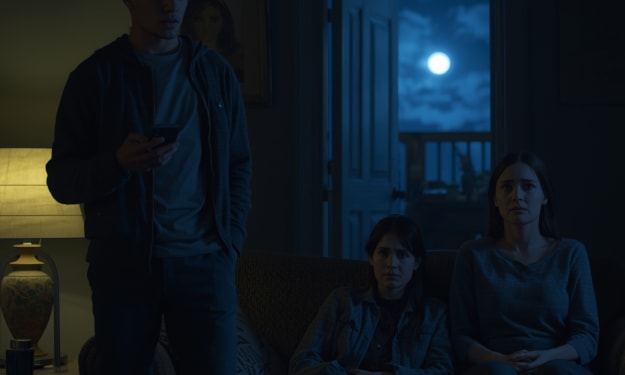
Inside, the living room lights were on, but the house felt darker than ever. My mother sat on the couch, her face pale, her hands wrapped tightly around her scarf. Areeba stood beside her, eyes red from crying.
“Where’s Abbu?” I asked.
No one answered.
That silence said more than words ever could.
“He left,” my mother finally whispered.
Left.
The word didn’t make sense. My father wasn’t the kind of man who “left.” He was the quiet pillar of our home—the one who paid the bills, fixed broken taps, and watched the news every night at exactly 10 p.m.
“He said he couldn’t do this anymore,” Areeba said, her voice cracking. “He packed a bag and walked out.”
It felt like the floor shifted beneath me.
For years, I had noticed the tension. The late-night arguments behind closed doors. The cold silences at dinner. The forced smiles during family gatherings. But I had convinced myself it was temporary. Every family has problems, I thought. We’ll get through it.
That night, I realized denial can be a dangerous comfort.
“Did he say where he’s going?” I asked.
My mother shook her head. “He just said he needs peace.”
Peace.
The word echoed bitterly in my mind. What about us? What about the peace of the family he was leaving behind?
I walked into my parents’ bedroom. The cupboard door was slightly open. Half his clothes were gone. His watch box was empty. On the bedside table, there was a folded piece of paper.
It wasn’t addressed to anyone.
Just a few lines in his familiar handwriting:
I tried. I really did. But sometimes staying hurts more than leaving. Forgive me.
I read it three times, hoping the meaning would change. It didn’t.
Anger rose inside me like fire. How could he walk away? How could he leave my mother to explain this to relatives, to neighbors, to a society that thrives on whispers? How could he leave Areeba, who still needed him to check her math homework?
And how could he leave me—with the sudden weight of being “the man of the house”?
That night, everything fell apart—not just our family structure, but the illusions I had built around it.
Around midnight, the power went out.
Normally, we would joke about the timing. That night, no one said a word. The house sank into darkness, lit only by the faint glow of streetlights filtering through the curtains.
I sat on the floor beside my mother. For the first time in my life, she looked small.
“I failed,” she murmured.
“You didn’t,” I said quickly, though I wasn’t sure what I believed. “This isn’t your fault.”
But blame has a way of creeping into broken spaces. It fills the gaps with questions that have no answers.
Around 2 a.m., my phone buzzed.
A message from Abbu.
Take care of them.
That was it.
No explanation. No location. No promise to return.
Just a responsibility handed over like an inheritance.
I stared at the screen, my chest tight. I wanted to call him, to shout, to demand answers. Instead, I turned the phone off.
Because deep down, I knew this wasn’t just about one fight or one bad day. This was years of unspoken pain finally spilling over.
As the night stretched on, reality settled in.
Tomorrow, I would have to face relatives asking uncomfortable questions. I would have to manage finances I barely understood. I would have to be strong for my sister when I felt like collapsing myself.
But in that darkness, something unexpected happened.
We talked.
For the first time in years, my mother opened up about her loneliness. About how silence had replaced partnership. About how pride had stopped both of them from seeking help.
Areeba admitted she had heard more arguments than we realized.
And I confessed that I had seen the cracks but chose to ignore them because it was easier than confronting the truth.
The night that broke us also stripped us of pretenses.
By dawn, the sky softened into pale blue. Birds began to chirp as if nothing had changed.
But everything had.
Our family would never look the same again. There would be judgment, financial strain, and emotional wounds that wouldn’t heal overnight. There would be moments of anger and days of deep sadness.
Yet, as sunlight slowly filled the room, I understood something important:
Falling apart doesn’t always mean the end.
Sometimes, it’s the beginning of rebuilding—without lies, without forced smiles, without pretending everything is fine.
That night, I lost the version of my family I thought I had.
But I gained something else.
Clarity.
Strength I didn’t know I possessed.
And the painful, necessary understanding that love cannot survive where honesty is absent.
The night everything fell apart was the worst night of my life.