
Punch the Macaque: The Baby Monkey Who Found Comfort in a Plush Friend
From abandonment to global adoration, a tiny primate’s journey captures millions of hearts

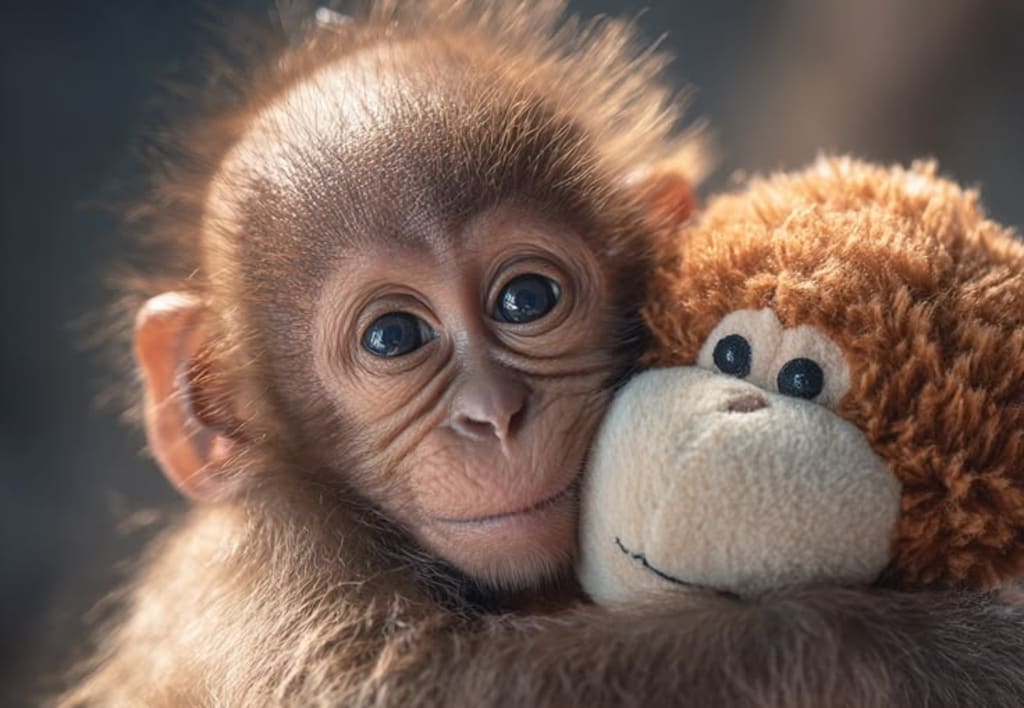
Today we look back at one of the most unexpected viral stories of 2025—a tale that began quietly in a zoo in Japan and grew into a global symbol of resilience and tenderness. It is the story of Punch, a Japanese macaque born in July 2025 at Ichikawa City Zoo in Chiba Prefecture. His life began with hardship, but what followed has touched millions across the world.
Punch entered the world on July 26, 2025, a healthy infant macaque. His species, the Japanese macaque (Macaca fuscata), is often called the snow monkey, famous for its thick fur and habit of bathing in hot springs during winter. But Punch’s story was not about snowy landscapes or natural behaviors. It was about survival, comfort, and the extraordinary bond between a baby animal and a toy.
Shortly after his birth, Punch’s mother rejected him. In the wild, such abandonment often means certain death for an infant primate. At the zoo, however, keepers stepped in to provide care. They fed him, monitored his health, and tried to give him the warmth he had lost. Yet, despite their efforts, Punch remained fragile and lonely. He needed something to cling to, something to replace the absent embrace of his mother.
That “something” arrived in the form of a bright orange orangutan plush toy. Zookeepers placed it in his enclosure, and Punch immediately latched onto it. He carried it everywhere—dragging it across the floor, clutching it tightly when nervous, and curling up against it at night. Visitors began to notice. The sight of a tiny macaque hugging a stuffed orangutan was both heartbreaking and profoundly moving. In that simple act of comfort, people saw something universal: the need for love, security, and connection.
The zoo named the plush “Oran‑mama,” a surrogate mother for Punch. Day after day, he treated it as his constant companion. Photos and videos of Punch with Oran‑mama began circulating online. At first, it was local news. Then it spread to social media platforms—Twitter, TikTok, YouTube. Within weeks, Punch’s gentle resilience had captured tens of millions of views worldwide. Hashtags like # HangInTherePunch trended globally. Fans from different countries shared his story, adding captions of encouragement and admiration. Punch was no longer just a baby macaque in a zoo—he had become a symbol of innocence and survival.
The response was overwhelming. Families began visiting Ichikawa City Zoo specifically to see Punch. Children brought their own stuffed animals to “show” him, creating a quiet ritual of solidarity. Parents explained to their kids that Punch’s plush was like their teddy bears—a source of comfort when the world feels uncertain. The zoo, once a modest local attraction, suddenly found itself at the center of international attention.
Corporate support soon followed. In early March 2026, Walmart delivered a truckload of plush toys and blankets to the zoo in Punch’s honor. The gesture was more than charity; it was recognition of how one small animal’s struggle had united people across cultures. The zoo staff distributed the toys to children visiting Punch, turning his enclosure into a place of shared joy. What began as a story of abandonment had transformed into a celebration of compassion.
Punch’s fame also sparked conversations about animal welfare and the emotional needs of primates. Experts noted that macaques, like humans, rely heavily on maternal bonding in their early months. Without it, they can suffer stress and developmental challenges. Punch’s attachment to his plush toy highlighted the importance of surrogate comfort, not just for survival but for emotional stability. His story became a case study in how zoos can creatively support vulnerable animals.
Beyond science, Punch’s journey resonated on a cultural level. Stuffed animals have long been symbols of childhood comfort. Seeing a baby macaque cling to one reminded people of their own teddy bears, their own need for security. It blurred the line between human and animal experience, showing that the desire for companionship is universal.
As Punch grows, his story continues to evolve. He is stronger now, more playful, and increasingly curious about his surroundings. Yet he still carries Oran‑mama with him, dragging the plush across the enclosure as if it were a lifeline. Visitors watch with affection, knowing they are witnessing not just an animal’s survival but a living metaphor for resilience.
Punch’s tale is not simply about a zoo animal. It is about the power of empathy, the way a single story can ripple outward until it touches millions. From a fragile abandoned infant to a global symbol of hope, Punch has shown the world that even the smallest creature can inspire extraordinary kindness. His plush orangutan is more than fabric and stuffing—it is a reminder that comfort can come in unexpected forms, and that compassion, once sparked, can spread across the globe.
And so, Punch lives on not just as a macaque in Ichikawa City Zoo, but as a story that continues to grow—one that blends heartbreak with hope, and proves that sometimes the most powerful tales are told not in words, but in the quiet embrace of a toy.
About the Creator
Haroon Pasha
👍 Like | 💬 Comment | 🔔 Follow
🔄 Share my stories to support independent writing
💖 Tip to help this page grow and create more content
💹 Smart steps build strong futures — begin yours with Binance
Keep reading
More stories from Haroon Pasha and writers in Families and other communities.
Ray Kroc: The Relentless Visionary Who Built a Global Empire One Hamburger at a Time
Today we look back at a man who proved that ambition has no age limit—someone who didn’t discover his life’s defining purpose until he was well into his fifties. His name was Ray Kroc, and his journey from a restless teenager to the architect of the world’s most successful fast‑food corporation is one of the most remarkable business stories of the 20th century.
By Haroon Pasha6 days ago in Chapters
Protecting Retirement Assets In A High Net Worth Divorce
High net worth divorces are rarely simple. When millions of dollars, complex investments, and valuable property are involved, separating finances becomes far more than just dividing a house or a car. Retirement accounts often make up a significant portion of the marital estate, yet they are one of the most misunderstood and risky areas during a divorce. Many couples focus on visible assets like real estate or cash, leaving retirement funds for the last minute. This oversight can trigger heavy taxes, costly penalties, and long-term financial setbacks totaling hundreds of thousands of dollars. Understanding how different types of retirement and investment accounts work is essential to protect your wealth and secure your financial future during this challenging time.
By Dina Haddad7 days ago in Families




Comments
There are no comments for this story
Be the first to respond and start the conversation.