
Why Contract Lifecycle Management Software Is Changing the Way Organizations Handle Agreements?
The Shift Toward Smarter, More Controlled Contract Creation, Execution, and Compliance

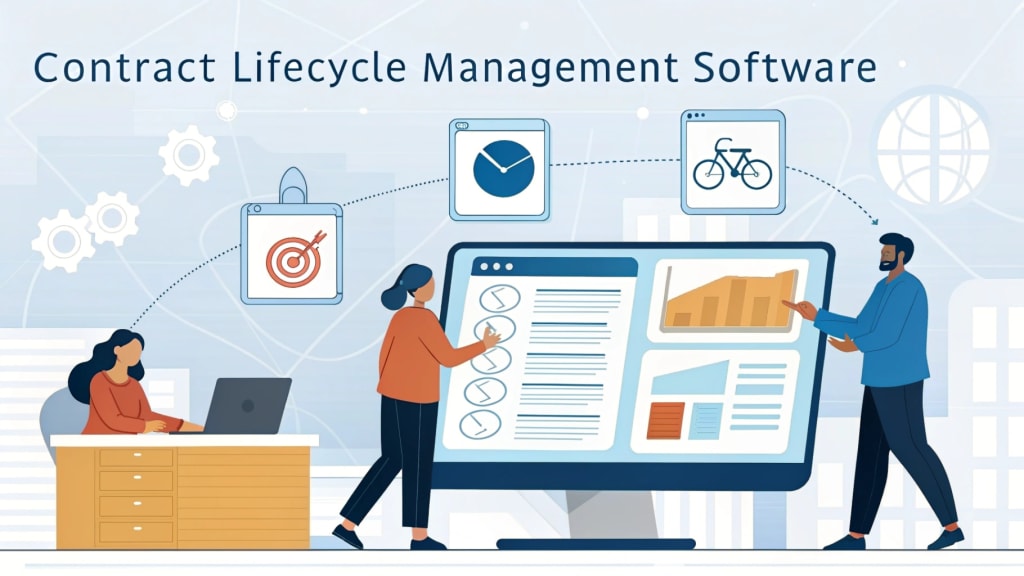
systems become more complex and connected, it also becomes more of an operational concern to deal with the high volume of agreements that organizations have with suppliers, partners, customers, and employees. Manual methods of contract management become increasingly prone to error. Because of this, contract lifecycle management software has been on the rise in usage.
Contract lifecycle management software used to be seen as merely a back-office administrative function, but it has emerged as a calculated asset for governance, efficiency and risk management throughout the life of a contract. CLM software brings more structure and visibility to organizations' management of compliance, deadlines, and contract obligations. Its growth reflects a general trend of moving towards digital workflows and process transparency.
Understanding What Contract Lifecycle Management Software Really Is
Contract lifecycle management (CLM) software manages the creation, negotiation, approval, and execution of contracts, as well as managing performance, renewal, and expiry. CLM is intended to replace fragmented documents, spreadsheets, emails, and other legacy approaches to creating and managing contracts.
These products help companies create and store contract templates, manage contract versions, get approval, store executed contracts, and track certain contractual commitments and due dates. When contrasted with other document management systems, the difference is that contract lifecycle management software keeps track of contracts throughout the entire lifecycle.
Click here if you want to know more about Contract Lifecycle Management Software Market
Key Factors Driving the Popularity of Contract Lifecycle Management Software
Improving efficiency is one of the primary reasons for using contract lifecycle management software since managing a contract manually is time-consuming, and can lead to errors, delays, and miscommunication. Software-based systems can standardize processes, reduce administrative overhead and reduce the time taken to contract.
Risk management is another factor. Failure to meet or misreading the obligations under an agreement can result in legal, financial and compliance risks. Contract lifecycle management software provides visibility to the key clauses, milestones and obligations to reduce risk. This lowers the risk of penalties and disputes.
Growing compliance requirements also drive adoption. It is then easier to enforce alignment of contracts to internal policies and regulations using a centralized system and it can provide an audit trail to show compliance as required.
Business scalability is another challenge. As the business grows, expanding geographically or adding new business units, manually managing its contracts becomes an increasingly complex and resource-intensive endeavor. Software solutions enable this growth without introducing unnecessary complexity.
The Role of Innovation and Technology
Innovation also increases the value of CLM software. Some innovations in contract lifecycle management products take advantage of automation technology to eliminate repetitive processes including generating contracts, signing contracts and sending notifications. Automation also reduces the need for manual follow-ups, making the process more consistent across teams.
Advanced search and analytics functions allow users to identify relevant contracts, clauses, and keywords to direct better decision-making and performance management of contracts. Clause libraries and guided authoring tools are included in many platforms, to help drive legal and commercial consistency.
Integration with other enterprise systems is becoming more common. CLM software solutions are typically used alongside procurement, finance, customer management, and document management systems, allowing information to be easily shared between systems and unnecessary duplication of work eliminated.
The cloud-based deployment of contract management software also enables collaborative working and contract negotiation in a secure environment from dispersed locations, maintaining version and access control.
Changing Organizational Behavior and Contract Practices
Organizational behavior regarding contracts is moving away from contract management, described as a reactive, command and control function, towards the notion that contracts are living assets that need to be constantly monitored and optimized.
Collaboration between legal, procurement, sales and finance departments can happen more readily because of a common set of tools for cross-functional teams that do not challenge the underlying business process.
Visibility and accountability are important to decision-makers because contract lifecycle management software allows stakeholders to see and track approval, ownership and compliance responsibility and generally provides higher levels of governance and faster response times.
As digital transformation progresses, organizations are willing to invest in specific contract management capabilities to replace their aging legacy and manual processes.
Benefits and Practical Advantages
Benefits of using contract lifecycle management software for organizations include:
• Improved Efficiency: Streamlined contract creation, review, and approval workflows
• Improved Visibility: Provide a single source of truth for contracts and related data
• Risk Reduction: Helps to track obligations, timelines, and compliance
• Consistency and control: Strengthens templates, clauses, and workflows
• Faster Turnaround: Less delay due to handwritten notes and miscommunication
• Better Collaboration: Multiple teams can collaborate on a single centralized platform
• Audit Readiness: Keeps an audit trail for governance while being ready for audits
These advantages make contract lifecycle management software a powerful operational and planned tool.
Global Adoption and Regional Relevance
Contract lifecycle management software solutions are used across industries and geographic locations. The maturity of businesses, as well as industry specific or geographic regulatory considerations, may also impact the depth of structured contract management in an organization.
Their large-scale adoption has been driven in developed economies, by digital transformation initiatives and by complex supply chains with multinational corporations utilizing them to manage contracts across different jurisdictions and business units.
Emerging markets are adopting contract lifecycle management software as businesses formalize processes and look to expand into new markets. The cloud considerably lowers the barriers to entry by eliminating infrastructure and enabling scalable rollouts.
Across the different regions, a primary driver is the need for more control, transparency, and efficiency in managing contracts.
Challenges Facing the Contract Lifecycle Management Software Market
The acquisition of contract lifecycle management software can be a difficult decision, specifically for organizations that might be deeply secured with existing legacy-based operational practices or attempting to manage numerous existing contracts.
User adoption is another consideration. Employees need to be trained to use the new system effectively, and resistance can slow the process. Clear communications and change management processes may reduce this issue.
This involves migrating and standardizing data, which includes manually inputting existing contracts into the program, as well as avoiding missing data or incorrect information entering the system.
Finally, your software capabilities must match up to your organization and needs once you know your workflows, compliance, and long-term plans. Look for solutions that suit your priorities.
Future Outlook of Contract Lifecycle Management Software
Future iterations of contract lifecycle management software are expected to be automated, integrated, and clever, to meet a need for easier use and scaling due to organizations increasingly focused on cost-effective approaches and risk management.
New features and functionality for the future may be focused on user experience and analytics, enabling contract teams to be more proactive in monitoring contract performance, and further integrating with enterprise-level systems.
As the role of contracts in business outcomes, governance, and risk management becomes more impactful, contract lifecycle management software may become part of the digital infrastructure for businesses.
Conclusion
Contract lifecycle management software is changing the way organizations create, manage and monitor contracts. By migrating from manual to structured, transparent and collaborative workflows, organizations can reduce risk, reduce costs, improve compliance and gain better control of contractual obligations.
As businesses become more complex and digital transformation becomes more common, the need for well-executed contract management continues to be a growing focus area, and contract lifecycle management software will likely influence the future of contract management in corporations as its usage increases.
About the Creator
Akshay Kumar
A dedicated Market Research Professional specializing in in-depth analysis, industry forecasting, and strategic insights. Known for precision, reliability, and delivering research that adds real business value.
Keep reading
More stories from Akshay Kumar and writers in Education and other communities.
Why Home Improvement Services Are Changing the Way People Upgrade Their Homes?
Homeownership is changing; the basis for a home owner's investment in their home is being driven not only by home value, but also comfort, function and style. One of the most influential trends has been the use of professional home improvement services. Home improvement services taken for granted in earlier decades are now considered essential as more homeowners seek convenience, energy savings and quality work.
By Akshay Kumarabout 8 hours ago in Education
Wheat Germ Oil and Its Role in Nutritional and Functional Applications
Wheat germ oil is a highly nutritious natural oil extracted from the germ of the wheat kernel. Although it represents only a small fraction of the wheat grain, the germ is the most nutrient-dense part, making wheat germ oil one of the richest sources of essential vitamins, antioxidants, and fatty acids. Over the years, wheat germ oil has gained significant attention across the food, cosmetic, pharmaceutical, and nutraceutical industries due to its health-promoting properties and versatile applications.
By Bobby Yadav5 days ago in Education
The People We Become When No One Is Watching
We live in a world where almost everything is visible. Opinions are posted. Achievements are shared. Moments are documented. Even the most ordinary parts of life can be turned into content if someone angles their phone the right way. Visibility has become a kind of currency — a way to signal who we are, or at least who we want people to believe we are.
By Thomas McCorryabout 22 hours ago in Education




Comments
There are no comments for this story
Be the first to respond and start the conversation.