
What Skills Matter Most in AI Jobs in 2026?
As artificial intelligence reshapes hiring expectations, the definition of technical talent is shifting toward adaptability, context awareness, and real-world problem solving.

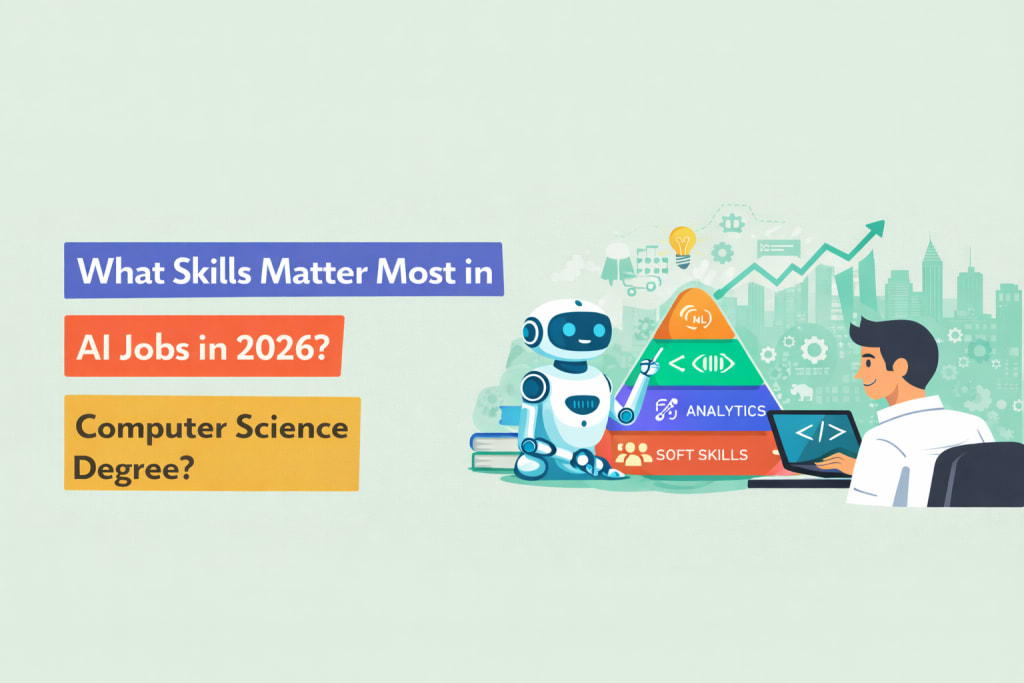
A few years ago, the typical AI job description read like a checklist from a graduate-level computer science curriculum: advanced mathematics, distributed systems, deep learning architecture, research publications. Today, many hiring managers describe something different. They still want technical capability, but they are also looking for people who can interpret data, collaborate across disciplines, and translate abstract models into usable outcomes.
The shift did not happen overnight. It emerged gradually as organizations moved from experimenting with artificial intelligence to deploying it in production environments. As AI became embedded into real workflows — customer service, healthcare diagnostics, logistics forecasting, creative production — employers began to see that success depended on more than coding skill alone.
In 2026, the most sought-after AI professionals are not defined by a single technical specialty. They are defined by a blend of technical literacy, contextual thinking, and practical execution.
The Expansion of AI Roles Beyond Pure Engineering
One of the biggest misconceptions about AI careers is that they revolve exclusively around machine learning engineers or data scientists. Research from the World Economic Forum shows that AI-related job growth is spreading across industries, including marketing, finance, manufacturing, healthcare, and product design.
LinkedIn’s workforce analytics have consistently shown AI as one of the fastest-growing job categories globally, with roles expanding into areas such as AI operations, product management, AI ethics, conversational design, and automation strategy.
This expansion has changed the skill landscape. Organizations need professionals who understand how AI fits into business processes, not just how to build models from scratch.
Andrew Ng once remarked that AI is becoming “the new electricity.” Electricity reshaped countless professions without turning everyone into electrical engineers. The same dynamic now applies to artificial intelligence.
Technical Foundations Still Matter — But Differently
Technical ability remains essential, though the nature of that requirement is evolving.
Rather than expecting every candidate to design neural networks from first principles, many companies prioritize familiarity with frameworks, cloud services, and model deployment pipelines. Tools such as pre-trained models and automated machine learning platforms have lowered the barrier to entry.
According to Gartner, more than 80% of organizations experimenting with AI now rely on pre-built models or external platforms rather than developing algorithms entirely in-house. This shift places greater importance on implementation skills — integrating tools, evaluating outputs, and ensuring reliability.
Employers increasingly ask questions like:
- Can this candidate interpret model results?
- Can they identify bias or data gaps?
- Can they deploy solutions in real-world systems?
Technical literacy remains non-negotiable, but depth in one narrow area is no longer the only path.
Data Literacy: The Skill Behind Almost Every AI Role
If there is one capability that appears across nearly every AI job description, it is data literacy.
AI systems rely on data quality. Poorly structured datasets produce unreliable outcomes regardless of algorithm strength. Professionals who understand how to collect, clean, interpret, and question data hold an advantage.
A report from McKinsey found that organizations with strong data governance practices see measurable performance gains from AI initiatives compared to those focusing solely on algorithm development.
Data literacy includes:
- Understanding statistical basics
- Identifying bias in datasets
- Evaluating data sources critically
- Communicating findings clearly
These skills bridge technical and business roles, making them highly transferable.
Prompt Design and Human-AI Interaction
The rise of generative AI has introduced new roles centered on interaction design rather than traditional programming.
Prompt design, workflow orchestration, and evaluation of AI-generated outputs are now emerging skill areas. While some dismiss prompt engineering as temporary, hiring trends suggest otherwise. Companies increasingly seek professionals who understand how to guide AI systems effectively, especially as generative tools integrate into daily workflows.
MIT Technology Review has highlighted how generative AI shifts focus toward human judgment — selecting, refining, and contextualizing outputs rather than building algorithms entirely from scratch.
This creates opportunities for individuals from writing, design, psychology, and business backgrounds who develop technical fluency alongside domain knowledge.
The Rise of Cross-Disciplinary Thinking
AI projects rarely succeed in isolation. They require collaboration between engineers, designers, domain specialists, legal teams, and product managers.
Harvard Business School research has indicated that cross-functional collaboration improves project outcomes, particularly in complex technical initiatives.
Employers increasingly prioritize candidates who can:
- Communicate technical concepts to non-technical stakeholders
- Understand ethical considerations
- Align AI initiatives with organizational goals
These abilities reflect the growing recognition that AI is not purely a technical problem — it is also a human and organizational one.
Cloud and Deployment Skills
Another major shift involves deployment.
Building a prototype model is only the beginning. Organizations need professionals who can integrate AI into live systems, maintain performance, and monitor outcomes over time.
Cloud platforms have become central to this process. Familiarity with cloud infrastructure, APIs, and deployment workflows often carries more weight than academic credentials.
According to IDC research, a large majority of enterprise AI workloads now run on cloud platforms, making cloud literacy a baseline expectation for many roles.
Ethical Awareness and Responsible AI
As AI adoption expands, ethical considerations move from theory to practice.
Questions around bias, transparency, data privacy, and fairness increasingly influence hiring decisions. Governments and regulatory bodies continue introducing guidelines around responsible AI use, pushing organizations to include ethical evaluation in development cycles.
Professionals who understand these concerns — even at a conceptual level — add value by helping teams anticipate risks before deployment.
The growing attention to ethical design reflects a broader shift: AI is no longer viewed solely as a technical asset; it is also a social tool with wide-reaching consequences.
Domain Knowledge as a Competitive Advantage
Perhaps the most overlooked skill in AI careers is domain expertise.
A healthcare professional entering AI brings understanding of patient workflows. A logistics manager understands supply chain variables. A marketer understands consumer behavior.
Organizations increasingly value professionals who combine industry knowledge with AI literacy because they can frame problems more effectively.
For example, companies working in mobile app development Austin increasingly integrate AI features such as predictive analytics, recommendation engines, or conversational interfaces. Teams building these systems benefit from professionals who understand user behavior as much as algorithms.
Context often matters as much as technical skill.
Continuous Learning as a Core Requirement
AI evolves rapidly. Tools that dominate today may fade tomorrow.
The most successful professionals demonstrate ongoing learning habits — experimenting with new frameworks, participating in open-source communities, and staying informed about emerging research.
Stack Overflow surveys have consistently shown that a large portion of developers learn new technologies through self-directed exploration rather than formal education alone.
In AI careers, learning itself becomes a skill.
Soft Skills Are No Longer “Soft”
Communication, curiosity, and adaptability frequently appear in hiring discussions. While these qualities may sound generic, they reflect real workplace needs.
AI projects involve ambiguity. Data rarely arrives perfectly structured. Business requirements change mid-project. Teams must iterate.
Professionals who can navigate uncertainty, ask clear questions, and collaborate effectively help projects move forward even when technical challenges arise.
Employers increasingly acknowledge that technical brilliance without collaboration often slows progress.
Looking Ahead to the AI Workforce of 2026
As AI continues to expand, hiring patterns suggest that successful candidates will combine several layers of capability:
- Technical literacy rather than narrow specialization alone
- Data interpretation skills
- Contextual understanding of industry problems
- Ethical awareness
- Deployment and cloud familiarity
- Strong communication abilities
The stereotype of the solitary coder is fading. AI work increasingly resembles a collaborative discipline where multiple forms of knowledge intersect.
The future of AI careers may not belong solely to those with the deepest technical specialization. It may belong to those who connect technology with context — who understand both how systems work and why they matter.
In 2026, the most important skill might not be any single tool or programming language. It might be the ability to learn continuously while bridging the gap between artificial intelligence and real-world needs.
About the Creator
Ash Smith
Ash Smith writes about tech, emerging technologies, AI, and work life. He creates clear, trustworthy stories for clients in Seattle, Indianapolis, Portland, San Diego, Tampa, Austin, Los Angeles, and Charlotte.
Why Theatre Still Matters in a Digital World: The Enduring Magic of Live Performance
The world today runs on WiFi and touchscreens. Movies stream in seconds. Social media updates never stop. News travels fast and fades even faster. In the middle of all this speed, the stage still stands. The question of why theatre still matters in a digital world deserves real attention.
By Therese Marie Thompson5 days ago in Education
Real Estate Financing Tips Before You Apply
Preparing for real estate financing requires clarity, organization, and a solid understanding of the loan landscape. Because lenders evaluate every detail of your financial profile, property selection, and long-term affordability, taking the right steps before you apply can greatly improve your chances of approval.
By Eric Kleiner4 days ago in Education


Comments
There are no comments for this story
Be the first to respond and start the conversation.