
The Light That Changed the World
How a Simple Bulb Illuminated Human Progress and Transformed Civilization

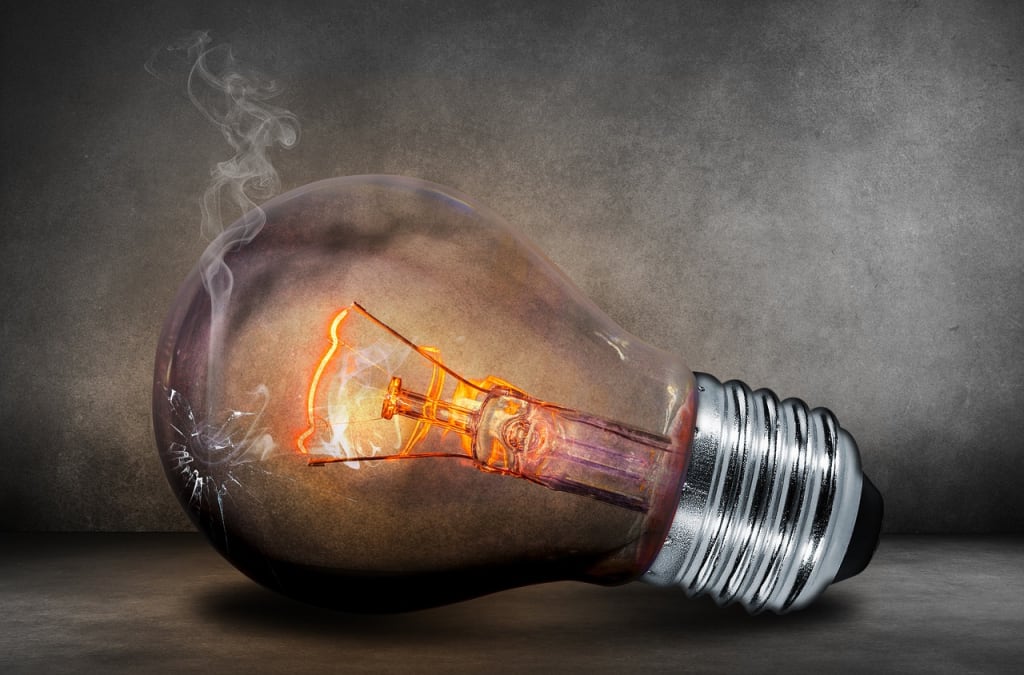
The Glowing Marvel: A Journey Inside the Humble Light Bulb
Have you ever stopped for a moment to truly appreciate the light bulb?
A small glass sphere. A glowing filament. A simple flick of a switch—and the darkness disappears.
We use them every day, rarely thinking about the miracle hidden inside. But if you dive into the story of the light bulb, you’ll find a tale filled with curiosity, failure, triumph, and transformation. The humble light bulb is not just a utility—it’s a symbol of human progress, resilience, and brilliance.
A World Before Light
Imagine living in the 1800s. As the sun set, the world would be swallowed by darkness. People depended on candles, oil lamps, and gas lights to see at night. These sources were dim, dangerous, expensive, and unreliable. Nights were long, productivity was limited, and life paused after sunset. Society was bound by the natural cycle of day and night.
But all of that changed with one spark.
The Long Road to Illumination
The invention of the light bulb wasn’t the work of one man in a single night. It was the result of decades of experiments and contributions from inventors across the world.
In 1802, Humphry Davy created the first electric light by connecting wires to a battery and passing current through a strip of platinum. It was bright—but far from practical.
In the following years, many others tried to improve this concept. British scientist Warren de la Rue, American inventor Joseph Henry, and English physicist Joseph Swan all made notable attempts. But it was Thomas Edison, in 1879, who gave us the first commercially viable, long-lasting light bulb.
Edison didn’t just invent the light bulb—he invented the system that made it useful. Power generation, distribution, sockets, switches—he imagined it all. That’s what made his contribution revolutionary.
Lighting Up the World
Edison’s bulb burned for over 1,200 hours. The world was never the same again.
Factories began running night shifts. Students could study after sunset. Shops remained open longer. Streets were lit, crime decreased, and public life expanded into the night. Cities sparkled with artificial daylight, and human civilization took a leap forward.
All of this, thanks to a tiny object that fits in the palm of your hand.
Evolution of a Genius Invention
The journey didn’t stop with Edison. The incandescent bulb, though groundbreaking, used a lot of energy. Over time, scientists developed better alternatives.
Halogen bulbs lasted longer and burned brighter.
Fluorescent lamps were more energy-efficient.
CFLs (Compact Fluorescent Lamps) became a common sight in homes.
And today, LED bulbs dominate the market—offering unmatched efficiency, lifespan, and flexibility.
Modern LED bulbs can change color, adjust brightness automatically, and even sync with music or your mood. Some are controlled via smartphones, others respond to voice commands. Yet, their core purpose remains the same: to push away the darkness.
The Symbolism of the Bulb
The light bulb is more than a technological marvel—it’s a cultural icon. It represents ideas, innovation, and inspiration. In cartoons, when a character has an idea, a light bulb pops up above their head. In daily speech, we say “a light bulb went off in my mind” to describe sudden insight.
The bulb is a symbol of clarity. Of thought. Of possibility.
Inside the Glass
Look closer, and you’ll find incredible precision and engineering.
A filament made of tungsten, coiled tightly, heats up to thousands of degrees Celsius and glows. It’s surrounded by inert gases like argon to prevent burning. The glass is not just a cover—it protects, insulates, and magnifies the glow. All these components, working in perfect harmony, give us clean, safe, and instant light.
Such brilliance in such a small form!
Light for the Future
Today, lighting is smarter and greener. Solar-powered bulbs bring light to villages without electricity. Emergency bulbs charge during the day and light up during power cuts. Some bulbs even kill bacteria or help plants grow indoors.
In the near future, light bulbs might become sources of internet via Li-Fi technology, or help regulate sleep by adjusting color temperatures naturally.
From humble beginnings to high-tech marvels, the bulb’s journey mirrors our own—as humans, ever evolving, ever reaching for more.
About the Creator
Noman Afridi
I’m Noman Afridi — welcome, all friends! I write horror & thought-provoking stories: mysteries of the unseen, real reflections, and emotional truths. With sincerity in every word. InshaAllah.
Keep reading
More stories from Noman Afridi and writers in Education and other communities.
The Fiery Heart of Our Solar System: Mysteries of the Sun
Every morning, the Sun rises with timeless grace, bathing the world in golden light. Yet behind its calm appearance lies a raging inferno, a cosmic engine that has burned for over 4.6 billion years. The Sun is not just a glowing ball in the sky—it is the center of our solar system, the giver of life, and a symbol of divine power across countless civilizations. But how much do we truly understand about this blinding, burning giant?
By Noman Afridi8 months ago in Education
Seven Books to Read When You Have No Time to Read
Modern life rarely leaves room for long, uninterrupted reading sessions. Between work, family, notifications, and daily responsibilities, finding hours to sit with a thick novel can feel impossible. Yet reading remains one of the most rewarding ways to relax, learn, and escape the noise of everyday life. The good news is that not all books demand weeks of commitment. Some are short, fast-paced, and powerful enough to be read in brief moments—during commutes, lunch breaks, or just before sleep. If your schedule is packed but your love for books remains strong, here are seven perfect reads for when time is limited but curiosity is not. 1. “The Old Man and the Sea” by Ernest Hemingway This classic novella is proof that a small book can carry enormous emotional weight. At just over 100 pages, Hemingway’s story of an aging fisherman battling a giant marlin is simple yet deeply symbolic. The language is clear and direct, making it easy to read in short sessions. Despite its brevity, the book explores themes of endurance, pride, and humanity’s relationship with nature. It is a reminder that you do not need a long novel to experience literary greatness. 2. “Animal Farm” by George Orwell Few books manage to be both entertaining and politically sharp in such a compact form. Orwell’s allegory of farm animals overthrowing their human owner is short, gripping, and unforgettable. The story moves quickly, with simple language and strong symbolism that makes it ideal for busy readers. You can read a chapter in minutes and still feel like you’ve engaged with something meaningful and thought-provoking. 3. “We Should All Be Feminists” by Chimamanda Ngozi Adichie Adapted from a popular TED Talk, this slim book packs a powerful message into fewer than 70 pages. Adichie discusses gender, culture, and equality in a personal and accessible way. It is perfect for readers who want insight without long explanations. The conversational tone makes it feel less like homework and more like a thoughtful conversation with a friend. 4. “Of Mice and Men” by John Steinbeck Steinbeck’s short novel about friendship and dreams during the Great Depression is emotionally rich but easy to follow. The characters of George and Lennie stay with readers long after the final page. Its short chapters and clear narrative make it ideal for those who can only read in small bursts. Despite its simplicity, the book deals with loneliness, hope, and tragedy in a powerful way. 5. “The Little Prince” by Antoine de Saint-Exupéry Often seen as a children’s book, The Little Prince is deeply philosophical and touching for adults as well. With short chapters and gentle illustrations, it is easy to read in one or two sittings. The story reflects on love, responsibility, and the loss of childhood wonder. It is a comforting book for readers who want something meaningful but not mentally exhausting. 6. “Letters to a Young Poet” by Rainer Maria Rilke This book is a collection of short letters rather than a continuous story, making it ideal for fragmented reading time. Each letter stands alone and offers wisdom about creativity, self-doubt, and personal growth. You can read one letter in five minutes and still feel enriched. It is perfect for readers who want inspiration without committing to a long narrative. 7. “The Alchemist” by Paulo Coelho Coelho’s famous novel is written in simple language and short chapters, making it highly accessible. The story follows a young shepherd on a journey to find treasure, but its true focus is on purpose, destiny, and listening to one’s heart. Many readers finish this book quickly because of its smooth pacing and motivational tone. It is ideal for moments when you want encouragement rather than complexity. Why Short Books Matter Short books are not lesser books. In many cases, they demand more discipline from the author and offer greater focus for the reader. When time is scarce, these works provide a sense of completion and accomplishment. Finishing a book—even a small one—can restore confidence and reignite the habit of reading. They also suit modern lifestyles. A few pages before bed or during a commute can slowly build into a meaningful reading experience. Instead of waiting for the perfect free weekend, short books allow reading to fit into everyday life. Making Reading Possible Again If you feel too busy to read, the solution is not to quit—it is to adjust expectations. Choose books that match your schedule. Keep one in your bag or on your phone. Replace five minutes of scrolling with five minutes of reading. Over time, these small moments add up. Conclusion Reading does not require endless free time. It requires intention and the right kind of books. These seven titles prove that powerful stories and ideas can be delivered in short, accessible forms. Whether you want inspiration, reflection, or escape, there is always room for a book—even in the busiest life. When time is limited, let these books remind you that literature does not have to be long to be lasting.
By Fiaz Ahmed about 23 hours ago in Education
The Increasing Gender Disparity in College Degree Attainment
The gender gap in American higher education has widened significantly, with men falling behind women in both college enrollment and completion rates. As of the early 2020s, women have outpaced men in earning bachelor's degrees for several decades, with the divide continuing to grow, often referred to as the "enrollment flip". In 2021, men received only 42% of bachelor's degrees, the lowest share on record, which is roughly equal to the 43% of degrees awarded to women in 1970 (source: https://aibm.org/research/male-college-enrollment-and-completion/).
By Megan Wilsonabout 18 hours ago in Education




Comments
There are no comments for this story
Be the first to respond and start the conversation.