
The Last Bench Genius
Sometimes, the quietest student has the loudest dreams

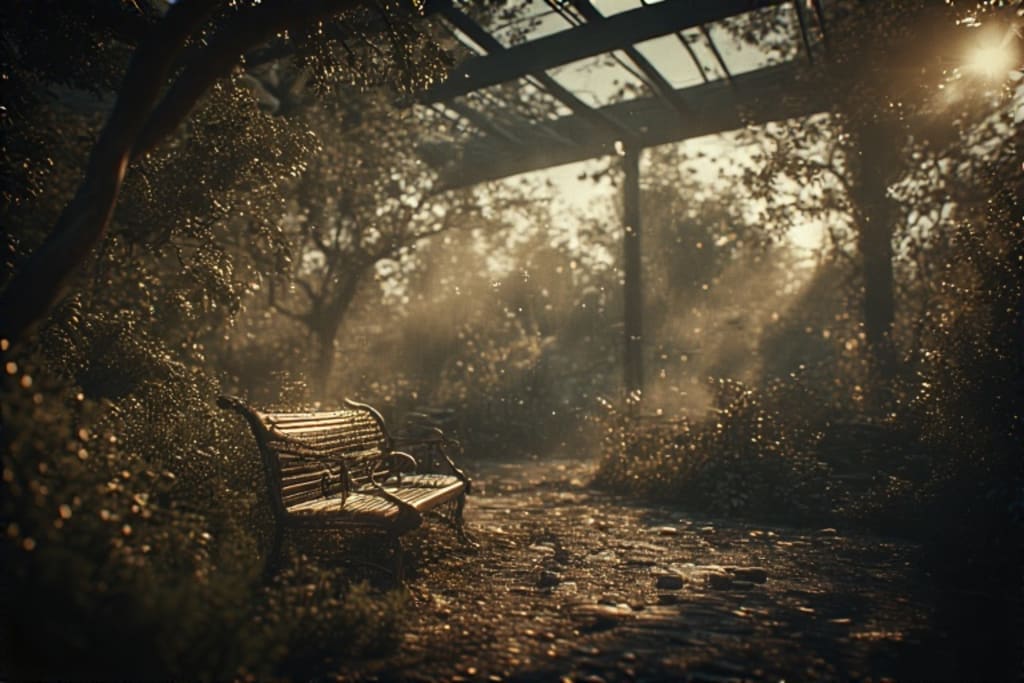
In the bustling village of Rampur, where the golden fields stretched to the horizon and the aroma of fresh bread drifted through the air, there was a small school with faded walls and squeaky windows. The school was old but alive with the sounds of eager children and the creak of wooden benches.
At the very back of this lively classroom sat Aarif, a quiet boy with worn-out clothes and tired eyes. He always chose the last bench—not because he wanted to hide, but because it was the only place where he felt comfortable enough to think.
Aarif wasn’t like the other children who answered quickly or raised their hands first. He struggled to keep up with reading and math. Letters twisted on the pages, numbers danced, and sometimes, the lessons seemed like puzzles with missing pieces. The teachers often sighed when they saw him, and some of his classmates whispered, “He just doesn’t try hard enough,” or worse, “Maybe he’s not smart at all.”
But Aarif had a secret no one knew. Every night, under the dim light of a kerosene lamp, he worked harder than anyone else. He practiced reading with old newspapers, copied words over and over, and built tiny models out of sticks and clay in the hope of understanding the world better.
His favorite spot was the last bench. There, he could spread his papers, make mistakes without judgment, and dream about a future where learning didn’t feel so hard.
One day, the school announced a big event: the Annual Science Competition. The winner would receive a scholarship to study at the city’s renowned school. It was a chance Aarif’s family had only dared to dream about.
When Aarif heard the news, his heart raced. But fear held him back. “Who would listen to a boy from the last bench?” he wondered.
His best friend, Samina, saw the spark in his eyes and wouldn’t let it go out. “You’re the smartest person I know,” she said one afternoon, grabbing his hand. “You just don’t know it yet. You have to enter the competition!”
Samina’s belief gave Aarif courage. He decided to create a project about water conservation—a simple but useful idea to collect rainwater and store it for dry times. It was something his village desperately needed.
For weeks, Aarif worked secretly in his backyard. He measured containers, tested filters made from cloth, and fixed leaks. The first model leaked water everywhere. The second one broke under its own weight. But he didn’t give up. Each failure was a lesson, and each lesson was a step forward.
The day of the competition arrived, and Aarif walked into the school hall with a small, patched-up box. Inside was his rainwater collector model, made from recycled containers and carefully sewn cloth filters.
Around him were projects filled with blinking lights, shiny wires, and colorful displays. People whispered, “Look at the last bench boy trying to compete with these big projects.”
The judges moved from table to table, smiling and nodding at the fancy inventions. When they reached Aarif’s project, their expressions changed to curiosity.
“This is different,” one judge said, examining the humble model closely.
Aarif took a deep breath and explained, “My system collects rainwater using simple containers and filters it to make it clean. It helps villages like ours save water during droughts, when the wells run dry.”
The judges asked questions. Aarif answered carefully, his confidence growing with every word.
When the winners were announced, Aarif’s heart pounded wildly.
“And the first prize goes to... Aarif, the boy from the last bench!”
The applause was thunderous. Teachers who had doubted him wiped tears from their eyes. His classmates who had once ignored him now cheered the loudest.
Aarif couldn’t believe it. The boy who had struggled every day had won.
That scholarship changed his life. At the city school, Aarif blossomed. He made friends, learned new things, and most importantly, he began to believe in himself.
Years later, Aarif returned to Rampur—not as a student but as a teacher. He stood once again in the same classroom, but this time, he was the one guiding young minds. The peeling walls and squeaky windows were still there, but so was the spirit of hope.
One afternoon, as he looked over his new students, Aarif smiled and said, “No matter where you sit—whether in the front row or the last bench—each of you holds a genius inside. It just takes courage, patience, and belief to let it shine.”
Behind his desk, a new sign hung proudly:
“Every bench holds a genius. Never stop believing in yours.”
And the boy who once sat quietly at the back was now a beacon of hope for every child who ever felt unseen.
Moral:
A person’s potential is never measured by where they sit or how others see them, but by their courage to keep trying and believing in themselves. Every student deserves a chance to shine
About the Creator
Keep reading
More stories from Najeeb Scholer and writers in Education and other communities.
Math in the Mango Tree
In the village of Sundarpur, where the air smelled of earth and ripening fruit, a tall mango tree stood proudly near the edge of the schoolyard. Its branches stretched wide like arms waiting for a hug, and its roots curled gently around the playground like old, sleepy snakes.
By Najeeb Scholer6 months ago in Education
Swinging Through the Storm: The Emotional Landscape of Golf
Golf is a game of precision, patience, and subtle mastery. On the surface, it is a serene walk across green landscapes, interrupted only by the occasional swing of a club. But anyone who has spent time on a golf course knows the truth: beneath the calm exterior lies an intense emotional journey. Golf is a sport where emotions are not just present, they are central. It lays bare the player's temperament, testing not only physical skill but also the capacity to remain emotionally composed amid challenges both big and small.
By Jeb Kratziga day ago in Education
Writing About Writing: The Rainbow Trap
The good thing about living in modern times is that LGBTQ representation in media is increasing. Not just in niche and Independant media, either, but also in mainstream media. Books, movies, TV shows, comics... they're finally catching on that LGBTQ+ people form a significant part of their audience, and deserve to see themselves on screen and in fiction, not just as victims in documentaries and true crime shows.
By Natasja Rosea day ago in Writers


Comments
There are no comments for this story
Be the first to respond and start the conversation.