
Mastering Cold Calling Scripts for Pre-Foreclosure Properties
The Art of the Lifeline: Navigating Pre-Foreclosure Cold Calling in 2026


In the 2026 real estate landscape, the most effective investors are distinguished not by the size of their marketing spend, but by their mastery of crisis psychology. While many entry-level practitioners focus on high-volume, low-intent listings, a sophisticated sector of the market is dedicated to the pre-foreclosure niche.
To the uninitiated, reaching out to a homeowner in distress can feel intrusive. However, when framed through a professional, education-first lens, these interactions evolve from "sales pitches" into essential financial interventions. This guide breaks down the mechanics of a high-integrity communication framework that prioritizes empathy and actionable solutions.
Understanding the Distressed Homeowner’s Environment
Before initiating contact, one must recognize the "decision fatigue" plaguing homeowners in 2026. These individuals are navigating a storm of legal notices, mounting debt, and social stigma. By the time an investor calls, the homeowner has likely been bombarded with aggressive robocalls and generic mailers.
Your objective is to cut through this noise by adopting a consultative posture. You are not merely looking for a property; you are identifying a problem that requires a technical solution. Whether that solution involves a cash purchase, a short sale, or creative financing, your communication must serve as the bridge from crisis to resolution.
Phase 1: The Consultative Opening
The first ten seconds of a conversation dictate the outcome. The most common pitfall is adopting a "high-energy salesperson" persona. In a sensitive situation, this triggers immediate defensiveness. Instead, aim for the tone of a concerned consultant: calm, direct, and professional.
The Framework:
"Hello [Name], my name is [Your Name]. I’m calling regarding the property at [Address]. I noticed that a public notice was recently filed concerning the mortgage status, and I specialize in helping homeowners explore the financial options available to protect their credit before an auction date is set. I’m not sure if you’ve already established a plan, but do you have a few minutes to discuss what your current options look like?"
Why it works: Referencing the "public notice" validates your call without sounding like you are prying into private affairs. Leading with "credit protection" offers a long-term benefit that resonates even if the owner isn't ready to sell immediately.
Phase 2: Discovery and Emotional Intake
Once a dialogue begins, resist the urge to jump into a pitch. This is the Discovery Phase. Foreclosure carries immense emotional weight; by allowing the homeowner to explain their situation, you build the rapport necessary for a complex transaction.
Focus on open-ended questions:
• "What has your recent communication with the lender been like?"
• "If we could resolve the debt today, what would be your ideal next step for your family?"
• "What is the primary hurdle currently preventing a resolution with the bank?"
Identifying the "hurdle"—be it a medical emergency, job loss, or simple lack of equity—allows you to tailor your solution to their specific needs.
Phase 3: The "Solution Bridge" and Education
In an educational context, it is vital to explain the mechanics of the situation. Many homeowners operate under the misconception that an auction simply "takes the house away." They may not realize that an auction can lead to deficiency judgments or a decade of damaged credit.
The Scripting Transition:
"I appreciate you sharing those details. Many people feel that the auction is the only way out, but that often results in the most severe credit impact. Based on the estimated loan balance of [Amount], we might be able to facilitate a direct purchase that clears the debt entirely. To see if that’s a viable path, could you tell me a bit more about the property's current condition?"
This shifts the focus from a personal crisis to an objective real estate transaction, discussing tangible facts like repairs and loan balances.
Phase 4: Data-Driven Credibility
In 2026, vague claims are a liability. Professionalism is signaled through precision. If you can reference specific timelines—such as the number of days since a Notice of Default was filed—you immediately distinguish yourself as a local market expert.
Using data to prioritize your approach is essential:
• High-Equity Leads: Focus on cash-out solutions that provide the homeowner with a "fresh start" fund.
• Low-Equity Leads: Focus on "Subject-To" or mortgage assumption strategies that preserve the homeowner's credit rating.
Professional Standards: Pitfalls to Avoid
To maintain the quality standards of a high-level investor and educator, avoid these common mistakes:
1. Over-Promising: Never guarantee you can "stop" a foreclosure. Instead, use accurate terminology like "mitigating loss" or "working toward a resolution."
2. Industry Jargon: Terms like "wholesaling" or "spreads" are for internal use only. When speaking with homeowners, use transparent language: "agreement," "closing costs," and "net proceeds."
3. The "One-and-Done" Fallacy: Most resolutions require multiple points of contact. If a homeowner isn't ready, offer a resource: "I understand this is a lot to process. May I send you a PDF guide on foreclosure timelines and check back next week?"
Conclusion: The Ethics of the Deal
Mastering the pre-foreclosure conversation is an exercise in ethical problem-solving. When you approach a lead with the intent to provide a "soft landing," the financial rewards follow as a byproduct of the value you provide. You are offering speed, certainty, and a path toward financial recovery that traditional avenues often cannot match.
About the Creator
Keep reading
More stories from REI Data Solutions and writers in Education and other communities.
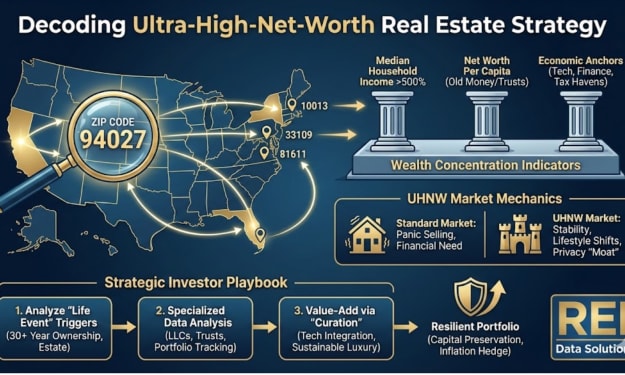
Wealthiest Zip Codes in the U.S: A Guide for Real Estate Investors
In the world of real estate, there is a distinct difference between "expensive" markets and "wealth-concentrated" ecosystems. While many investors chase high-growth "hot" markets, a select group of seasoned professionals focuses on a different metric: the five-digit zip code.
By REI Data Solutions24 days ago in Education
SEO Handbook
Most people run into SEO the same way: you build a site, you publish something you’re genuinely proud of, and you expect reasonably that the internet will do its thing. You wait a day or two. Maybe a week. You refresh your stats like you’re checking a pulse.
By Sayed Zewayed7 days ago in Education
The Saddest Thing - The Billionaires Who Rule America Aren't Even Enjoying Themselves
This single post says more about our ruling class than a thousand policy papers. The saddest thing about today's system is that the men robbing the rest of us - sabotaging our economic prospects, our pensions, our access to affordable healthcare - are not even happy.
By Scott Christenson🌴5 days ago in The Swamp


Comments
There are no comments for this story
Be the first to respond and start the conversation.