
Is transcription a good career for work-life balance?
Why More People Are Choosing Transcription for Flexible Living
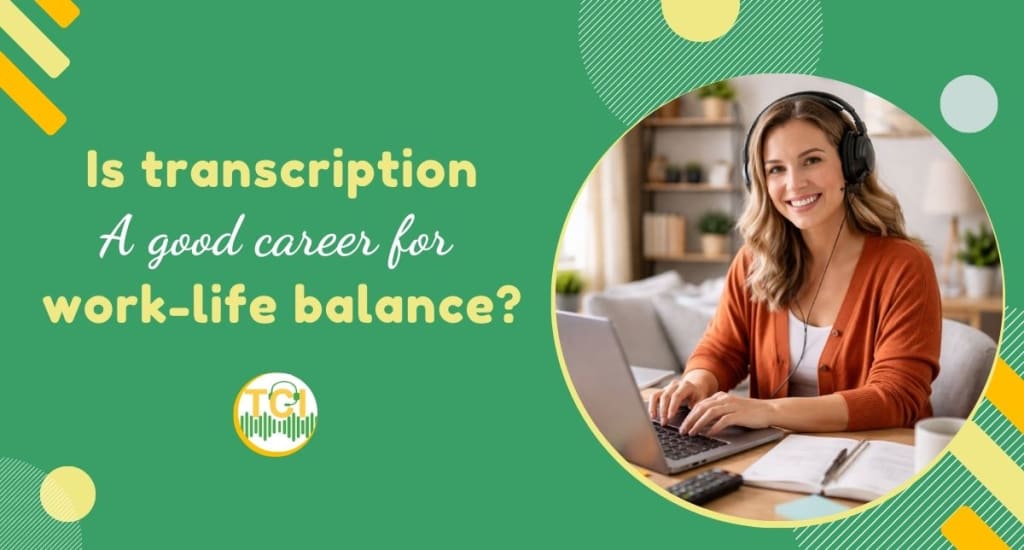
In today’s fast-moving world, “work-life balance” often feels like a luxury rather than a reality. Many traditional 9-to-5 jobs demand long commutes, fixed schedules, overtime, and constant availability. As remote work becomes more common, people are searching for flexible careers that allow them to earn well without sacrificing family time, health, or personal goals. One such career that continues to attract attention is transcription. But is transcription truly a good career for work-life balance? Let’s explore.
What Is Transcription?
Transcription is the process of converting audio or video recordings into written text. This can include interviews, podcasts, business meetings, webinars, court proceedings, medical reports, and more. There are different types of transcription, such as:
- General transcription
- Legal transcription
- Medical transcription
Each type requires different levels of specialization, but the core skill remains the same: listening carefully and typing accurately.
Flexibility: The Biggest Advantage
One of the strongest reasons transcription supports work-life balance is flexibility. Most transcription work is freelance or contract-based. This means you can often choose:
- When you work
- How much you work
- Where you work
Whether you are a student, a stay-at-home parent, or someone looking for a side income, transcription allows you to design your schedule around your life, not the other way around.
Instead of waking up early for a commute, you can work from the comfort of your home. If you prefer working at night or early in the morning, you can structure your day accordingly. This flexibility is a major reason many professionals turn to transcription for better balance.
Work From Anywhere
All you need for transcription is a reliable internet connection, a laptop or desktop, headphones, and good typing skills. You can work from home, a co-working space, or even while traveling. This location independence reduces stress and saves time and money that would otherwise be spent commuting.
Remote work also allows parents to stay close to their children and caregivers to manage responsibilities more effectively. Instead of choosing between career and family, transcription allows many people to maintain both.
Control Over Workload
In traditional jobs, workload is often dictated by managers or company policies. In transcription, especially freelance work, you usually have more control. You can accept more projects when you need higher income and reduce work during personal commitments or busy life phases.
This control prevents burnout and helps maintain mental well-being. Being able to say “no” to extra work is a powerful tool for maintaining balance.
Income Potential: Is It Stable?
Work-life balance isn’t just about time; it’s also about financial security. The income in transcription varies depending on:
- Skill level
- Speed and accuracy
- Type of transcription (general, legal, medical)
- Experience
- Client base
Beginners may start with modest earnings, but as skills improve, income can increase significantly. Specialized transcription like legal or medical often pays more because it requires additional training and knowledge.
However, since many transcription roles are freelance, income may fluctuate. To create stability, experienced transcriptionists often work with multiple clients or agencies. Building long-term relationships with clients helps maintain consistent income.
Skill Development and Growth
Transcription improves listening skills, typing speed, attention to detail, and language proficiency. Over time, professionals can upgrade their skills and move into higher-paying niches.
Some transcriptionists expand into related fields like:
- Captioning
- Subtitling
- Content editing
- Proofreading
This growth potential makes transcription more than just a temporary side job. With dedication and training, it can become a sustainable long-term career.
Challenges to Consider
While transcription offers many benefits, it is not without challenges.
- Deadlines: Clients may require quick turnaround times. Poor time management can lead to stress.
- Isolation: Working from home can feel lonely for some people.
- Physical strain: Long hours of typing may cause eye strain or wrist discomfort if proper ergonomics are not followed.
- Competition: The online market is competitive, so beginners must focus on quality and consistency.
To maintain balance, it’s important to set boundaries, take regular breaks, and manage time effectively.
Is It Right for Everyone?
Transcription is ideal for people who:
- Prefer independent work
- Have strong listening and typing skills
- Are self-disciplined
- Value flexibility
However, if someone prefers face-to-face teamwork, structured environments, or fixed salaries, they may find freelance transcription challenging.
Realistic Work-Life Balance
The truth is, no career automatically guarantees perfect balance. The difference with transcription is that it provides the tools and flexibility to create balance, if managed wisely.
Successful transcriptionists often:
- Set daily working hours
- Take scheduled breaks
- Invest in skill improvement
- Build strong client relationships
With discipline and planning, transcription can provide both freedom and financial opportunity.
Final Thoughts
So, is transcription a good career for work-life balance? For many people, the answer is yes.
It offers flexibility, location independence, and control over workload, three essential components of a balanced life. While income may vary in the beginning, consistent effort and skill development can turn transcription into a stable and rewarding career.
In a world where work often takes over life, transcription stands out as a profession that allows individuals to reclaim control over their time. If you value flexibility, independence, and the ability to work from anywhere, transcription could be a strong step toward achieving the work-life balance you’ve been searching for.
Ultimately, the key lies not just in the career choice, but in how you manage it. With the right mindset and strategy, transcription can be more than just a job, it can be a lifestyle that supports both professional growth and personal happiness.
About the Creator
Mahesh Kumar
Representing Transcription Certification Institute, a Nashville, TN, based company that provides comprehensive online general transcription training certification courses.
Keep reading
More stories from Mahesh Kumar and writers in Education and other communities.
The $100M Line in Elite Real Estate: Where Ultra Luxury Becomes a Class of Its Own
In the world of high end property, prices can climb very fast. A $15 million mansion feels extreme to most buyers. A $40 million penthouse sounds even more rare. Yet in the top layer of the market, those numbers do not define the peak. The real shift happens at the $100M mark. This is the point where elite real estate breaks away from homes that are simply expensive.
By Inspirata Group2 days ago in Education
Best Forex Signal Providers
The forex market in 2026 is more competitive and data-driven than ever. With rapid price movements, global economic uncertainty, and algorithmic trading dominating liquidity, many retail traders rely on forex signal providers to help structure their trades.
By Elaxi Digital6 days ago in Education
When the Shelter Closes
Across the street from my house, a man slept under a tree, his dog by his side. My first, naive thought: he must be traveling through. But he kept coming back, often sleeping there during the day. Then it hit me—that person might not have a home.
By Bride of Sounda day ago in Humans



Comments
There are no comments for this story
Be the first to respond and start the conversation.