
How Sky Brightness Is Measured
Sky brightness plays a crucial role in astronomy, astrophotography, environmental science, and urban planning. Whether you're observing distant galaxies or studying the effects of light pollution, understanding how sky brightness is measured helps reveal the quality of our night skies.we’ll explore what sky brightness is, the units used to measure it, the instruments involved, how professionals and amateurs monitor it, and why it matters for science and society.

What Is Sky Brightness?
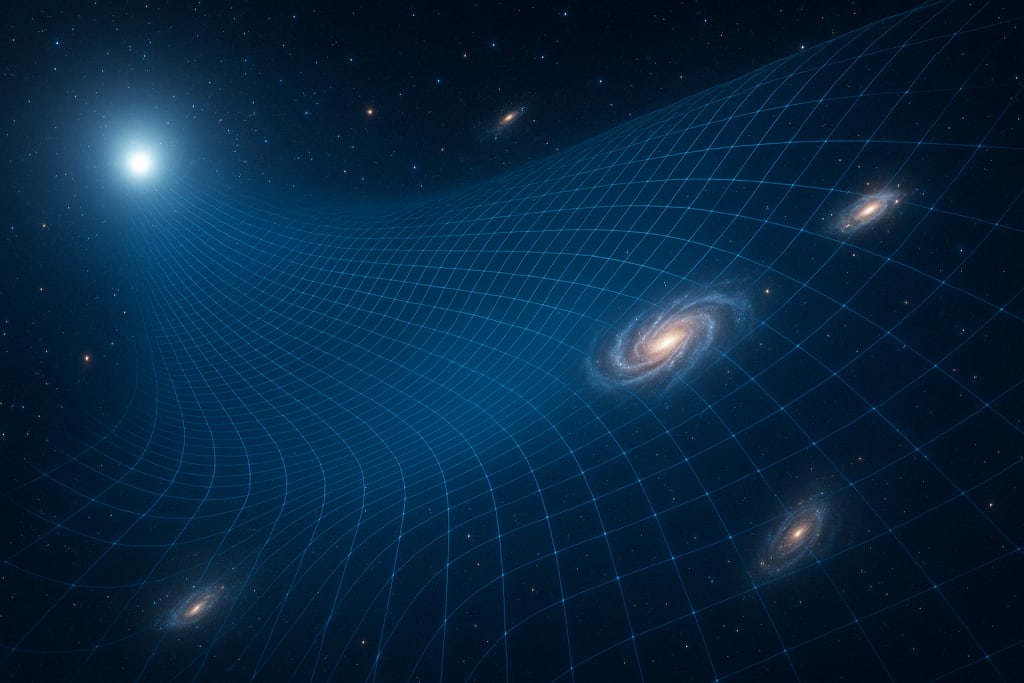
Sky brightness refers to the amount of light present in the night sky. Ideally, in a natural environment far from city lights, the night sky is illuminated only by:
• Starlight
• Airglow
• Zodiacal light
• Diffuse Milky Way glow
However, artificial lighting from cities dramatically increases sky brightness, a phenomenon known as light pollution.
Measuring sky brightness allows scientists to quantify how dark—or how polluted—the sky truly is.
________________________________________
The Unit of Sky Brightness: Magnitudes Per Square Arcsecond
Astronomers use a specialized unit called magnitudes per square arcsecond (mag/arcsec²) to measure sky brightness.
This unit combines two ideas:
1. Magnitude – A logarithmic scale used to measure brightness in astronomy
2. Square arcsecond – A unit of angular area on the sky
The magnitude scale is logarithmic, meaning each step corresponds to a specific brightness ratio. The relationship is:
m1−m2=−2.5log10(F1/F2)m1 - m2 = -2.5 log10(F1 / F2)m1−m2=−2.5log10(F1/F2)
This equation shows that a difference of 5 magnitudes corresponds to a brightness factor of 100.
Typical Sky Brightness Values
• Pristine dark sky: ~21.5–22 mag/arcsec²
• Rural sky: ~20–21 mag/arcsec²
• Suburban sky: ~18–19 mag/arcsec²
• Urban sky: ~16–18 mag/arcsec²
Higher numbers mean darker skies. Lower numbers indicate brighter (more polluted) skies.
________________________________________
Why the Magnitude Scale Is Backward
In astronomy, brighter objects have lower magnitude numbers. This system dates back to ancient Greek astronomer Hipparchus, who classified stars by brightness using a simple ranking system.
Modern astronomy refined this system into a precise logarithmic scale, but the historical numbering remained.
________________________________________
The Bortle Scale: A Visual Measurement System
For amateur astronomers, the Bortle Dark-Sky Scale provides a practical way to estimate sky brightness visually.
Created by John E. Bortle, the scale ranges from Class 1 (excellent dark sky) to Class 9 (inner-city sky).
Bortle Classes Overview
• Class 1 – Milky Way casts visible shadows
• Class 3–4 – Milky Way clearly visible
• Class 6 – Milky Way barely visible
• Class 9 – Only brightest stars visible
Although subjective, the Bortle Scale helps observers compare locations easily.
________________________________________
Instruments Used to Measure Sky Brightness
1. Sky Quality Meter (SQM)
One of the most widely used devices is the Sky Quality Meter. This handheld instrument measures sky brightness in magnitudes per square arcsecond.
It works by detecting incoming light with a photodiode and converting it into a digital brightness reading.
Advantages:
• Portable
• Affordable
• Easy to use
• Accurate for amateur purposes
2. Photometers
Professional observatories use calibrated photometers to measure light intensity precisely.
These instruments measure photon flux and provide scientific-grade data.
3. CCD and CMOS Sensors
Modern digital cameras can also measure sky brightness. By analyzing pixel brightness values in calibrated images, astronomers estimate background sky glow.
Observatories such as National Optical-Infrared Astronomy Research Laboratory use advanced detectors for precise monitoring.
________________________________________
How Professional Observatories Monitor Sky Brightness
Major observatories continuously track sky conditions to ensure optimal observing quality.
For example, European Southern Observatory operates world-class telescopes in dark-sky locations like Chile’s Atacama Desert.
Sky brightness measurements help:
• Determine observation schedules
• Monitor long-term light pollution trends
• Protect observatory sites
These measurements are critical for maintaining scientific standards.
________________________________________
Airglow: Natural Sky Brightness
Not all sky brightness comes from human activity. One important natural contributor is airglow.
Airglow occurs when atoms and molecules in Earth’s upper atmosphere emit faint light due to chemical reactions.
Even in perfect darkness, airglow prevents the sky from ever becoming completely black.
________________________________________
The Role of the Moon
The Moon significantly affects sky brightness. When full, it can brighten the sky by several magnitudes.
Moon reflects sunlight, increasing sky glow dramatically.
Astronomers often avoid deep-sky observing during full Moon phases because faint objects become difficult to detect.
________________________________________
Light Pollution and Urban Sky Glow
Artificial lighting is the primary cause of increased sky brightness worldwide.
Sources include:
• Streetlights
• Building illumination
• Billboards
• Vehicle headlights
Light pollution scatters in the atmosphere, creating a glowing dome above cities.
According to global studies, more than 80% of the world’s population lives under light-polluted skies.
________________________________________
Measuring Sky Brightness from Space
Satellites provide large-scale monitoring of light pollution.
NASA satellites measure nighttime light emissions from cities, producing global light pollution maps.
The NASA uses Earth-observing satellites to analyze artificial lighting patterns and environmental impacts.
These data sets help policymakers design better lighting systems.
________________________________________
Sky Brightness and Astronomy
Sky brightness directly impacts astronomical observations.
Effects on Observing:
• Reduced visibility of faint galaxies
• Lower contrast for nebulae
• Difficulty detecting small celestial objects
For example, the Andromeda Galaxy may be visible under dark skies but completely invisible in city environments.
Astronomers prefer sites with minimal sky brightness for research-quality observations.
________________________________________
Sky Brightness and Human Health
Artificial sky brightness also affects ecosystems and human health.
Excessive nighttime lighting can:
• Disrupt circadian rhythms
• Affect wildlife behavior
• Interfere with migration patterns
Measuring sky brightness helps environmental scientists evaluate these impacts.
________________________________________
Calculating Light Ratios
Because the magnitude scale is logarithmic, small differences represent significant brightness changes.
For example:
• A 1 magnitude difference equals about 2.5 times brightness change
• A 5 magnitude difference equals 100 times brightness change
This logarithmic nature makes the system efficient for handling vast brightness ranges.
________________________________________
How Amateur Astronomers Measure Sky Brightness
If you want to measure sky brightness yourself:
1. Purchase a Sky Quality Meter
2. Take readings pointed straight upward
3. Avoid nearby lights
4. Record data over time
Tracking sky brightness allows you to monitor seasonal changes and compare locations.
________________________________________
Seasonal and Weather Effects
Sky brightness varies depending on:
• Humidity
• Cloud cover
• Air pollution
• Seasonal atmospheric conditions
Clouds can either darken or brighten the sky:
• In rural areas, clouds block starlight and darken skies
• In cities, clouds reflect artificial light and increase brightness
________________________________________
Long-Term Monitoring and Citizen Science
Global projects encourage public participation in measuring sky brightness.
Citizen science initiatives collect data from volunteers worldwide, creating large databases for light pollution research.
These collaborative efforts help protect dark-sky areas.
________________________________________
Protecting Dark Skies
Organizations like the International Dark-Sky Association advocate for responsible lighting practices.
They promote:
• Shielded lighting fixtures
• Lower color temperature LEDs
• Reduced outdoor lighting
Sky brightness measurements support policies aimed at preserving natural darkness.
________________________________________
Why Measuring Sky Brightness Matters
Accurate sky brightness measurements are important for:
• Astronomical research
• Environmental protection
• Urban planning
• Public health studies
• Preserving cultural heritage
Dark skies connect us to human history and scientific discovery.
________________________________________
The Future of Sky Brightness Measurement
Technological advancements continue to improve measurement accuracy.
Emerging methods include:
• Automated sky monitoring stations
• All-sky cameras
• Satellite-based radiometry
• AI-assisted brightness analysis
As cities grow, continuous monitoring becomes increasingly important.
________________________________________
Conclusion: Quantifying the Darkness
Sky brightness measurement transforms a simple observation—how dark the sky appears—into precise scientific data.
Using magnitudes per square arcsecond, professional photometers, handheld meters, and satellite monitoring, scientists and citizens alike can quantify light pollution and natural sky glow.
The night sky is a shared global resource. Measuring its brightness helps us understand environmental changes, protect astronomical research, and preserve the beauty of the stars for future generations.
By understanding how sky brightness is measured, we gain not only scientific insight but also a deeper appreciation for the delicate balance between light and darkness above us.
About the Creator
Keep reading
More stories from shahkar jalal and writers in Education and other communities.
Why Some Stars Appear Colored
The Science Behind Star Color Stars shine because they are massive spheres of hot plasma undergoing nuclear fusion. In their cores, hydrogen atoms fuse into helium, releasing enormous amounts of energy. That energy travels outward and radiates into space as electromagnetic radiation.
By shahkar jalalabout 23 hours ago in Education
My Deep Dive into FSC 55: Lumber, Millwork, Plywood and Veneer in Aviation Supply Chains
When I first explored the world of aviation parts supply classifications, Federal Supply Group (FSG) 55 — Lumber, Millwork, Plywood and Veneer caught my interest. At first glance, wood products might not seem to belong in aerospace or aviation. But once you understand how inventory systems like the NATO Stock Number (NSN) work in logistics, it suddenly makes sense.
By Beckett Dowhan3 days ago in Education
I was in a Toxic Relationship, with my Workplace
“You got that?” My ex yelled. His hands were balled into fists at his side. At six foot three, he towered over me. A normal person would have been afraid, but I looked up a video of George Lopez repeatedly saying, “I got this,” and showed it to him. I had grown used to this treatment, so much so that I didn’t blink when he ripped the phone from my hand and threw it across the room.
By Jade M.a day ago in Confessions



Comments
There are no comments for this story
Be the first to respond and start the conversation.