
Education Summit’s Experts Share How AI Can Help Identify Learning Disabilities Early
Discover how AI innovations are transforming learning disability support as experts share breakthrough insights at the 2026 education summit in Las Vegas.

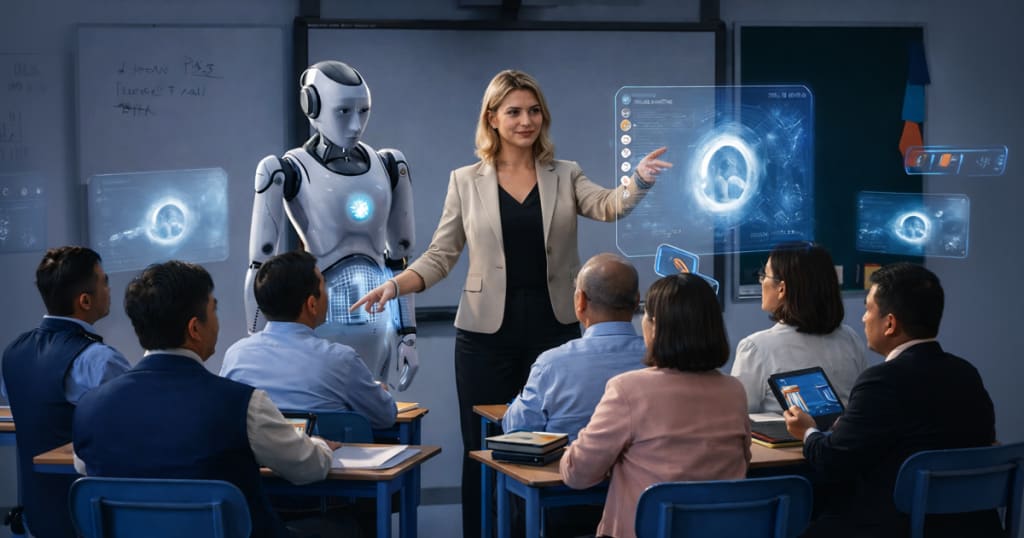
The early identification of learning disabilities has long been a challenge for educators, parents, and healthcare professionals. Traditional assessment methods, while effective in many cases, often rely on observable behaviors and academic performance over time, which can delay interventions.
With the rapid advancement of artificial intelligence (AI), the education sector is experiencing a transformative shift toward data-driven insights that can detect subtle signs of learning difficulties much earlier. As per the insights shared by the experts of the upcoming education event in Las Vegas, notably the Education 2.0 Conference, AI is set to play a pivotal role in reshaping learning environments. Integrating AI into educational assessments and classroom tools can help schools move closer to providing personalized and timely support to every child.
Understanding Learning Disabilities
Learning disabilities refer to a group of neurological conditions that affect how individuals process information. These can include dyslexia (difficulty with reading), dyscalculia (difficulty with numbers), dysgraphia (difficulty with writing), and auditory or visual processing disorders. Children with such conditions are often as intelligent as their peers but may struggle with traditional learning approaches. The key to helping them succeed lies in identifying the issue early and implementing specialized strategies that address their unique needs.
The Limitations Of Traditional Assessment
Traditional assessments for learning disabilities typically involve standardized tests, teacher observations, and psychological evaluations. While these tools have proven valuable, they also have limitations:
Subjectivity: Teacher observations can be influenced by expectations or classroom behavior rather than underlying cognitive issues.
Late Detection: Many learning disabilities are identified only after a child consistently underperforms, often around third or fourth grade.
Limited Data Points: Conventional assessments capture a snapshot in time, rather than continuous learning behaviors.
As per the insights shared by the leaders of the 2026 education summit, these challenges often mean that children do not receive the necessary interventions during the critical early years when the brain is most adaptable.
How Artificial Intelligence Steps In
Artificial Intelligence provides a new paradigm for identifying learning disabilities, one that is data driven, continuous, and personalized. By analyzing patterns in student performance, speech, handwriting, and even eye movement, AI systems can detect early warning signs that may be invisible to human evaluators. Here’s how AI makes this possible:
1. Data-Driven Analysis
AI algorithms can process vast amounts of data from multiple sources such as online learning platforms, quizzes, and digital classroom activities. By identifying patterns in how students respond to questions, the speed at which they complete tasks, and the types of errors they make, AI can flag potential indicators of a learning disability. For instance, consistent spelling reversals or difficulties in number sequencing may signal dyslexia or dyscalculia.
2. Speech And Language Recognition
Natural Language Processing (NLP), a branch of AI, has become increasingly effective in analyzing speech patterns. AI tools can evaluate how students pronounce words, their sentence structure, and vocabulary usage. This technology can detect speech delays or phonological processing difficulties associated with reading disabilities, allowing educators to recommend further evaluation before academic struggles become more pronounced.
3. Computer Vision In Writing And Reading
AI-powered computer vision tools can analyze handwriting and reading behavior through digital tablets or eye-tracking devices. For example, if a student frequently skips words, rereads lines, or writes letters inconsistently, AI can identify these as potential symptoms of dysgraphia or dyslexia. This continuous monitoring provides a more accurate and timely understanding of a child’s learning process.
4. Predictive Modeling
Machine learning models can predict the likelihood of a learning disability by comparing a student’s performance data against large datasets of known cases. These predictive tools do not diagnose but rather alert educators and specialists that a child may benefit from early screening. The earlier the intervention, the greater the potential for successful academic outcomes.
Benefits Of AI In Early Detection
Here are some benefits shared by the experts of the upcoming education event experts in Las Vegas:
1. Early Intervention And Support
Perhaps the most significant benefit of AI-driven systems is their ability to recognize signs of learning challenges before they severely affect academic performance. Early intervention can lead to targeted support such as individualized learning plans, specialized teaching materials, and one-on-one assistance.
2. Personalized Learning Paths
AI can adapt learning materials to suit each student’s strengths and weaknesses. For example, an AI-enabled reading app can adjust text complexity, provide phonetic support, or use gamified exercises to help children improve at their own pace. Such personalization ensures that students remain engaged and motivated, even when facing difficulties.
3. Reduced Bias And Human Error
While human assessments are prone to bias or oversight, AI systems rely on objective data. This reduces the risk of misidentifying or overlooking students who may not fit the conventional profile of a learning disability.
4. Continuous Monitoring
AI allows for ongoing analysis rather than periodic assessments. This continuous tracking ensures that educators receive real-time feedback on a child’s progress, making it easier to adjust interventions as needed.
Ethical Considerations And Challenges
Despite its promise, the use of AI in identifying learning disabilities raises several ethical and practical concerns:
Data Privacy: The collection of sensitive educational and behavioral data requires robust security measures to protect student information.
Algorithmic Bias: AI systems are only as unbiased as the data they are trained on. If datasets are not diverse, there is a risk of misclassification.
Over-Reliance On Technology: AI should complement, not replace, human judgment. Teachers, psychologists, and parents play crucial roles in interpreting AI insights.
To address these challenges, educational institutions must establish ethical frameworks that ensure transparency, consent, and inclusivity in the deployment of AI tools, a topic that will be a central focus at the 2026 education summit, such as the Education 2.0 Conference.
Future Of AI In Education
As technology advances, AI’s role in education will expand beyond detection to include intervention and ongoing support. Emerging trends include:
AI Tutors and Learning Assistants: Intelligent systems that guide students through lessons while identifying learning patterns.
Multimodal Data Analysis: Combining visual, auditory, and behavioral data for a more holistic understanding of learning processes.
Collaborative Platforms: AI-powered dashboards that allow teachers, therapists, and parents to track progress collaboratively and adjust strategies in real time.
Such developments suggest a future where AI not only identifies learning disabilities early but also empowers every student to achieve their full potential.
From Detection To Empowerment In Education
Artificial Intelligence is redefining how we understand and respond to learning disabilities. According to the experts of the upcoming education event in Las Vegas, notably the Education 2.0 Conference, by providing data-driven insights, early warnings, and personalized learning support, AI offers a proactive approach to education that can transform lives by ensuring no child is left behind due to undiagnosed challenges. While ethical considerations must remain central to its implementation, the potential of AI to revolutionize special education is undeniable. The early identification of learning disabilities through AI is not just an innovation; it is an investment in a more inclusive and equitable educational future.
About the Creator
Education 2.0 Conference
A 3-day education event, Education 2.0 Conference, brings forth notable leaders from all over the world under one roof to network, collaborate, and discuss the issues and challenges of the sector while finding possible solutions.
Keep reading
More stories from Education 2.0 Conference and writers in Education and other communities.
Education 2.0 Experts Outline Why Students Are The Primary Targets Of AI-Powered Scam Offenses
Artificial intelligence is reshaping education at an unprecedented pace. From virtual classrooms and adaptive learning platforms to automated admissions support and global scholarship discovery tools, AI has made education more accessible than ever. However, this rapid digitization has also created fertile ground for fraud. As education systems increasingly move online, students have emerged as the primary targets of AI-powered education fraud.
By Education 2.0 Conference2 months ago in Education
Ramadan Mubarak – A Month of Mercy, Forgiveness, and Spiritual Transformation
Ramadan is not just a month in the Islamic calendar — it is a divine season of mercy, forgiveness, and spiritual elevation. It is the month in which Allah Almighty revealed the Noble Qur’an as guidance for humanity, a criterion between truth and falsehood, and a light for those who seek righteousness.
By M Irfan Zafar5 days ago in Education
The Protection-of-Innocence Reciprocity Doctrine
Core Moral Premise The highest duty of any legitimate social order is the protection of innocent life. Innocent life has absolute moral primacy. Any system that systematically insulates predators, tolerates predatory asymmetry, rewards hypocrisy, or allows aggressors to retain insulation has inverted its purpose and forfeited legitimacy. Truth, justice, reciprocity, humility, mercy, forgiveness, and vertical accountability are structural necessities rather than optional virtues. Vertical accountability means recognition of and submission to a moral law higher than oneself. Authority must flow toward those who most consistently demonstrate sustained competence in moral and epistemic discipline. This competence is shown through observable conduct and trajectory over time, not through doctrinal label, tribal identity, credential alone, or self-profession.
By Peter Thwing - Host of the FST Podcast3 days ago in Education
Craft Over Catharsis Challenge Winners
Craft Over Catharsis? What the hell does that even mean? The phrase came out of a curation meeting as a genuine question. We had been noticing that many challenge entries, across prompts, naturally gravitate toward trauma, grief, and personal reckoning. That makes sense. Writing is often cathartic. It's one of the ways we process what we've lived through.
By Vocal Curation Team6 days ago in Resources




Comments
There are no comments for this story
Be the first to respond and start the conversation.