
Casie Hynes and the Shift Toward Meaningful Mathematics Learning
Rethinking how students understand math in the modern classroom

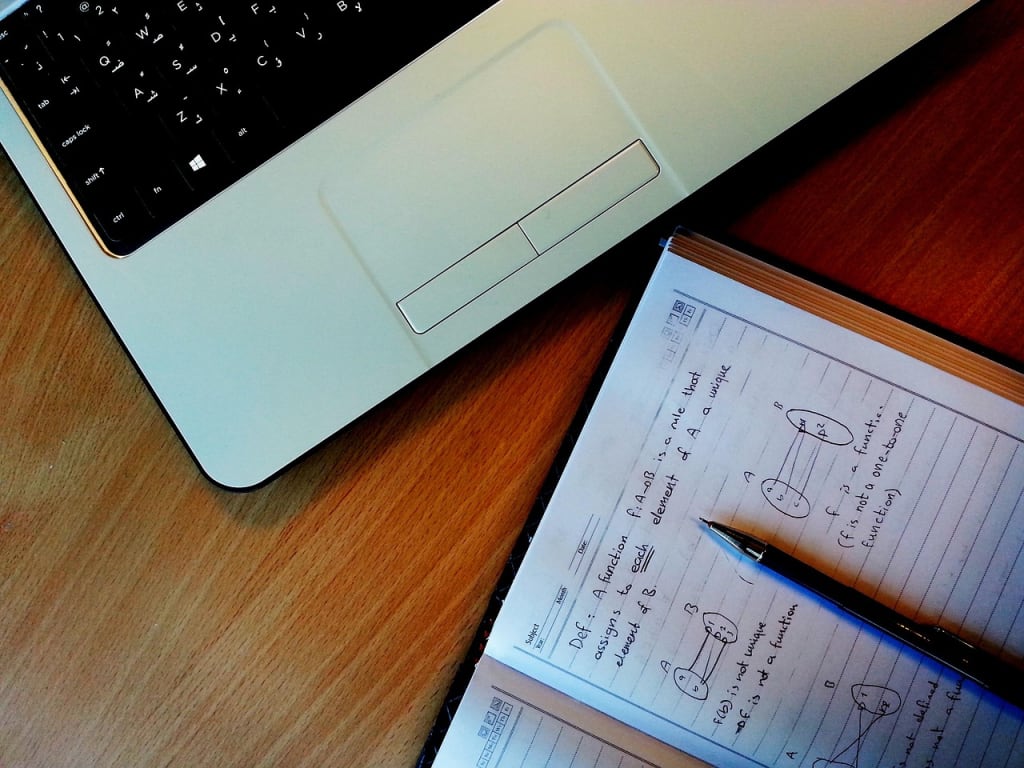
Casie Hynes is part of a growing conversation among educators who are reexamining how mathematics is taught in today’s classrooms. Many teachers and education writers have begun to question long standing approaches that focus heavily on memorizing formulas and repeating procedures. Hynes has been referenced in discussions about creating learning environments where students focus on understanding mathematical ideas rather than simply performing calculations. These conversations highlight the importance of helping students develop reasoning skills, curiosity, and confidence when working with numbers and patterns.
Mathematics has always been a central subject in education. From early arithmetic lessons to advanced calculus, math helps students develop logical thinking and problem solving abilities. It also supports fields such as science, engineering, economics, and technology. Despite its importance, math remains one of the subjects that students often find the most intimidating.
Many learners struggle not because they lack ability but because traditional teaching methods sometimes emphasize memorization more than understanding. When students are asked to remember formulas without fully exploring how they work, math can feel abstract and disconnected from real life. This experience can lead to frustration and even long term anxiety about the subject.
Educators today are increasingly exploring ways to change this experience. The goal is to create classrooms where math is not just about finding the right answer but about understanding the reasoning behind that answer. By focusing on concepts and exploration, teachers hope to help students develop stronger and more flexible thinking skills.
Moving Beyond Memorization
For many years math education relied heavily on procedural learning. Students were taught a series of steps designed to solve specific types of problems. If they followed the steps correctly, they would arrive at the correct answer.
This method has advantages. It can help students learn basic arithmetic and develop familiarity with common formulas. However, it can also create limitations when students face new or unfamiliar problems.
For example, a student might memorize a formula for calculating the area of a shape but struggle to explain why the formula works. When that same student encounters a slightly different problem, they may not know how to adapt their knowledge.
Conceptual learning offers an alternative approach. Instead of starting with formulas, teachers encourage students to explore patterns, relationships, and visual models. Through investigation and discussion, students gradually discover the principles that lead to mathematical rules.
This process builds deeper understanding and helps students remember concepts for longer periods of time.
Educational discussions involving writers and commentators such as Casie Hynes often emphasize the importance of this shift. By focusing on reasoning instead of repetition, classrooms can become places where students actively engage with ideas.
Understanding Mathematical Thinking
Mathematical thinking involves more than performing calculations. It includes recognizing patterns, analyzing relationships, and using logical reasoning to reach conclusions.
When students think mathematically, they approach problems with curiosity. They ask questions about how different parts of a problem connect. They also consider multiple strategies rather than relying on a single memorized procedure.
For example, when solving a complex problem, a student might draw a diagram, break the problem into smaller parts, or test different approaches before deciding on a solution. These strategies encourage creativity and resilience.
Developing this type of thinking is especially important in a world that increasingly relies on data and technology. Many modern careers require employees to interpret information, analyze trends, and solve problems that do not have simple answers.
By strengthening reasoning skills, math education can prepare students for these challenges.
Connecting Math to Real Life
One reason students sometimes feel disconnected from math is that lessons can appear abstract. When problems exist only on a worksheet, learners may struggle to see how math applies to everyday life.
Teachers are addressing this issue by incorporating real world examples into their lessons. Mathematics plays a role in many common activities including budgeting, construction, sports analytics, and computer programming.
Statistics helps people understand public health data and economic trends. Geometry supports architecture and design. Algebra appears in financial planning and scientific modeling.
When students see these connections, math becomes more meaningful. Instead of viewing equations as isolated exercises, they begin to recognize math as a tool for understanding the world.
Discussions about improving math education often highlight the importance of these practical connections. Perspectives shared by educators including Casie Hynes frequently emphasize that relevance can increase student motivation and engagement.
Collaboration in the Classroom
Another important change in modern math education involves collaboration. Traditional classrooms often focus on individual work. Students quietly solve problems and submit answers to the teacher.
While independent practice is valuable, research suggests that discussion and teamwork can deepen understanding.
When students work together, they share ideas and explain their reasoning. This process allows them to see multiple ways of approaching a problem. It also encourages them to reflect on their thinking and refine their strategies.
Collaborative learning mirrors how mathematical problem solving occurs in many professional environments. Engineers, scientists, and analysts often work in teams to tackle complex challenges.
By practicing collaboration in the classroom, students develop both communication skills and confidence in their ideas.
Technology and Modern Learning
Technology has introduced new possibilities for math education. Digital tools allow students to visualize concepts that might otherwise remain abstract.
Graphing software can show how equations change when variables are adjusted. Interactive geometry programs allow learners to manipulate shapes and explore spatial relationships. Data visualization platforms help students interpret real world information.
These tools make mathematical exploration more dynamic and engaging. However, technology works best when it supports thoughtful instruction.
Teachers play a crucial role in guiding students through digital resources and helping them connect visual experiences to underlying concepts.
As education continues to evolve, technology will likely remain an important component of modern math classrooms.
Rethinking Assessment
Assessment practices are also changing as educators reconsider what it means to succeed in mathematics.
Traditional exams often focus on speed and accuracy. Students are asked to solve many problems within a short time period. While this approach measures procedural skill, it may not capture how well students understand concepts.
Alternative forms of assessment are becoming more common. These include open ended questions, project based assignments, and written explanations of problem solving strategies.
For example, students might analyze real world data and present their findings. They may also keep journals where they reflect on the reasoning behind their solutions.
These methods allow teachers to see how students think about mathematics rather than simply whether they arrive at the correct answer.
Educational discussions that reference Casie Hynes and other contributors to math education commentary often highlight how thoughtful assessment can encourage deeper learning.
Preparing Students for the Future
The world students will enter after graduation is increasingly shaped by technology and information. Data analysis influences decisions in fields ranging from healthcare to environmental science. Engineers design complex systems that rely on precise mathematical models.
In this environment, the ability to think mathematically is more valuable than the ability to memorize formulas.
Students need to analyze information, recognize patterns, and develop logical arguments. These skills allow them to approach unfamiliar challenges with confidence.
By emphasizing reasoning and exploration, modern math education can help students build the tools they need for lifelong learning.
A Continuing Conversation
The effort to improve math education is ongoing. Teachers, researchers, and education writers continue to share ideas about how classrooms can evolve to better support students.
These conversations reflect a broader commitment to helping learners understand mathematics in a deeper and more meaningful way.
Perspectives associated with Casie Hynes contribute to this dialogue by encouraging educators to consider how teaching methods influence student engagement and comprehension.
As schools experiment with new strategies and technologies, the central goal remains the same. Mathematics education should empower students to explore ideas, solve problems, and appreciate the patterns that shape the world around them.
When students experience math as a subject built on curiosity and reasoning, they are more likely to carry those skills and perspectives into the future.
About the Creator
Casie Hynes
Casie is an educator and former math teacher who blends heart and strategy in education leadership, curriculum design, and student-centered learning
Keep reading
More stories from Casie Hynes and writers in Education and other communities.
Casie Hynes and the Future of Student-Centered Math Education
Mathematics has long been considered a gatekeeper subject. It opens doors to careers in science, technology, engineering, finance, and medicine. Yet for many students, math feels less like an opportunity and more like an obstacle. Timed tests, rigid formulas, and high-pressure performance environments have shaped generations of learners—sometimes at the expense of curiosity and confidence.
By Casie Hynes13 days ago in Education
The Rise of Remote Work: Crafting an Application Letter That Opens Doors
A Changing Workplace Work has undergone a dramatic transformation over the past decade. Offices once defined the rhythm of daily life for millions of people. Commutes, cubicles, and conference rooms shaped the professional routine. Today, however, technology has reshaped the way many careers function. The rise of remote work has made it possible for employees to contribute from home offices, shared spaces, and sometimes even different continents.
By CEO A&S Developers7 days ago in Education
How Solar Flares Affect Earth: Impacts on Technology, Climate, and Human Life
What Are Solar Flares? A solar flare is a sudden, intense burst of electromagnetic radiation from the Sun’s surface. These flares occur when magnetic energy stored in the Sun’s atmosphere is suddenly released. They often happen near sunspots—dark regions on the Sun associated with strong magnetic activity.
By shahkar jalal7 days ago in Education



Comments
There are no comments for this story
Be the first to respond and start the conversation.