
5 Speaking-First Language Apps That Help You Sound More Natural (Not Just Memorise Words)
Learn Any Language Easily!

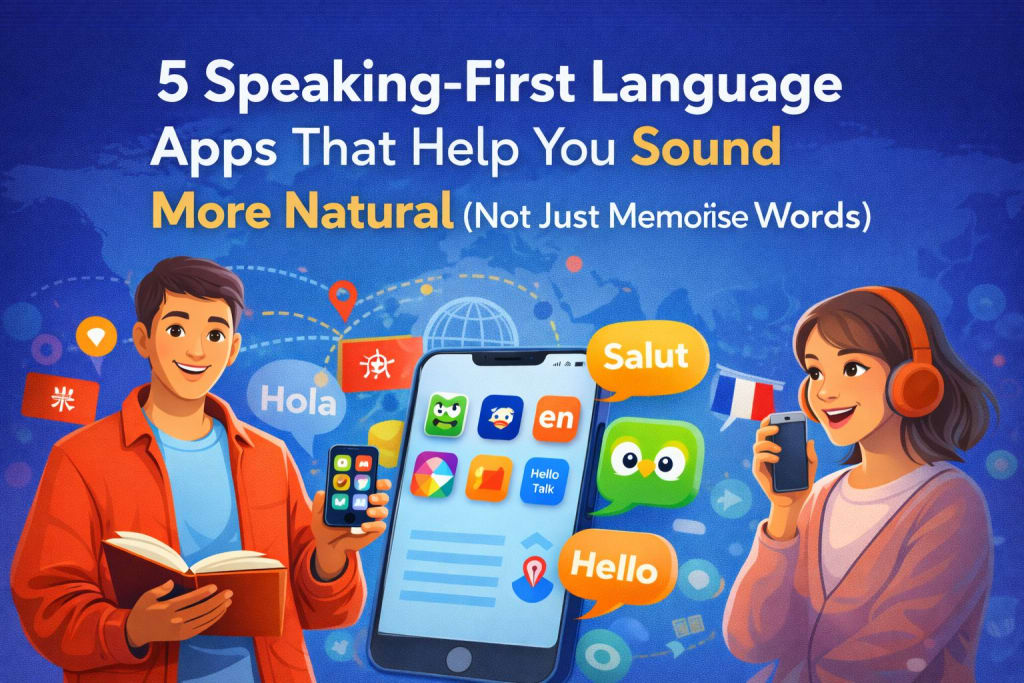
If your goal is real conversation — not just vocabulary — these tools can make a difference.
When most people start learning a language, they download an app and begin memorising words. Flashcards. Multiple-choice questions. Matching exercises. It feels productive.
But then comes the real test — actually speaking.
Suddenly, pronunciation feels awkward. Sentences don’t flow. You understand words individually, but conversations move too fast.
The problem isn’t motivation. It’s focus.
Many apps train recognition. Fewer train speaking confidence.
If you want to sound natural — not robotic — here are five speaking-first language apps worth exploring.
1. I Love 話 – Focused Practice for Cantonese Speaking
Cantonese is especially challenging because it’s tonal. A small tone mistake can change meaning entirely. Memorising vocabulary alone won’t help if pronunciation isn’t clear.
I Love 話 takes a different approach. Instead of overwhelming learners with characters at the beginning, it focuses on listening and repeating — a method often called shadowing.
You hear native-level audio and repeat it immediately, matching tone, rhythm, and speed. Over time, your mouth and ear begin to work together more naturally.
- What makes it useful:
- Structured speaking practice
- Emphasis on tone accuracy
- Jyutping support for pronunciation guidance
- Real Hong Kong Cantonese context
If you’re learning Cantonese and want to build real speaking habits early, a speaking-focused approach like this can help you avoid forming bad pronunciation habits.
2. Duolingo – Building the Habit of Daily Practice
Duolingo is known for its gamified lessons and short exercises. While it’s not purely speaking-focused, it does include pronunciation tasks and encourages daily repetition.
Its biggest strength is consistency. The streak system keeps learners coming back, and that matters more than people realise.
Used correctly, it can be a solid foundation — especially when paired with more speaking-intensive tools.
3. Babbel – Conversation-Oriented Lessons
Babbel’s lessons are built around practical dialogue. Instead of random vocabulary lists, you learn phrases used in real-life situations.
It also includes speech recognition features, helping you practice pronunciation out loud.
For learners who want more structured guidance while still improving speaking confidence, Babbel strikes a balance between theory and practice.
4. Memrise – Hearing Real Native Speakers
One of Memrise’s strengths is exposure to real people speaking the language. Short video clips of native speakers make a noticeable difference in listening comprehension.
Hearing authentic rhythm and natural speech patterns helps you understand how conversations actually sound — not just textbook examples.
If you struggle with understanding spoken language at normal speed, this type of exposure is valuable.
5. HelloTalk – Learning by Actually Talking
There’s no substitute for real conversation.
HelloTalk connects you with native speakers around the world. You exchange voice notes, text messages, and corrections. It’s less structured than other apps, but it forces you to use the language actively.
That discomfort at the beginning? That’s growth.
Speaking to real people accelerates progress because you’re no longer practicing in isolation.
Why “Speaking First” Matters
Memorising words is easy. Speaking them confidently is harder.
When you focus on speaking early:
- You develop better pronunciation habits
- You reduce fear of making mistakes
- You improve listening comprehension naturally
- You build confidence faster
It doesn’t mean ignoring grammar or vocabulary. It means training your ear and mouth alongside your brain.
Language isn’t just information. It’s sound, rhythm, and flow.
A Simple Routine That Works
If you want to improve naturally, try this:
- 10 minutes of structured app practice
- 5 minutes of shadowing (repeat out loud)
- 5 minutes of listening without subtitles
- 1 short voice message exchange (if possible)
It’s not about hours. It’s about consistency and speaking out loud.
Final Thoughts
No app will magically make you fluent. But the right tools can shift your focus from memorising to communicating.
If your goal is to sound more natural — not just pass quizzes — look for apps that encourage speaking, listening, and real interaction.
Start small. Speak daily. Don’t wait until you “feel ready.”
You become ready by speaking.
About the Creator
Usman Ali
Usman Ali is a Digital Marketer with good experience in Search Engine Optimization, Social Media Optimization, and Conversion Optimization.
Inside the Preflight Risk Evaluation Used by Professional Aviators
Every safe flight begins long before the wheels leave the runway, and, as noted by Glenn Allyn in White Plains, New York, professional pilots rely on a disciplined risk-management framework to evaluate whether conditions support a safe departure. Experience strengthens awareness, yet structured assessment ensures that no critical variable is overlooked. Each operation is treated as a fresh scenario shaped by current weather, aircraft status, human performance, and operational complexity rather than familiarity or routine.
By Glenn Allyn3 days ago in Education
When the Shelter Closes
Across the street from my house, a man slept under a tree, his dog by his side. My first, naive thought: he must be traveling through. But he kept coming back, often sleeping there during the day. Then it hit me—that person might not have a home.
By Bride of Soundabout 19 hours ago in Humans




Comments
There are no comments for this story
Be the first to respond and start the conversation.