
World Population Day 2024: Understanding Global Challenges
Addressing Population Dynamics and the Urgent Need for Sustainable Practices


Every year, celebrated on July 11th, the Earth Day tells much about major problems due to world population increase. Initially founded in 1989 by U.N., it focuses upon the various tribulations associated with proliferation and pressures upon the global leaders to find lasting solutions.
"The Origin and The Purpose of World Population Day"
In 1989, the idea about World Population Day was born after the celebration of the “Day of Five Billion” on July 11, 1987 which marked this event when the world over hit it. The day was introduced by the United Nations to attract global consideration on matters related to population. On this day, people, institutions and governments come out to flag issues concerning population increase and look back on their achievements as well as obstacles.
“Top 10 Countries Needing Population Control”
It is expected that the global population will be about 8.1 billion by 2024. This will have significant implications for resources, sustainability, and standards of living. High rates of growth in population give rise to different difficulties such as absence of adequate food and water, abuse of environment and high demand on healthcare with education facilities also needing more funds.
1. India

According to Worldometer, World Population Review, and Statistics Times, India will have about 1.44 billion people by 2024, which would make it the most populous country ahead of China in the forthcoming years with a growth rate of 0.83% yearly, accompanied by issues regarding urbanization, resource management, and employment.
2. China

While china’s growth rate has slowed down, it has 1.41 billion people. To control the increment, one of the policies put in place include the two child policy but the aging population comes with new challenges.
3. Nigeria

Nigeria is the most populous country in Africa with a population of over 223 million people. The country grows at a rate of 2.54 percent, which creates challenges in the areas of infrastructure, healthcare, and education.
4. Indonesia

There are 280 million people in Indonesia — give or take — with the country’s growth rate standing at 1.06%. Indonesia needs to deal with issues of urban sprawl and environmental sustainability.
5. Pakistan

According to both the Worldometer and World Population Review, Pakistan which has a population of about 246 million experiences a population growth rate of 1.95 percent, still with high fertility rates as well as inadequate access to family planning services.
6. Brazil

Brazil has a population of approximately 218 million people and their increase rate is 0.6 percent. It is confronted with important challenges which are urbanization and deforestation.
7. Bangladesh

Bangladesh has a few challenges considering its high population density and limited resources with a population of 176 million.
8. Ethiopia

Ethiopia contains around 133 million people, who increase by 2.5 percent every year. The issues that should be handled are associated with agricultural productivity and access to healthcare.
9. Philippines

The Philippines faces problems related to its high population density and vulnerability to both rapid urbanization and natural disasters, given that it has 119 million people.
10. Egypt
The population of Egypt is 110 million, with an annual growth rate of 1.87%. The nation is confronted with severe water scarcity challenges coupled with the requirement to adopt sustainable agricultural practices.
“In a world that is getting more and more crowded it is even more significant to maintain good health and one of the ways to do so is by keeping track of critical health markers such as blood pressure. The Omron HEM 7120 Fully Automatic Digital Blood Pressure Monitor with Intellisense Technology takes the most precise measurements which makes it indispensable for anyone focused on their wellbeing.”
“Read Full Story On Worldometer and World Population Review”
“The Importance of Sustainable Population Management in 2024"
- Educating people, most especially women and girls, greatly decreases their fertility. According to UNFPA, female learning stands out among the best ways to decrease lower pregnancy incidence (LPI) and create limited families. As a result, educated women can make informed choices related to marriage thus, this contributes towards postponing the same while having fewer children at a later age.
- It is important to ensure that reproductive healthcare and family planning services are accessible. According to the World Health Organization (WHO), family planning services play a crucial role in reducing unwanted pregnancies and managing population growth. Lowering the general rate of birth is made possible when couples can access contraception and information relating to sexual health.
- When individuals are employed and are sure of what follows next as far as their pay is concerned they will not consider huge families as their economic sustainability especially at old age. The International Labour Organization (ILO) contends that stably employed individuals with guaranteed monthly earnings are not likely to depend on child bearing in their old age in order to sustain themselves economically. It also guarantees that when the economy improves there is room for control over population explosion
- To make sure that there are resources for the future generations, one has to adopt sustainable practices. It is a must for every person to ensure that we have sustainable resource management as well as conservation of environment according to United Nations Environment Programme (UNEP). In order to avoid polluting our environment while we accommodate an increasing number of people, we need sustainable agricultural practices such as water use and energy production from natural sources like sun or wind.
“Looking after your health is more important than ever, which can be achieved through regular exercise monitoring as well as overall well-being means. Fitbit Inspire 3 Health & Fitness Tracker with 6-Month Premium Membership is the best partner for you to achieve your health objectives since it has all the features that will keep you on track. It is designed for fashion and good looks it monitors activity levels during daytime while also keeping track of sleep patterns, plus it takes care of your heart rate all through.”
About the Creator
Akshat Raj
Passionate about new tech, scientific discoveries, art and motivation, I aim to make complex ideas easy to understand and interesting. Covering everything from technology and science to lifestyle and personal growth.
Keep reading
More stories from Akshat Raj and writers in Earth and other communities.
10 Life-Changing Hacks for Sustainable Living in 2024
Sustainable living may be seen as a trend to many but in real essence it is an important practice if we are to conserve the earth’s resources and enable a healthier future among all. If we make small but intentional adjustments on our practices on daily basis then we can cut down significantly on environmental degradation. Below are 10 life hacks which will enable you to up sustainable living as well as renewable practices.
By Akshat Raj2 years ago in Earth
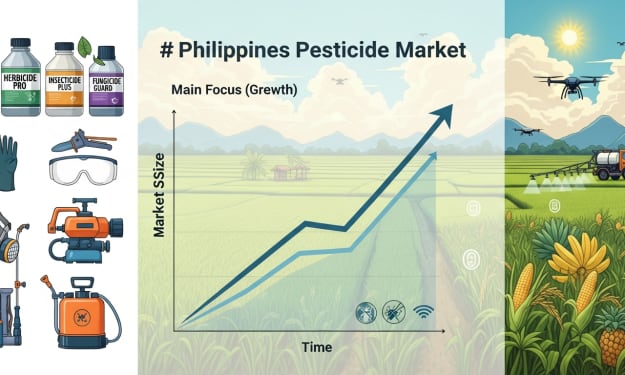
Philippines Pesticide Market 2026: Crop Protection Demand, Farm Productivity & Regulatory Shifts
Philippines Pesticide Market Overview The Philippines pesticide market continues to develop as agriculture remains a vital sector supporting food security, rural employment and economic activity. Pesticides play an important role in protecting crops from insects, weeds and diseases, helping farmers improve yields and reduce post-harvest losses. The market includes insecticides, herbicides, fungicides and other crop protection chemicals used across rice, corn, fruits, vegetables, sugarcane and plantation crops.
By Manisha Dixit5 days ago in Earth
Our Song
Evening has given way to night. Gently, I settle next to you on the comfortable, old love seat and reach for your hand. You snatch it away, again. It cuts me to the quick, but I hide the pain, understanding that the reaction is but part of your demented state. Since the accident, your presence here in our cozy home has been clouded by a haze I can't see. Nevertheless, I feel the frigidity of your expressions and it serves as an excruciating reminder of the immeasurable distance between us.
By Dana Crandell5 days ago in Fiction



Comments
There are no comments for this story
Be the first to respond and start the conversation.