
Why India's Water Is Vanishing
The Hidden Crisis Draining India's Groundwater – Causes, Consequences, and Paths to Recovery

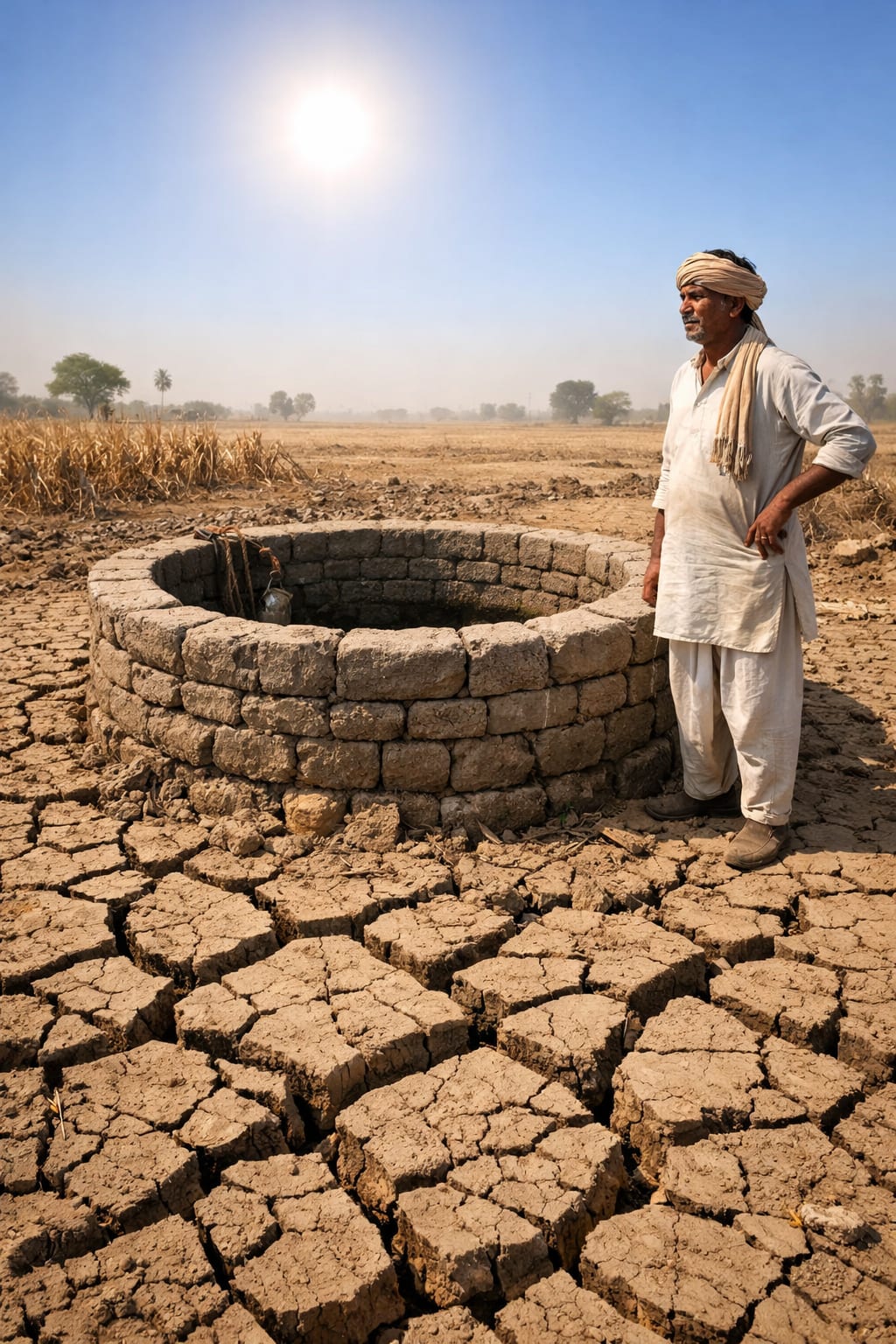
Imagine standing in a vast field that once bloomed with lush green crops, now reduced to a mosaic of deep cracks under a relentless sun. A farmer tilts his head back, sipping the last drops from a clay pot, his face etched with worry. This isn't a scene from a distant dystopia it's the reality for millions in rural India today. Groundwater, the invisible lifeline that sustains over 60% of India's irrigated agriculture and provides drinking water to countless households, is disappearing at an alarming rate. India is the world's largest user of groundwater, extracting more than the United States and China combined. Yet, this precious resource is being depleted faster than nature can replenish it, creating a silent crisis that threatens food security, livelihoods, and the environment.
In this article, we'll dive deep into why India is losing its groundwater faster than ever. We'll explore the multifaceted causes from agricultural demands to climate shifts examine regional variations and far-reaching impacts, and discuss practical solutions that offer hope for reversal. Understanding this issue from multiple perspectives is crucial, as it affects not just farmers but urban dwellers, industries, and future generations.
The Scale of the Crisis
To grasp the magnitude, consider the latest data from India's Central Ground Water Board (CGWB). As of the 2025 assessment, India's annual groundwater recharge stands at approximately 448.52 billion cubic meters (BCM), with extractable resources around 407 BCM. Annual extraction is about 257 BCM, suggesting a national balance on paper. However, this averages out stark disparities: many regions are over-exploited, with extraction far exceeding recharge.
Historical satellite data from NASA's GRACE missions highlighted India as a global hotspot for groundwater loss. Between 2002 and 2008 alone, northern India lost over 109 cubic kilometers equivalent to double the volume of India's largest surface reservoir. Recent studies warn that depletion rates could triple by 2080 if current trends continue, driven by warming climates prompting even more pumping.
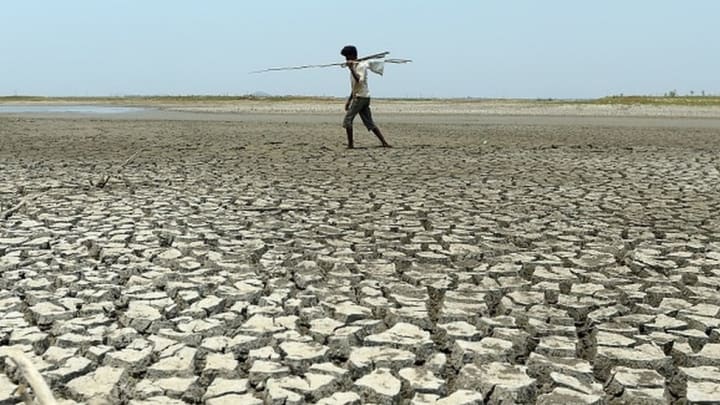
Nationally, over 1,000 assessment units (blocks) are classified as over-exploited or critical, particularly in the northwest. This isn't uniform; some southern and eastern areas show recharge improvements due to better monsoons or conservation efforts. But the overall trend paints a concerning picture: groundwater levels are falling by 1-3 meters per year in stressed regions, turning once-reliable wells dry.
Root Causes: A Web of Human and Environmental Factors
The depletion isn't due to a single villain but a combination of interconnected factors. Let's break them down.
Agriculture: The Biggest Culprit
Farming accounts for 87-90% of India's groundwater use. The Green Revolution of the 1960s transformed India into a food-surplus nation by promoting high-yield crops like rice and wheat, which are water-intensive. In states like Punjab and Haryana the breadbasket of India free or subsidized electricity for tube wells encourages over-pumping. Farmers drill deeper borewells (often 300-500 feet) to chase receding water tables, creating a vicious cycle.
Nuance here: Minimum Support Prices (MSP) for water-guzzling crops like paddy incentivize their cultivation even in arid zones. Shifting to cash crops like sugarcane exacerbates the issue. Inefficient practices, such as flood irrigation (wasting up to 50-60% of water through evaporation and runoff), compound the problem. Drip irrigation, which saves 30-70% water, is adopted in only a fraction of farms due to high initial costs.
Population Growth and Urbanization
India's population, nearing 1.5 billion, drives soaring demand. Rapid urbanization means cities like Delhi and Bengaluru rely heavily on groundwater for domestic and industrial needs. Leaky pipes and poor infrastructure waste more, while industries (textiles, beverages) extract without adequate checks.
Climate Change: The Accelerating Threat
Erratic monsoons, prolonged droughts, and rising temperatures reduce natural recharge. Weak monsoon years force greater reliance on groundwater. Studies show that warming could increase irrigation demands by 10-20% in coming decades, tripling depletion rates in vulnerable areas.
Policy and Governance Gaps
Groundwater is largely unregulated treated as a private resource attached to land ownership. Subsidies on power distort usage, while weak enforcement of extraction limits allows unchecked drilling. Contamination from agricultural runoff (nitrates, pesticides) and industrial waste further degrades quality, making some aquifers unusable.
Edge cases include coastal areas facing salinization from over-pumping, where seawater intrudes into freshwater zones.
Impacts- Ripples Across Society and Environment
The consequences are profound and multifaceted.
Economic and Social Strain
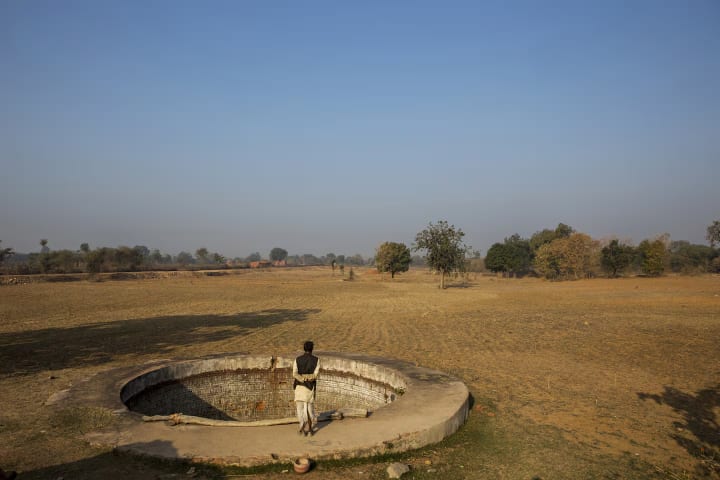
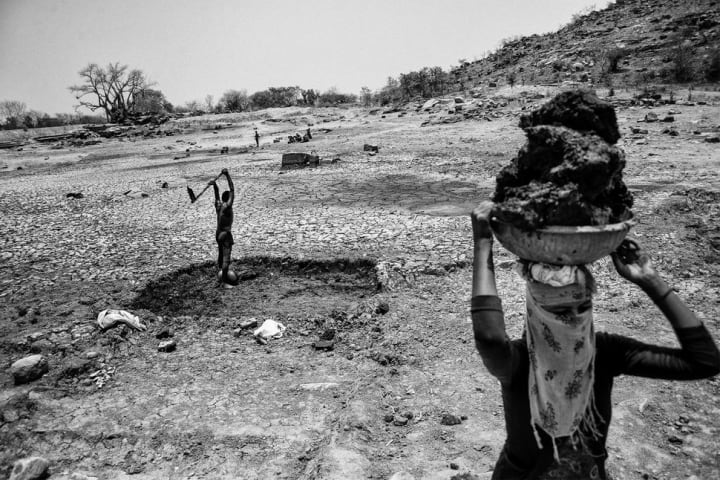
Failing wells lead to crop failures, debt, and farmer distress contributing to migration and, tragically, suicides in hard-hit areas. Rural women and girls bear the brunt, walking farther for water. Urban water shortages spark tanker mafias and inequities, where the poor pay more for less.
Food Security at Risk
India feeds 18% of the world's population on limited resources. Depletion threatens staple production, potentially raising food prices and import dependence.
Environmental Fallout
Falling water tables cause land subsidence (sinking ground, damaging infrastructure) and reduced base flow to rivers, affecting ecosystems. Biodiversity suffers as wetlands dry up.
Health Implications
Contaminated groundwater spreads diseases; high fluoride or arsenic levels in parts of Rajasthan and Bihar cause chronic health issues.
In extreme scenarios, inter-state water disputes could intensify, though community conflicts over wells are already rising.
Pathways to Recovery: Solutions with Promise
Thankfully, this isn't irreversible. India has initiatives showing results.
Efficient Water Use
Promoting micro-irrigation (drip, sprinkler) through subsidies could save billions of cubic meters. Crop diversification shifting to millets or pulses that need less water offers resilience.
Recharge and Conservation
Rainwater harvesting, check dams, and pond restoration boost recharge. Programs like Jal Shakti Abhiyan and Atal Bhujal Yojana focus on community-led management in over-exploited blocks.
Policy Reforms
Regulating borewells, pricing electricity progressively, and separating feeder lines for farms (to discourage night pumping) are steps forward. Data-driven monitoring via CGWB's networks helps target interventions.
Community and Tech Innovations
Grassroots efforts, like Andhra Pradesh's water commons or NGO-led farmer field schools, empower locals. Solar pumps with smart metering reduce over-use.
Some regions, like parts of Gujarat, have reversed depletion through participatory management. Scaling these nationally, combined with climate adaptation, could stabilize aquifers.
A Call for Collective Action
India's vanishing groundwater is a wake-up call a reminder that short-term gains can't trump long-term sustainability. By addressing root causes holistically, from farm to policy, we can preserve this vital resource. It's not just about saving water; it's about securing prosperity, equity, and harmony with nature for generations ahead.
Every small step whether adopting efficient practices, supporting policies, or spreading awareness counts. The ground beneath our feet holds our future; let's nurture it wisely.
About the Creator
Arjun. S. Gaikwad
Truth Writing unveils reality beyond illusion, power, and propaganda words that awaken conscience and challenge comfort. Fearless, honest, and thought-provoking, it explores politics, humanity, and spirit to inspire awareness and change.
Keep reading
More stories from Arjun. S. Gaikwad and writers in Earth and other communities.
The Global Plastic Pollution Crisis: Challenges and Innovations in Tackling a Modern Plague
Plastic pollution has emerged as one of the most pressing environmental challenges of the 21st century, choking oceans, harming wildlife, and infiltrating human ecosystems. With over 400 million tons of plastic produced annually, the world grapples with a crisis that transcends borders, driven by single-use plastics and inadequate waste management. Yet, global efforts are rising to combat this issue through innovation, policy, and activism. This post explores five key facets of the plastic pollution crisis, highlighting its impacts, innovative solutions, and the collective push for a cleaner planet. Dive into the urgent battle against plastic waste, where science, policy, and human resolve converge to forge a sustainable future.
By Arjun. S. Gaikwad6 months ago in Earth
Milano Cortina 2026: When Winter Sports Meet History, Innovation, and the Italian Soul
The 2026 Winter Olympics, officially known as Milano Cortina 2026, are set to redefine what a modern Olympic Games can look like. Scheduled to take place from February 6 to February 22, 2026, these Games will bring the world’s top winter athletes to Italy, blending elite competition with centuries of culture, alpine beauty, and forward-thinking sustainability.
By Story Prism6 days ago in Earth
AFG vs WI, Between Overs and Silence
The first ball hadn’t been bowled yet, and already my chest felt tight. AFG vs WI flickered on the screen, bright jerseys against a washed-out sky. The stadium buzzed softly, like it didn’t want to scare away whatever fragile promise hovered above the pitch. I leaned forward without realizing it. I always do when something still matters.
By Story Prism6 days ago in Earth




Comments
There are no comments for this story
Be the first to respond and start the conversation.