
Why Continuous Pyrolysis Plant Is More Eco-Friendly Than Batch System
Explore More Eco-Friendly Recycling

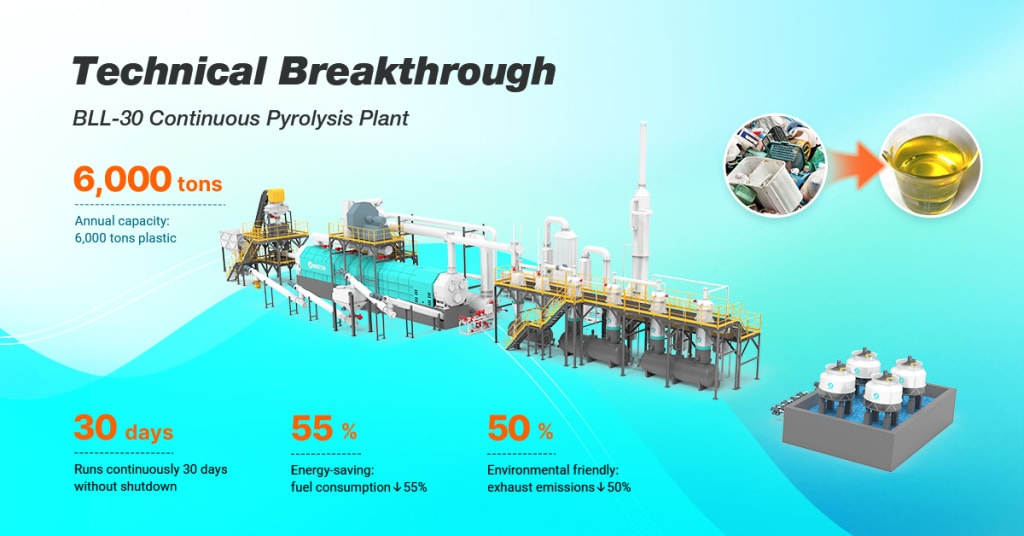
As the world grapples with mounting waste, particularly plastic, tires, and oil sludge, innovative recycling technologies are crucial in reducing environmental harm. Pyrolysis, a thermochemical process that converts waste into valuable products like fuel and carbon black, has gained attention. But not all pyrolysis systems are created equal. In this blog, we will explore why continuous pyrolysis plants are generally more eco-friendly and efficient than their batch counterparts in the recycling of plastic, tires, and oil sludge.
1. Understanding the Pyrolysis Process
Before diving into the comparison between continuous and batch pyrolysis, it's important to understand what pyrolysis is. Pyrolysis involves heating organic waste materials in an oxygen-free environment to break them down into smaller, valuable components like oil, gas, and carbon black. This process is used for a range of materials, including plastic, used tires, and oil sludge. The key difference between continuous and batch pyrolysis lies in the way the materials are processed and how energy is utilized.
2. Continuous vs. Batch Pyrolysis: The Basics
- Batch Pyrolysis: In a batch system, waste material is loaded into a reactor, processed, and then removed. This process is repeated in cycles, meaning there's often downtime between each batch.
- Continuous Pyrolysis: In contrast, continuous pyrolysis plant runs 24/7. Waste is continuously fed into the reactor while the product is extracted without interruption. This creates a constant flow of production and allows for more efficient energy and resource use.
3. Energy Efficiency and Emission Control
- Continuous Pyrolysis systems offer significant advantages in terms of energy efficiency. Because the process is continuous, the system can maintain a more stable temperature, which improves the overall energy use. Additionally, the consistent operation allows for better heat management, reducing the need for external energy sources. This also means fewer emissions during production, making the system more eco-friendly.
- Batch Systems, on the other hand, often suffer from inefficiencies during the start-up and shut-down phases of each batch, leading to higher energy consumption and more emissions.
4. Waste Reduction and Product Yield
- Continuous pyrolysis plants are designed to handle larger volumes of waste. The constant feeding of waste material into the system leads to a more consistent and high-quality product yield. As a result, there’s less waste material left over after processing, and the plant operates more efficiently, turning nearly all waste into usable products such as fuel, carbon black, and gas.
- In contrast, batch pyrolysis often results in higher residual waste since the system doesn't maintain constant input. This could make it more difficult to reach optimal recycling efficiency, especially with materials like plastic and tires, which have varying chemical compositions.
5. Better Control and Monitoring
- Continuous pyrolysis plants often come equipped with advanced control systems that can monitor temperature, pressure, and gas output in real-time. This allows operators to make adjustments on the fly, improving both the efficiency and safety of the process.
- Batch systems, although often simpler in design, lack this continuous monitoring ability and can experience fluctuations in product quality, which could lead to higher pollution levels or wasted material.
Conclusion
While batch pyrolysis systems have their place in specific applications, the continuous pyrolysis plant stands out as a more eco-friendly and efficient option for recycling plastic, tires, and oil sludge. Its ability to reduce emissions, increase energy efficiency, and maximize product yield makes it an ideal choice for large-scale operations looking to both reduce environmental impact and improve profitability.
As the global demand for sustainable waste management solutions continues to rise, continuous pyrolysis is proving to be a game-changer in the recycling industry—offering a greener, more efficient pathway to turning waste into valuable resources.
About the Creator
Bestonpyrolysis
Engaged in waste plastic/tyre/rubber recycling, oil sludge treatment, biomass recycling, sewage sludge management and paper recycling…
https://bestonpyrolysisplant.com/
Keep reading
More stories from Bestonpyrolysis and writers in Earth and other communities.
Woody vs. Herbaceous Biomass: Which Reigns Supreme in Charcoal Making?
In the world of charcoal manufacturing, the choice of feedstock can make or break the final product. Two primary contenders dominate the scene: woody biomass (think tree trunks, branches, and sawdust) and herbaceous biomass (such as straw, grass, and crop residues). While both can be transformed into charcoal, their differences in structure, composition, and processing requirements set them apart. And when it comes to efficiency and quality, the right tools—like a reliable wood charcoal machine—play a pivotal role in bridging these gaps.
By Bestonpyrolysis6 months ago in Earth



Comments
There are no comments for this story
Be the first to respond and start the conversation.