


Climate change is one of the most pressing issues facing the world today. It refers to the long-term changes in the earth's climate, including changes in temperature, precipitation, and sea levels. These changes are primarily caused by human activities, such as the burning of fossil fuels, deforestation, and industrial processes. In this article, we will discuss the definition of climate change, its causes and impacts, and some solutions for mitigating its effects.
Definition of Climate Change:
Climate change is defined as a long-term change in the earth's climate, including changes in temperature, precipitation, and sea levels. These changes are primarily caused by human activities, such as the burning of fossil fuels, deforestation, and industrial processes. The Intergovernmental Panel on Climate Change (IPCC) defines climate change as "a change in the state of the climate that can be identified (e.g., by using statistical tests) by changes in the mean and/or the variability of its properties, and that persists for an extended period, typically decades or longer."
Causes and Impacts of Climate Change:
The primary cause of climate change is the release of greenhouse gases into the atmosphere, primarily carbon dioxide (CO2) from the burning of fossil fuels. Other human activities, such as deforestation and industrial processes, also contribute to the release of greenhouse gases. The effects of climate change are widespread and have serious implications for the environment and human society. These include:
Rising temperatures: Global temperatures have increased by about 1°C since the pre-industrial era. This increase in temperature has led to more frequent and severe heatwaves, droughts, and wildfires.
Rising sea levels: As a result of melting ice caps and glaciers, sea levels have risen by about 8 inches since 1880. This rise in sea level increases the risk of flooding and coastal erosion.
Extreme weather events: Climate change has led to more frequent and severe weather events, such as hurricanes, floods, and droughts.
Biodiversity loss: Climate change is leading to the loss of biodiversity, as many species are unable to adapt to the changing climate.
Solutions for Mitigating Climate Change:
Mitigating climate change requires a multi-faceted approach that involves reducing greenhouse gas emissions, increasing renewable energy production, and promoting sustainable practices. Some of the solutions for mitigating climate change include:
Reducing fossil fuel use: This can be achieved by increasing the use of renewable energy sources such as solar and wind power.
Promoting energy efficiency: Energy efficiency measures, such as improving building insulation and using energy-efficient appliances, can reduce energy consumption and greenhouse gas emissions.
Encouraging sustainable land use practices: This includes reducing deforestation and promoting reforestation, as well as reducing meat consumption to decrease the demand for livestock farming, which is a significant contributor to greenhouse gas emissions.
In conclusion, climate change is a significant threat to the environment and human society, and it requires urgent action to mitigate its effects. While the effects of climate change may seem daunting, it is important to remember that there are steps that individuals and organizations can take to reduce greenhouse gas emissions and promote sustainable practices. By working together, we can make a positive impact on the environment and ensure a sustainable future for generations to come.
In summary, climate change is a long-term change in the earth's climate caused by human activities such as the burning of fossil fuels and deforestation. The effects of climate change are widespread and include rising temperatures, rising sea levels, extreme weather events, and biodiversity loss. To mitigate its effects, individuals and organizations can take steps to reduce greenhouse gas emissions, promote energy efficiency and sustainable land use practices, and increase renewable energy production. As United Nations Secretary-General António Guterres has stated, "climate change is the defining issue of our time, and we are at a defining moment." It is up to all of us to take action to address this critical issue.
Quotes:
"Climate change is the defining issue of our time, and we are at a defining moment." - United Nations Secretary-General António Guterres
"The impacts of climate change are already being felt in every corner of the globe." - The Intergovernmental Panel on Climate Change
"Mitigating climate change requires collective action from governments, businesses, and individuals." - The World Bank
References:
United Nations. (2022). Climate Change. Retrieved from https://www.un.org/en/climatechange/
Intergovernmental Panel on Climate Change. (2021). Climate Change 2021: The Physical Science Basis. Retrieved from https://www.ipcc.ch/report/ar6/wg1/
World Bank. (2022). Climate Change. Retrieved from https://www.worldbank.org/en/topic/climatechange
In conclusion, climate change is a significant
About the Creator
Keep reading
More stories from DIYStudent and writers in Earth and other communities.
What is a tsunami?
A tsunami is a powerful natural disaster that can cause extensive damage to coastal areas. The word "tsunami" comes from the Japanese words "tsu" meaning harbor and "nami" meaning wave. Tsunamis can be caused by a variety of events, such as earthquakes, volcanic eruptions, landslides, and meteor impacts. They can travel across oceans and affect entire coastlines, causing significant destruction and loss of life.
By DIYStudent3 years ago in Earth
Australia Agricultural Biologicals Market 2026: Sustainable Farming, Crop Protection & Biological Innovation
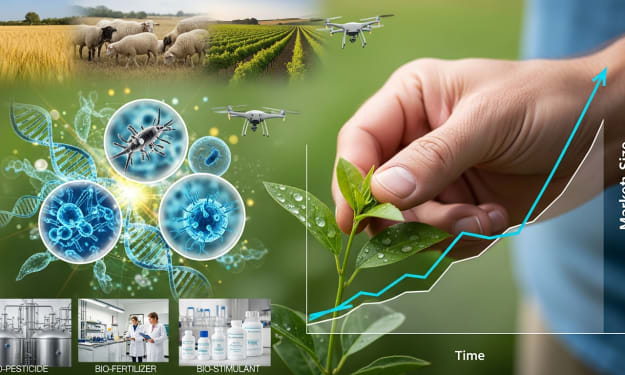
Australia Agricultural Biologicals Market Overview The Australia agricultural biologicals market is gaining steady momentum as farmers, agribusinesses and policymakers increasingly focus on sustainable crop production and environmentally responsible farming practices. Agricultural biologicals include products derived from natural sources such as microorganisms, beneficial insects, plant extracts and naturally occurring compounds. These products are used for crop protection, soil enhancement and plant growth promotion, offering alternatives or complements to conventional chemical inputs. According to IMARC Group, the Australia agricultural biologicals market size reached USD 218 Million in 2025. Looking forward, IMARC Group expects the market to reach USD 680 Million by 2034, exhibiting a growth rate (CAGR) of 13.5% during 2026-2034. This growth reflects increasing adoption of integrated pest management, rising demand for residue-free produce and expanding organic and regenerative farming practices.
By Amyra Singh2 days ago in Earth
‘Ransom Note’ for Kidnapped Mother of Today Show Host Sent to TMZ
A disturbing development has emerged in a high-profile kidnapping case after a ransom note allegedly connected to the kidnapped mother of a Today Show host was reportedly sent to celebrity news outlet TMZ. The situation has sparked widespread public concern, media scrutiny, and renewed debate about the ethics of reporting on sensitive criminal cases involving victims and their families.
By Aarif Lashari2 days ago in Earth
Self Help: Grifters' Gospel
On Self-Help, Snake Oil, and the Illusion of Change Psychology professionals and students can be imagined on two opposite sides of a line called self-help books: likely a larger group opposes pop-science and step-by-step manuals filled with talk of success, journaling, and not giving a f**k; others love them, but they aren’t many.
By Avocado Nunzella BSc (Psych) -- M.A.P 4 days ago in BookClub



Comments
There are no comments for this story
Be the first to respond and start the conversation.