
Trump ‘Not Thrilled’ With Iran Talks Progress, Contemplates Military Action
Former President Donald Trump signals frustration over stalled diplomatic efforts with Iran, raising the possibility of military measures as tensions over nuclear ambitions and regional security persist.
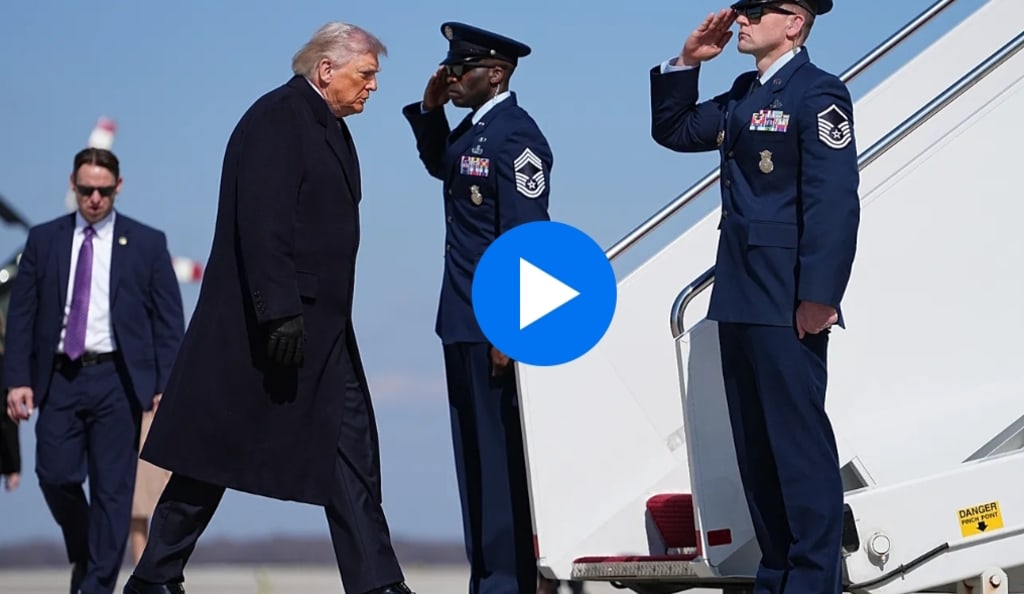
Frustration Over Diplomatic Stalemate
Former US President Donald Trump has expressed dissatisfaction with the pace and direction of talks involving Iran’s nuclear programme, stating he is “not thrilled” with the progress being made. His remarks, delivered during a public appearance and echoed by campaign representatives, suggest that patience with diplomatic efforts may be wearing thin.
Trump’s comments have reignited debate over how the United States should approach Iran — through negotiation and sanctions, or through renewed military deterrence. The remarks come amid ongoing uncertainty surrounding Iran’s nuclear activities and broader regional tensions.
Background: The Nuclear Issue
Iran’s nuclear programme has been a focal point of international diplomacy for nearly two decades. Western governments have long feared that Tehran could move toward developing nuclear weapons capability, while Iran insists its nuclear programme is intended for peaceful energy and research purposes.
In 2015, the Joint Comprehensive Plan of Action (JCPOA) was agreed upon between Iran and several world powers. The deal imposed restrictions on Iran’s uranium enrichment in exchange for sanctions relief. However, the United States withdrew from the agreement in 2018 during Trump’s presidency, arguing that the deal failed to adequately limit Iran’s long-term nuclear ambitions.
Since then, negotiations aimed at reviving or replacing the agreement have faced repeated setbacks.
Renewed Hardline Rhetoric
Trump’s latest remarks signal a potential return to a more confrontational posture. By publicly expressing dissatisfaction with diplomatic efforts and mentioning military options, he appears to be positioning himself as favoring a tougher stance.
While he did not outline specific plans or timelines, the suggestion of military action carries significant weight. During his previous term, Trump authorized targeted strikes, most notably the 2020 killing of Iranian General Qassem Soleimani, an action that dramatically heightened tensions between the two countries.
Supporters argue that such measures demonstrate strength and deter aggression. Critics warn that escalating rhetoric risks triggering unintended consequences.
Diplomatic Efforts Face Obstacles
Talks involving Iran have struggled due to several key challenges:
Disagreements over the scope of sanctions relief
Concerns about verification and inspection mechanisms
Iran’s continued enrichment of uranium at higher levels
Regional conflicts involving Iranian-backed groups
International mediators have attempted to bridge differences, but progress has been uneven. Trump’s frustration reflects broader skepticism among some US policymakers about whether negotiations can effectively curb Iran’s nuclear ambitions.
Military Option: What Would It Mean?
While “contemplating military action” does not necessarily mean imminent conflict, even raising the possibility shifts the tone of the discussion.
Military action against Iran could take various forms:
Targeted airstrikes on nuclear facilities
Cyber operations
Naval deployments to key waterways
Increased military presence in neighboring countries
However, analysts caution that any direct military engagement would likely provoke retaliation. Iran maintains significant missile capabilities and regional alliances, and conflict could disrupt global energy markets, particularly through the Strait of Hormuz.
Regional and Global Implications
The Middle East remains one of the world’s most strategically sensitive regions. Tensions involving Iran affect not only the United States but also Israel, Gulf states, European nations, and global trade routes.
Allies such as Israel have consistently advocated for preventing Iran from obtaining nuclear weapons capability, while European leaders generally emphasize diplomatic solutions.
An escalation in rhetoric from US leadership could influence regional calculations, either reinforcing deterrence or increasing volatility.
Domestic Political Context
Trump’s comments also come within a broader domestic political landscape. Foreign policy remains a central theme in US elections, and Iran policy has long been a dividing line between political factions.
Advocates of a hardline approach argue that diplomacy alone has failed to constrain Iran’s ambitions. Others contend that sustained negotiation, backed by international coordination, offers the best chance of long-term stability.
By signaling openness to military options, Trump appears to be reinforcing his image as a leader willing to act decisively on national security matters.
Iran’s Likely Reaction
Iranian officials have historically rejected threats of military action, framing them as hostile interference. Tehran has repeatedly stated that it will not negotiate under pressure and has warned that any attack would be met with a strong response.
Public statements from Iranian leaders often emphasize sovereignty and resistance to external pressure. Escalating rhetoric on either side may harden positions rather than encourage compromise.
The Balance Between Deterrence and Diplomacy
Foreign policy experts often describe US-Iran relations as a delicate balance between deterrence and diplomacy. Military strength can serve as a deterrent, but excessive pressure may undermine diplomatic openings.
The key challenge is avoiding miscalculation. In a region where multiple armed actors operate in close proximity, even small incidents can escalate rapidly.
Observers stress the importance of maintaining communication channels, even when rhetoric intensifies.
Conclusion
Donald Trump’s statement that he is “not thrilled” with the progress of Iran talks — coupled with contemplation of military action — underscores the fragility of current diplomatic efforts. The remarks reflect ongoing frustration with stalled negotiations and persistent concerns over Iran’s nuclear programme.
Whether this rhetoric leads to renewed pressure, stronger deterrence, or further diplomatic strain remains to be seen. For now, it highlights the continued complexity of US-Iran relations and the high stakes involved in decisions that could shape regional and global stability.
As discussions continue, policymakers face a difficult question: how to prevent escalation while ensuring security objectives are met. The path chosen will carry consequences not only for Washington and Tehran, but for the broader international community.
About the Creator
Keep reading
More stories from Aarif Lashari and writers in Earth and other communities.
Man (22) Charged With Murder of English Tourist in Temple Bar
Arrest and Formal Charges A 22-year-old man has been charged with the murder of an English tourist following a fatal incident in Dublin’s Temple Bar area. The charge comes after an intensive Garda investigation into events that unfolded in one of Ireland’s busiest and most popular nightlife districts.
By Aarif Lashariabout 17 hours ago in Earth
The Oldest, Largest, and Deepest Lake in the World
Exploring Earth’s Most Ancient and Massive Freshwater Giant Lake Baikal is often described as a freshwater sea because of its immense size and volume. Stretching over 600 kilometers in length and plunging to depths of more than 1,600 meters, it surpasses every other lake in age and depth. Unlike most lakes that form and disappear within thousands of years, Baikal has endured for millions, created by a continental rift that continues to widen today. This slow geological movement has allowed the lake to grow deeper over time. Its scale is so vast that it contains more water than all the Great Lakes of North America combined. Scientists regard it as one of the most important natural laboratories on Earth, preserving ancient life forms and climate records within its sediments. The surrounding mountains and forests enhance its isolation, helping protect its pristine condition.
By Muhammah Hanzalah6 days ago in Earth



Comments
There are no comments for this story
Be the first to respond and start the conversation.