
The Emerald Jewel in the Cosmic Tapestry
miracle planet

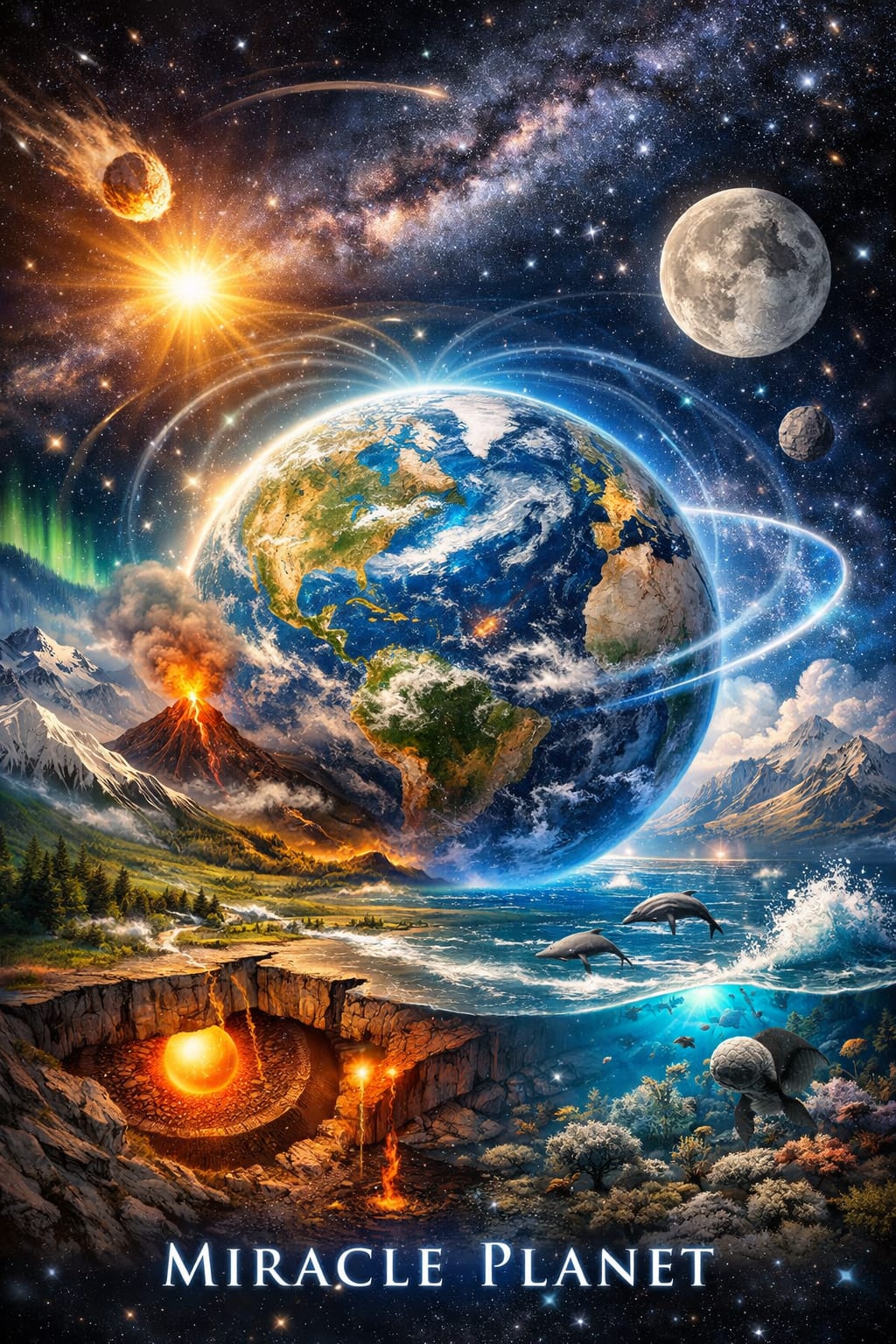
Earth, our vibrant home, is far more than just a planet; it is a meticulously crafted masterpiece, an emerald jewel suspended in the cold, vast expanse of the cosmos. It’s a place where the improbable coalesces into the miraculous, where every element, from its celestial dance to its intricate internal rhythms, conspires to foster and sustain an astonishing diversity of life. The designation "miracle planet" isn't hyperbole; it's an understatement of a cosmic ballet performed with breathtaking precision.
Our planet's initial stroke of genius lies in its unique position in the universe. Nestled gently in the spiral arm of the Milky Way, it avoids the chaotic, radiation-blasted galactic core and the sparse, resource-poor outer reaches. More critically, it resides within our solar system's "Goldilocks Zone" – not too hot, not too cold, but exquisitely just right. At approximately 93 million miles from the sun, Earth receives the perfect dosage of solar energy, allowing liquid water, the fundamental solvent of life, to persist stably on its surface. Without this precise orbital distance, water would either boil into steam or freeze into impenetrable ice, rendering life as we know it impossible. This perfect solar embrace ensures a delicate balance of warmth and coolness, a temperature sweet spot that no other known planet consistently maintains.
Beyond its celestial address, Earth's composition and structure form the very bedrock of its miraculous nature. Its layered interior—a dense, superheated iron-nickel core, a thick, convecting mantle of hot rock, and a relatively thin, solid crust—isn't merely structural; it's dynamically alive. The molten outer core generates a powerful magnetic field, an invisible shield that deflects harmful solar winds and cosmic radiation, protecting our delicate atmosphere and the life within it. Without this planetary magnetosphere, the raw energy from the sun would strip away our atmosphere, leaving the surface barren and lifeless.
The Earth's surface itself is a dynamic jigsaw puzzle of tectonic plates. These colossal segments of the lithosphere, comprising the crust and upper mantle, are in constant, albeit slow, motion. Driven by the immense heat circulating within the mantle, these plates collide, separate, and slide past one another. This geological ballet gives rise to majestic mountain ranges that influence weather patterns, deep ocean trenches that harbor unique ecosystems, and volcanic activity that recycles vital nutrients and releases gases crucial for atmospheric composition. This continuous geological renewal prevents the planet from becoming stagnant and inert, ensuring a constant reshaping and replenishment vital for long-term habitability.
Then there's the atmosphere, a breathable blanket of gases that performs multiple life-sustaining roles. Primarily composed of nitrogen (78%) and oxygen (21%), with trace amounts of argon, carbon dioxide, and other gases, it provides the essential ingredients for respiration and photosynthesis. This atmospheric composition is carefully maintained by biogeochemical cycles involving living organisms themselves. Furthermore, the atmosphere acts as a thermal regulator, trapping enough heat to prevent extreme temperature fluctuations between day and night, much like a greenhouse. It also offers protection against smaller meteoroids, burning them up before they reach the surface.
The unique balance between land and water is another cornerstone of Earth’s miracle. With roughly 71% of its surface covered by oceans, Earth is a "blue marble." These vast bodies of water regulate global temperatures, absorbing and distributing solar heat. Ocean currents act like massive conveyor belts, influencing climates worldwide. The hydrologic cycle—evaporation, condensation, precipitation—constantly replenishes freshwater sources on land, sustaining terrestrial ecosystems. This intricate interplay between land and sea creates a multitude of diverse habitats, from arid deserts to lush rainforests, each supporting a unique web of life.
Finally, the formation of Earth itself was a cosmic lottery win. Born from the accretion of dust and gas in the early solar nebula, it underwent a violent but ultimately successful planetary development. The "Giant Impact Hypothesis" suggests that a Mars-sized body collided with early Earth, creating the Moon. This seemingly catastrophic event bestowed another miracle: the Moon's stabilizing influence. Our relatively large Moon acts as a gravitational anchor, steadying Earth's axial tilt, preventing extreme wobbles that would lead to chaotic and uninhabitable climate shifts over geological timescales. The Moon also drives the tides, essential for nutrient mixing in coastal waters and influencing the reproductive cycles of many marine organisms.
Earth's designation as a "miracle planet" is not just poetic; it's a scientific conclusion. The confluence of its precise cosmic location, protective magnetic field, dynamic geology, life-giving atmosphere, abundant liquid water, and stabilizing lunar companion creates a symphony of interconnected systems, each perfectly tuned for the grand opera of life. It stands as a testament to the immense complexity and precision required for a planet to not only support life but to allow it to flourish in such spectacular, diverse, and enduring forms. It reminds us that our vibrant home is an incredibly rare and precious gift, demanding our utmost reverence and protection.
About the Creator
Being Inquisitive
Blogging can provide a creative outlet for expressing your thoughts, feelings, and ideas. It can be a way to share your passion and interests with others and to engage with like-minded individuals.
Keep reading
More stories from Being Inquisitive and writers in Earth and other communities.
Why is Earth called a miracle planet?
Our Earth is truly miraculous, with perfect conditions for life to flourish. It's in a unique position in our galaxy. Not too close, not too far from the sun, it's just right for us. It's the third planet from the sun and the only one known to support complex life forms.
By Being Inquisitive2 years ago in Earth
Members of the Board of Peace linked to Trump have announced a pledge of $7 billion in humanitarian assistance for Gaza, aiming to support relief efforts and address the growing crisis in the region.
Donald Trumps Board of Peace has gotten money from countries. These countries have given than $7 billion to help people in Gaza. The US president said this when the Board of Peace had its meeting.
By The Academy Awards2 days ago in Earth



Comments
There are no comments for this story
Be the first to respond and start the conversation.