
SpaceX Comes Up With Yet Another New Business Model — Privatized Space Traffic Control
The Race to Manage Earth’s Increasingly Crowded Orbit
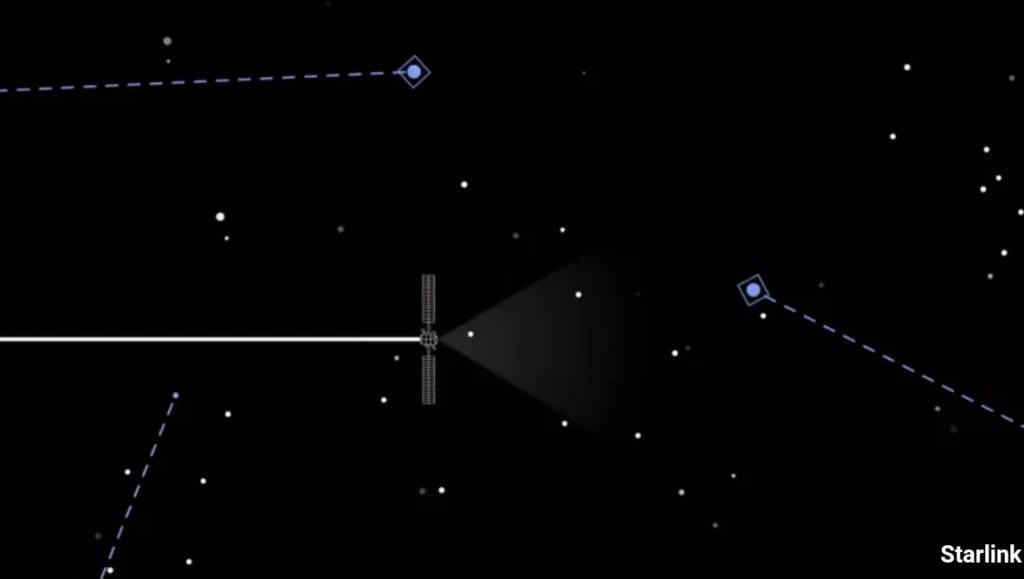
Space Is Getting Crowded — And Someone Must Control It
Humanity is entering a new era where space is no longer empty.
Thousands of satellites now orbit Earth, supporting communication, navigation, weather forecasting, and military operations. But as satellite deployment accelerates, a serious problem is emerging — space traffic management.
The company SpaceX has introduced yet another ambitious business idea: privatized space traffic control.
The concept is simple but revolutionary.
Instead of relying only on government agencies to track and manage orbital objects, private infrastructure could help coordinate satellite movement, reduce collision risks, and monitor orbital congestion.
This development reflects the rapid commercialization of space.
🛰️ Why Space Traffic Control Is Becoming Necessary
Earth’s orbit is becoming a busy transportation zone.
The expansion of satellite networks such as Starlink has dramatically increased the number of active spacecraft in low Earth orbit.
Traditional space monitoring is primarily handled by organizations like the NASA and the European Space Agency.
However, with private companies launching large satellite constellations, monitoring responsibilities are becoming more complex.
Orbital collisions are not hypothetical risks.
Even small debris traveling at high velocity can damage satellites, spacecraft, or space stations.
Space junk is already a growing concern for global space operations.
🤖 How Privatized Space Traffic Control Would Work
The proposed model would combine artificial intelligence, ground sensors, and satellite communication networks.
Key functions could include:
Real-time tracking of orbital objects
Collision risk prediction
Automated maneuver recommendations
Coordination between satellite operators
Debris movement monitoring
Instead of only reacting to threats, the system would aim to predict them before they occur.
SpaceX has long invested in autonomous navigation technologies, especially for Starlink satellite deployment.
If successful, this service could become a new commercial revenue stream beyond space transportation.
💰 A New Business Model for the Space Economy
SpaceX has traditionally generated revenue from:
Rocket launches
Satellite deployment
Spacecraft manufacturing
Government contracts
Adding space traffic management could transform the company into a central infrastructure provider for orbital operations.
Experts believe that space traffic control could become as essential as air traffic control on Earth.
Just as airlines rely on coordinated flight monitoring, future satellite operators may depend on centralized orbital coordination services.
⚠️ The Debate: Private Control of Space Infrastructure
The idea of privatized space traffic control is controversial.
Some policymakers worry about concentration of power.
If one company controls orbital coordination data, it could theoretically influence satellite operations globally.
Governments may want neutral oversight mechanisms.
Organizations like the Federal Aviation Administration are already exploring how space and air traffic systems might intersect in the future.
International space law also remains complex.
The Outer Space Treaty principle states that space should be used for peaceful purposes and benefit all humanity.
Balancing commercial innovation and global cooperation will be a major challenge.
🌍 The Starlink Factor
The rapid expansion of SpaceX Starlink is one of the main drivers behind this concept.
Starlink aims to provide global high-speed internet coverage using thousands of low-orbit satellites.
Managing such a large constellation requires advanced automation and continuous orbital adjustment.
Privatized traffic monitoring could help maintain operational safety as satellite numbers grow.
🔒 Security and Ethical Concerns
Cybersecurity is a major issue.
Space infrastructure could become a target for hacking or electronic interference. If traffic control systems are compromised, satellite communication networks could face disruption.
Experts emphasize the need for:
Strong encryption protocols
Multi-agency verification systems
Emergency manual override capabilities
International cooperation standards
Space is becoming critical digital infrastructure.
📡 The Future of Commercial Space Management
The commercialization of space is accelerating.
Companies are now exploring:
Space tourism
Lunar resource mining
Orbital manufacturing
Interplanetary communication networks
If space traffic control becomes a commercial service, it could support the entire emerging space economy.
The next generation of infrastructure may not be built only on land — but in orbit.
🧠 Why This Matters for Humanity
The shift toward private space infrastructure represents a major transformation.
Space is no longer solely the domain of governments.
Private companies are becoming key players in exploration, communication, and orbital safety.
Supporters believe privatization will accelerate technological innovation.
Critics warn about monopoly risks and governance challenges.
The debate is still unfolding.
🏁 Final Thought
Privatized space traffic control may sound futuristic, but it reflects a simple reality — humanity is moving deeper into space.
As orbital congestion increases, coordination will become as important as propulsion.
Whether managed by governments, private companies, or international partnerships, space infrastructure will require intelligent oversight.
The question is not whether space will need traffic control.
About the Creator
Honey, It's Time We Save the Bees
As you are looking outside at the flowers and trees, you might see a bee buzzing by, but did you know these common creatures are endangered? According to Greenpeace, “the number of bee colonies per hectare has declined by 90 percent since 1962” (Greenpeace, 2021). This is alarming as bees are responsible for doing so many things to keep our environment running efficiently. Ironically, we common overlook them like they are any other bug. We forget to appreciate all of the things bees do for us, and we fail to see the beauty that they bring into the world.
By Nicole Higginbotham-Hogueabout 7 hours ago in Earth



Comments
There are no comments for this story
Be the first to respond and start the conversation.