
Small Actions, Big Responsibility
Environmental Protection
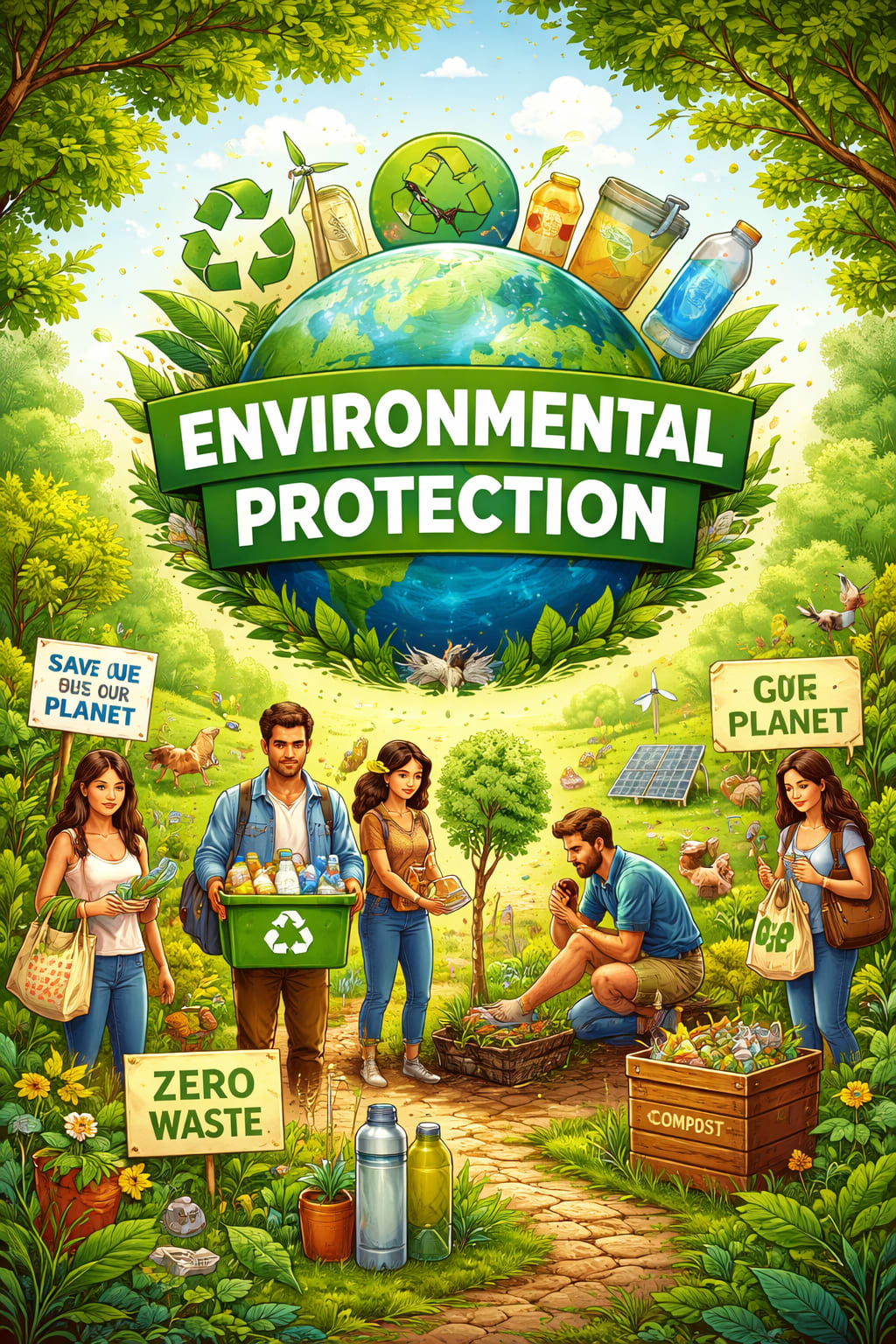
🌍 Environmental Protection: Small Actions, Big Responsibility
Environmental protection is no longer a choice — it is a responsibility. Every day, the planet shows us signs that something is wrong: rising temperatures, plastic-filled oceans, disappearing forests, and extreme weather. The truth is simple but uncomfortable — human activities are pushing Earth beyond its limits.
But here’s the powerful part: the same humans causing damage can also become the solution. This article explores plastic pollution, zero-waste living, sustainable habits, and deforestation — not just as environmental issues, but as personal responsibility.
🌊 Plastic Pollution Crisis: Convenience at a Cost
Plastic is everywhere. It is cheap, durable, and convenient. But that convenience comes with a heavy environmental price.
Globally, millions of tons of plastic waste enter oceans each year. Plastic does not disappear — it breaks into microplastics that contaminate water, soil, and even the food we eat. Marine animals mistake plastic for food, leading to injury or death. Over time, plastic enters the human food chain.
The crisis is not just about waste management. It is about overconsumption.
- Deep thought: If plastic lasts hundreds of years, why do we use it for items that serve us for only minutes?
♻️ Zero-Waste Lifestyle: Progress, Not Perfection
A zero-waste lifestyle does not mean producing zero trash overnight. It means reducing unnecessary waste by rethinking daily habits.
It starts with the 5 R’s:
- Refuse what you don’t need
- Reduce what you use
- Reuse what you can
- Recycle properly
- Rot (compost organic waste)
Zero-waste living is about intentional consumption. It asks one simple question before buying anything: Do I really need this?
When individuals shift from “throwaway culture” to mindful living, waste naturally decreases.
🌱 Sustainable Living Tips: Simple but Powerful
Sustainable living means meeting our needs without harming future generations.
Here are realistic habits anyone can adopt:
- Carry reusable bags and bottles
- Reduce meat consumption
- Save electricity and water
- Support local and eco-friendly brands
- Avoid fast fashion
- Choose products with minimal packaging
Small habits may seem insignificant, but collective action creates real impact. Sustainability is not about being extreme — it is about being consistent.
🌳 Deforestation Impacts: When Forests Fall, We All Fall
Forests are not just trees. They regulate climate, produce oxygen, protect biodiversity, and support indigenous communities.
Deforestation, mainly driven by agriculture, logging, and urban expansion, leads to:
- Loss of wildlife habitats
- Increased carbon dioxide levels
- Soilerosion
- Disruption of rainfall patterns
When forests disappear, the planet loses its natural defense system against climate change.
Protecting forests means protecting ourselves.
💚 Building a Meaningful Environmental Brand
If you want to build a meaningful brand around sustainability, remember this:
People connect with authenticity, not perfection.
A strong environmental brand:
- Educates without shaming
- Promotes realistic changes
- Shares transparent values
- Encourages community action
Your message should inspire hope, not fear. The goal is progress, not guilt
❓ Q&A: Deep Thinking Questions About Environmental Protection
1. Why should individuals care if corporations cause most pollution?
Because demand drives supply. When consumers change buying habits, companies are forced to adapt. Individual choices influence market trends.
2. Is zero-waste realistic for students or busy people?
Yes — when simplified. Start small: reusable bottle, mindful shopping, less food waste. Sustainability fits into any lifestyle when approached gradually.
3. How does plastic pollution affect human health?
Microplastics enter food and water systems. Over time, this may impact hormonal balance and organ health. Research is ongoing, but early signs are concerning.
4. Why is deforestation linked to climate change?
Trees absorb carbon dioxide. When forests are cut or burned, stored carbon is released back into the atmosphere, accelerating global warming.
5. What is the most powerful action one person can take?
Shift mindset from convenience to consciousness. Sustainable change begins with awareness.
6. Can sustainable living actually save money?
Yes. Using less electricity, buying fewer unnecessary items, cooking at home, and reusing products reduce long-term expenses.
7. How can young people build influence in environmental protection?
Start by sharing knowledge, practicing what you preach, and creating relatable content. Authenticity builds trust.
About the Creator
Being Inquisitive
Blogging can provide a creative outlet for expressing your thoughts, feelings, and ideas. It can be a way to share your passion and interests with others and to engage with like-minded individuals.
Keep reading
More stories from Being Inquisitive and writers in Earth and other communities.
Navigating the Climate Reality of 2050
Climate change is no longer a chapter in a science textbook or a distant warning for "future generations." For today’s students, it is the defining backdrop of their lives—an emotional and intellectual challenge that reshapes how we view our careers, our homes, and our security. To understand the planet in 2050 is to understand a world where the margins of error have vanished, and the need for collective resilience has become our primary survival skill.
By Being Inquisitiveabout 7 hours ago in Earth
Central Florida is under a fire weather watch due to the increased risk of wildfires.
Late winter is a time of mild temperatures and clear skies for many Floridians, not of burning sun and wildfire danger. However, this week, a significant portion of Central and West Florida was subjected to an unusual weather threat: an "elevated fire danger" and a "red flag" warning. These are conditions that are more frequently associated with the dry plains or the mountainous West than with the Sunshine State's typically humid climate. Fire officials, meteorologists, and residents alike were taken aback by how quickly the region’s fire risk escalated. The ideal conditions for fires to start and grow included dry vegetation, persistent winds, and low humidity. Authorities urged caution in some areas due to the speed with which embers can travel in gusty conditions, transforming tiny sparks into rapidly spreading wildfires. The narrative began with a prolonged drought.
By Raviha Imrana day ago in Earth
The Cairn Beside the Lake
And so it came to pass that King Ertharion, Tenth King of Lombaia, stood beside the still lake below unrelenting and unassailable cliffs with the remainder of his harried host. In what was the tenth year of his reign and his forty-fourth upon this great green earth, Menigo the Betrayer, cousin of King Ertharion, pressed home his false claim.
By Matthew J. Fromm3 days ago in Fiction


Comments
There are no comments for this story
Be the first to respond and start the conversation.