
Rubber Reorganization in Tire Pyrolysis
Unraveling the Mechanism

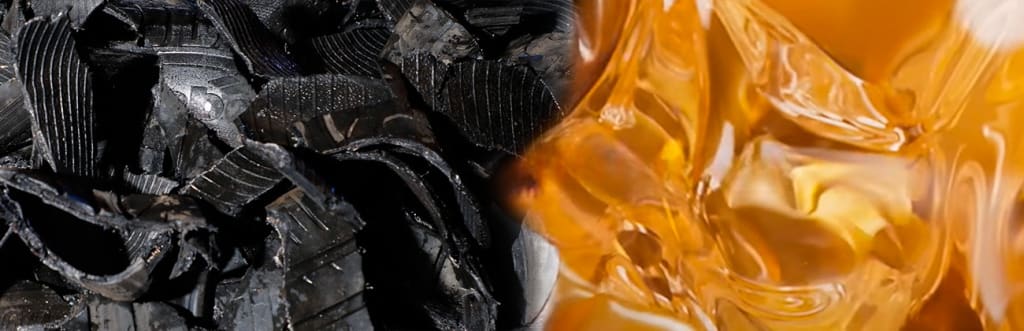
Tire pyrolysis is a highly effective method for recycling used tires, converting them into valuable products such as oil, gas, and char. One of the key mechanisms driving the process is the reorganization of rubber components within the tire. Understanding how rubber reorganizes during pyrolysis is essential for optimizing the efficiency of a pyrolysis plant and enhancing the quality of the resulting by-products. The rubber in tires, primarily composed of a complex blend of synthetic and natural rubber, undergoes a series of chemical transformations when subjected to high temperatures in the absence of oxygen.
Rubber Composition in Tires
Before delving into the reorganization process, it is important to understand the composition of tire rubber. Tires are made up of a combination of natural rubber, synthetic rubber, carbon black, sulfur, oils, resins, and various additives that enhance durability and performance. The rubber matrix provides the flexibility and resilience required for tire functionality, while the additives contribute to its strength and longevity. These components play a significant role in how rubber reacts during pyrolysis of tyre.
The Pyrolysis Process and Rubber Reorganization
The pyrolysis process involves heating the tires in a controlled, oxygen-deprived environment, typically in a pyrolysis plant. As the tires are exposed to elevated temperatures—often between 300°C and 700°C—several chemical reactions take place. One of the most critical reactions is the reorganization of the rubber structure, which leads to the breakdown of large polymer chains and the formation of smaller molecules.
Breaking of Polymer Chains
The first step in the reorganization of rubber during pyrolysis is the breaking of long polymer chains that constitute the rubber’s molecular structure. These polymer chains are composed of repeating units of monomers, typically styrene-butadiene or isoprene, depending on whether the rubber is synthetic or natural. Upon heating, the energy supplied breaks the weak bonds between the monomer units, leading to the formation of smaller free radicals.
Formation of Cross-links
In addition to chain scission, tire rubber also undergoes cross-linking during the reorganization process. Cross-linking occurs when the free radicals formed from broken polymer chains react with other radicals, creating new covalent bonds. This process is essential for enhancing the stability and integrity of the rubber structure during pyrolysis. The degree of cross-linking directly influences the physical properties of the pyrolysis products, such as the quality of the resulting bio-oil and gas.
Decomposition into Volatile Compounds
As the rubber reorganizes, it begins to decompose into various volatile compounds, including alkenes, alkanes, and aromatic hydrocarbons. These volatile compounds are the primary source of the liquid and gaseous products produced in a pyrolysis plant. The decomposition pathway is heavily influenced by the temperature and heating rate, with higher temperatures generally leading to more complete decomposition and the generation of lighter fractions of hydrocarbons.
The reorganization of rubber during pyrolysis is not a uniform process. The breakdown of different rubber components occurs at different rates, depending on their chemical composition. For example, synthetic rubbers, such as styrene-butadiene rubber (SBR), tend to decompose at slightly lower temperatures compared to natural rubber, which is primarily composed of polyisoprene. The presence of carbon black and other fillers in the rubber also affects the reorganization process, as these materials can inhibit or accelerate specific chemical reactions.
Conversion to Liquid and Gaseous Products
The majority of the volatile compounds produced during the reorganization of rubber are condensed into liquid bio-oil or gas. The liquid products from tire pyrolysis are rich in hydrocarbons, which can be further refined into useful fuels or chemical feedstocks. The gaseous products, primarily consisting of methane, ethylene, and other light hydrocarbons, can be used for energy generation within the pyrolysis plant itself or as fuel for external processes.
The balance between liquid and gaseous products depends on several factors, including temperature, pressure, and residence time. A higher temperature tends to favor the production of lighter gaseous fractions, while a lower temperature may result in the generation of heavier liquid oils. Adjusting the process parameters can therefore allow operators to optimize the yield of specific products based on the intended application.
The Role of Temperature in Rubber Reorganization
Temperature plays a critical role in the pyrolysis of tire rubber. As the temperature increases, the rate of polymer chain scission accelerates, leading to a more rapid breakdown of the rubber structure. At the same time, higher temperatures facilitate the formation of free radicals and the subsequent cross-linking, which enhances the stability of the pyrolysis products.
However, it is important to note that excessively high temperatures can lead to the formation of unwanted by-products, such as soot and tar, which can negatively impact the efficiency of the pyrolysis plant. These by-products are typically the result of incomplete decomposition or over-cracking of larger molecules. Therefore, controlling the temperature within an optimal range is essential to ensuring that the rubber reorganizes in a manner that maximizes the yield of valuable products while minimizing waste.
Optimizing Rubber Reorganization in Pyrolysis Plants
To achieve efficient rubber reorganization in a pyrolysis plant, operators must carefully control several process parameters. These include the temperature, heating rate, feedstock composition, and residence time. By adjusting these variables, it is possible to optimize the breakdown of rubber polymers and enhance the quality and yield of the products.
Additionally, the use of catalysts can help facilitate the reorganization of rubber, leading to improved product selectivity. Catalysts can lower the activation energy required for polymer chain scission and promote the formation of specific desired products, such as lighter hydrocarbons for fuel applications.
Impact on Pyrolysis Products
The reorganization of rubber during tire pyrolysis directly impacts the composition and quality of the final products. A well-executed reorganization process results in a higher yield of valuable bio-oil and gas, while minimizing the formation of solid residues like char. By understanding the intricacies of rubber reorganization, pyrolysis plant operators can fine-tune the process to optimize both the quantity and quality of the end products.
In conclusion, rubber reorganization is a central mechanism in tire pyrolysis, involving complex chemical reactions that transform tire waste into valuable resources. By optimizing the conditions under which this reorganization occurs, it is possible to enhance the efficiency of a pyrolysis plant and maximize the recovery of useful by-products from tire waste.
About the Creator
Keep reading
More stories from Wayne Shen and writers in Earth and other communities.
Reducing Carbon Footprint in Construction
The construction industry is a significant contributor to global carbon emissions, accounting for approximately 40% of the total CO₂ emissions. However, innovative solutions like biochar production are emerging as viable options to mitigate the environmental impact of building and infrastructure development. Biochar, a carbon-rich material produced through the pyrolysis of organic waste, offers multiple pathways to reduce the carbon footprint of the construction sector.
By Wayne Shen9 months ago in Earth
AFG vs WI, Between Overs and Silence
The first ball hadn’t been bowled yet, and already my chest felt tight. AFG vs WI flickered on the screen, bright jerseys against a washed-out sky. The stadium buzzed softly, like it didn’t want to scare away whatever fragile promise hovered above the pitch. I leaned forward without realizing it. I always do when something still matters.
By Story Prism5 days ago in Earth




Comments (1)
This article on tire pyrolysis is really interesting. I've seen some of the by-products from this process in action. It's amazing how those used tires can be transformed. I wonder how the different additives in the tires affect the quality of the resulting oil, gas, and char. Also, what's the most efficient way to control the temperature during pyrolysis to get the best rubber reorganization?