
Niagara Falls: A Living Story of Power, History, and Human Wonder
Niagara Falls is one of those rare places where nature doesn’t just impress you

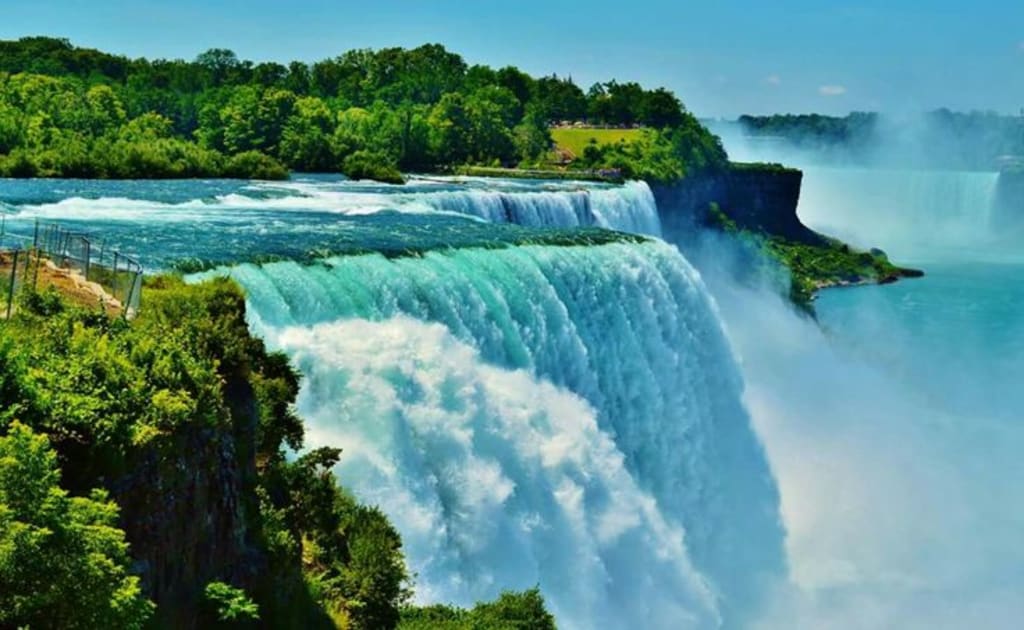
Niagara Falls is one of those rare places where nature doesn’t just impress you—it overwhelms you. It’s a place where the earth’s ancient past meets the dreams of millions who stand at its edge, feeling the mist on their skin and the thunder in their bones. Stretching across the border of Ontario, Canada, and New York State in the United States, Niagara Falls has become one of the most visited natural wonders in North America, drawing more than 14 million people every year.
But behind the postcard images and Instagram videos lies a story that spans 12,500 years, shaped by glaciers, Indigenous cultures, explorers, daredevils, engineers, honeymooners, and everyday travelers who come searching for something—beauty, adventure, or simply a moment of awe.
This is the human story of Niagara Falls: how it formed, how it shaped history, and why it continues to capture the world’s imagination.
🌍 The Ancient Birth of a Giant
To understand Niagara Falls, you have to go back—way back. The story begins 600 million years ago, when a shallow sea covered the region that would one day become the Great Lakes. Layers of mud, sand, and shells settled on the sea floor, eventually forming the limestone and shale that make up the Niagara Escarpment.
Fast forward to the end of the last Ice Age, around 12,500 years ago. A massive glacier retreated northward, carving out the Great Lakes and releasing torrents of meltwater. That water surged toward the Atlantic Ocean, cutting a path through the rock and creating the Niagara River.
Where the river met the escarpment, the water plunged downward—and Niagara Falls was born.
What we see today is the result of thousands of years of erosion, rock movement, and the unstoppable force of water. The Falls continue to move upstream by inches every year, slowly reshaping the landscape.
💧 Three Falls, One Iconic Destination
Most people say “Niagara Falls” as if it’s one waterfall, but it’s actually three distinct falls:
- Horseshoe Falls (Canada): The largest and most powerful, known for its curved shape and dramatic mist clouds.
- American Falls (USA): A wide, straight cascade with massive boulders at its base.
- Bridal Veil Falls (USA): The smallest, separated from the American Falls by Luna Island.
Together, they form one of the most powerful waterfalls on Earth, with more than 85,000 cubic feet of water flowing over the crest every second during peak flow.
Standing near the edge, you don’t just see Niagara—you feel it.
🪶 Indigenous Roots and Sacred Meaning
Long before European explorers arrived, the region around Niagara Falls was home to Indigenous peoples, including the Haudenosaunee (Iroquois Confederacy). The Falls were not just a natural wonder—they were a sacred place, woven into stories, ceremonies, and cultural identity.
The thunder of the water was believed to be the voice of powerful spirits. The mist was a veil between worlds. The river was a source of life, food, and connection.
Even today, Indigenous communities continue to honor the Falls as part of their ancestral heritage.
🧭 European Discovery and the Rise of a Global Attraction
The first European known to document Niagara Falls was French explorer Father Louis Hennepin in 1678. His writings introduced the Falls to the Western world, sparking curiosity and fascination.
By the 1800s, Niagara had become a major tourist destination. People traveled by horse, carriage, and eventually train to witness the spectacle. Hotels, viewing platforms, and attractions sprang up on both sides of the border.
Niagara Falls became a symbol of:
- Romance (honeymooners flocked there for generations)
- Adventure (tightrope walkers and daredevils risked their lives)
- Engineering (hydropower transformed the region)
It was a place where nature and human ambition collided.
🎩 The Daredevils Who Challenged the Falls
Niagara Falls has a long history of attracting thrill‑seekers who wanted to test their courage—or their luck.
Some of the most famous stunts include:
- Annie Edson Taylor, a 63‑year‑old schoolteacher, who became the first person to survive going over Horseshoe Falls in a barrel in 1901.
- Charles Blondin, who walked across the gorge on a tightrope in 1859—sometimes blindfolded, sometimes carrying a man on his back.
- Bobby Leach, who survived the plunge in a steel barrel but later died from slipping on an orange peel.
These stunts were dangerous, often illegal, and sometimes fatal. But they became part of Niagara’s legend.
⚡ Harnessing the Power of Water
Niagara Falls isn’t just beautiful—it’s powerful. In the late 19th century, engineers realized the Falls could generate enormous amounts of electricity.
In 1895, the world’s first major hydroelectric plant opened near the Falls, using technology influenced by Nikola Tesla’s alternating current system. This innovation helped power nearby cities and eventually contributed to the electrification of the northeastern United States.
Today, both the U.S. and Canada operate massive hydroelectric stations along the Niagara River, carefully balancing energy production with preservation of the Falls’ natural beauty.
🏙️ Niagara Falls Today: A Tale of Two Cities
Niagara Falls exists as two distinct but interconnected destinations:
Niagara Falls, Ontario (Canada)
A vibrant, entertainment‑driven city known for:
- Hotels with Falls‑view rooms
- Clifton Hill’s attractions and nightlife
- Casinos, restaurants, and family activities
- The iconic Horseshoe Falls
It welcomes 14 million visitors annually and is considered Canada’s #1 leisure destination.
Niagara Falls, New York (USA)
A more nature‑focused experience featuring:
- Niagara Falls State Park (the oldest state park in the U.S.)
- Scenic overlooks and walking trails
- The Cave of the Winds boardwalk
- The Maid of the Mist boat tour
Both sides offer unique perspectives—and together, they create a complete Niagara experience.
🌈 The Magic of the Mist: What Makes Niagara So Unique
Niagara Falls is not the tallest waterfall in the world, but it is one of the most powerful. Its uniqueness comes from:
- The volume of water
- The shape of the Horseshoe Falls
- The constant mist, which creates rainbows
- The deep gorge, carved over thousands of years
- The roar, which can be heard miles away
Standing near the brink, you feel the ground tremble. The mist cools your face. The sound fills your chest. It’s a sensory experience unlike anything else.
🧳 What to See and Do: A Traveler’s Guide
Niagara Falls is more than a waterfall—it’s a full destination with attractions on both sides of the border.
Must‑See Experiences
- Maid of the Mist (USA): A boat ride that takes you right into the heart of the Horseshoe Falls.
- Journey Behind the Falls (Canada): Walk through tunnels carved behind the waterfall.
- Cave of the Winds (USA): Wooden walkways that bring you inches from the Bridal Veil Falls.
- Skylon Tower (Canada): A 360° view from above.
- Niagara Parks Botanical Gardens (Canada): A peaceful escape from the crowds.
- Niagara Gorge Trail System (USA): Hiking paths with stunning views.
Nighttime Magic
At night, the Falls are illuminated in vibrant colors. Fireworks often light up the sky during summer and holidays, creating a breathtaking scene.
🍇 Food and Local Culture
The Niagara region is home to:
- Farm‑to‑table restaurants
- Local markets
- Indigenous cultural centers
- Art galleries and museums
The Canadian side, in particular, has a thriving culinary scene, while the American side offers more nature‑driven, historic experiences.
🌿 Protecting a Natural Wonder
Niagara Falls has faced environmental challenges over the years, including erosion, pollution, and over‑development. Today, both countries work together to protect the Falls through:
- Water flow regulation
- Conservation programs
- Park preservation
- Wildlife protection
The goal is to ensure that future generations can experience the same awe that visitors feel today.
💬 Why Niagara Falls Still Captivates Us
Niagara Falls is more than a tourist attraction. It’s a reminder of nature’s raw power and beauty. It’s a place where people propose, celebrate, reflect, and reconnect with something bigger than themselves.
It’s a destination that blends:
- History
- Geology
- Culture
- Adventure
- Romance
- Human stories
Every visitor leaves with a memory—whether it’s the roar of the water, the mist on their face, or the feeling of standing at the edge of something ancient and alive.
If this deep‑dive into Niagara Falls inspired you, share it with someone who loves travel, nature, or history.
Drop a comment with your favorite Niagara memory—or the moment you hope to experience someday. And if you’d like to support more human‑centered stories like this, feel free to leave a tip. It helps bring more powerful stories to life.
About the Creator
Haroon Pasha
📚 Learn history, literature & knowledge daily
👍 Like | 💬 Comment | 🔔 Subscribe
🔄 Share to support free education
💖 Tip us to help grow this page
Keep reading
More stories from Haroon Pasha and writers in Earth and other communities.
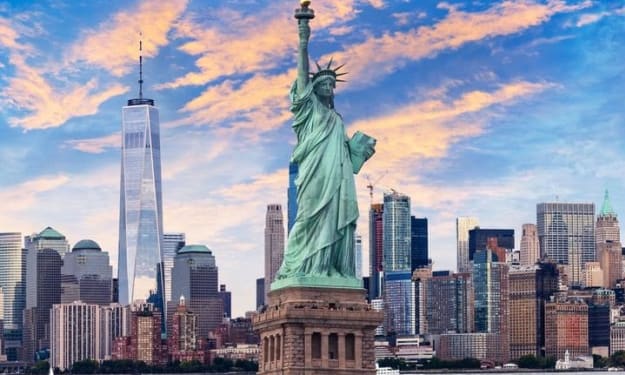
The Statue of Liberty: A Human Story of Hope, Courage, and the Promise of America
The Statue of Liberty is more than a monument rising above New York Harbor. For generations, she has been a silent witness to the dreams, fears, and hopes of millions of people who crossed the ocean searching for a new beginning. Her copper skin may have weathered, but her message has not: freedom is worth striving for, and hope is worth holding onto. 🇫🇷 A Gift Born From Shared Ideals The idea for the statue began not with governments, but with people—French thinkers, artists, and activists who admired America’s struggle for independence. They believed the United States represented something rare: a nation built on the idea that ordinary people could shape their own destiny. French sculptor Frédéric Auguste Bartholdi imagined a woman holding a torch high above the world, lighting the path toward liberty. Gustave Eiffel engineered the internal structure, giving her the strength to withstand storms, winds, and time itself. When the statue finally arrived in New York in 1885—packed in more than 200 crates—it wasn’t just a diplomatic gesture. It was a message of solidarity between two nations that believed in freedom. 📏 A Design Filled With Meaning Every detail of the statue carries intention: - The torch represents enlightenment—the idea that knowledge lights the way forward. - The seven rays on her crown symbolize the seven continents and seas, a reminder that liberty is universal. - The tablet in her left hand bears the date July 4, 1776, anchoring her to the birth of American independence. - The broken chains at her feet, often overlooked, speak to liberation from oppression. She stands 305 feet tall, but her true height comes from what she represents. 🛬 The First American Face Millions Ever Saw For immigrants arriving by ship in the late 1800s and early 1900s, the Statue of Liberty was not a tourist attraction—it was the first sign that their long, uncertain journey was ending. Imagine standing on the deck of a crowded ship after weeks at sea. You’re tired. You’re scared. You’re leaving everything you’ve ever known behind. And then, through the fog, you see her. People cried. People prayed. Some whispered promises to themselves. Others simply stared, unable to speak. Ellis Island processed more than 12 million immigrants, but Liberty Island gave them something just as important: the belief that they belonged somewhere. 🧠 A Cultural Icon Through Every Era The Statue of Liberty has appeared in films, paintings, speeches, and protests. She has been a symbol of resilience after national tragedies and a reminder of unity during divided times. She has stood through wars, economic crises, and cultural shifts. She has watched New York City rise, fall, rebuild, and rise again. Through it all, she has remained steady—an anchor in a world that constantly changes. 🧳 Visiting the Statue Today A visit to Liberty Island is more than a sightseeing trip. It’s a chance to stand where millions once stood and feel the weight of history beneath your feet. Visitors can explore: - The Statue of Liberty Museum, which tells the story of her creation - The pedestal, offering sweeping views of New York Harbor - The crown, accessible with advance reservations and not for the faint of heart The ferry ride itself is a moment of reflection—New York’s skyline on one side, Lady Liberty on the other. 📚 Little Details That Make Her Even More Fascinating - She wasn’t always green; she turned that color naturally as the copper oxidized. - When she was completed, she was the tallest structure in New York. - Her torch has been replaced and redesigned multiple times. - She can sway up to 3 inches in strong winds—graceful even in storms. 💬 Why She Still Matters The Statue of Liberty endures because she represents something deeply human: the desire to be free, to be seen, and to build a life with dignity. She reminds us that America’s story is not perfect, but it is always evolving—and always striving toward something better. She is not just a monument. She is a promise. If this story moved you, share it with someone who loves history or dreams of visiting New York. Leave a comment with your thoughts or your own experience seeing Lady Liberty. And if you’d like to support more human-centered stories like this, feel free to leave a tip—it helps bring more meaningful content to life.
By Haroon Pashaabout 14 hours ago in Chapters
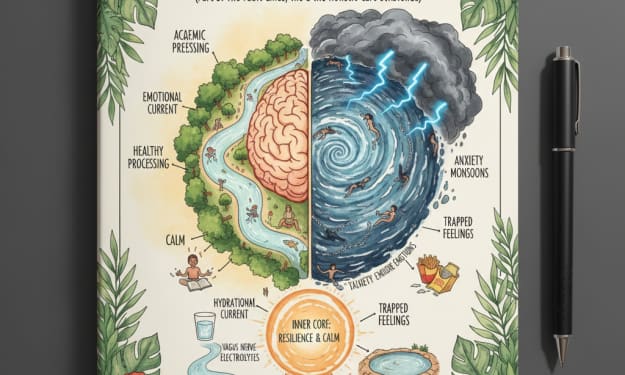
The Geology of Your Inner World
We've journeyed through the solid crust, the molten mantle, and the expansive atmosphere of our Niche Earth. Now, it's time to explore the element that covers most of our planet and profoundly shapes its landscape: the Hydrosphere. For an overthinking girl, the hydrosphere is our emotional world – the vast, deep, sometimes turbulent, and often beautiful realm of our feelings.
By Being Inquisitive6 days ago in Earth


Comments
There are no comments for this story
Be the first to respond and start the conversation.