
Massive Underground Formation Found Beneath Bermuda Baffles Scientists
BERMUDA TRIANGLE

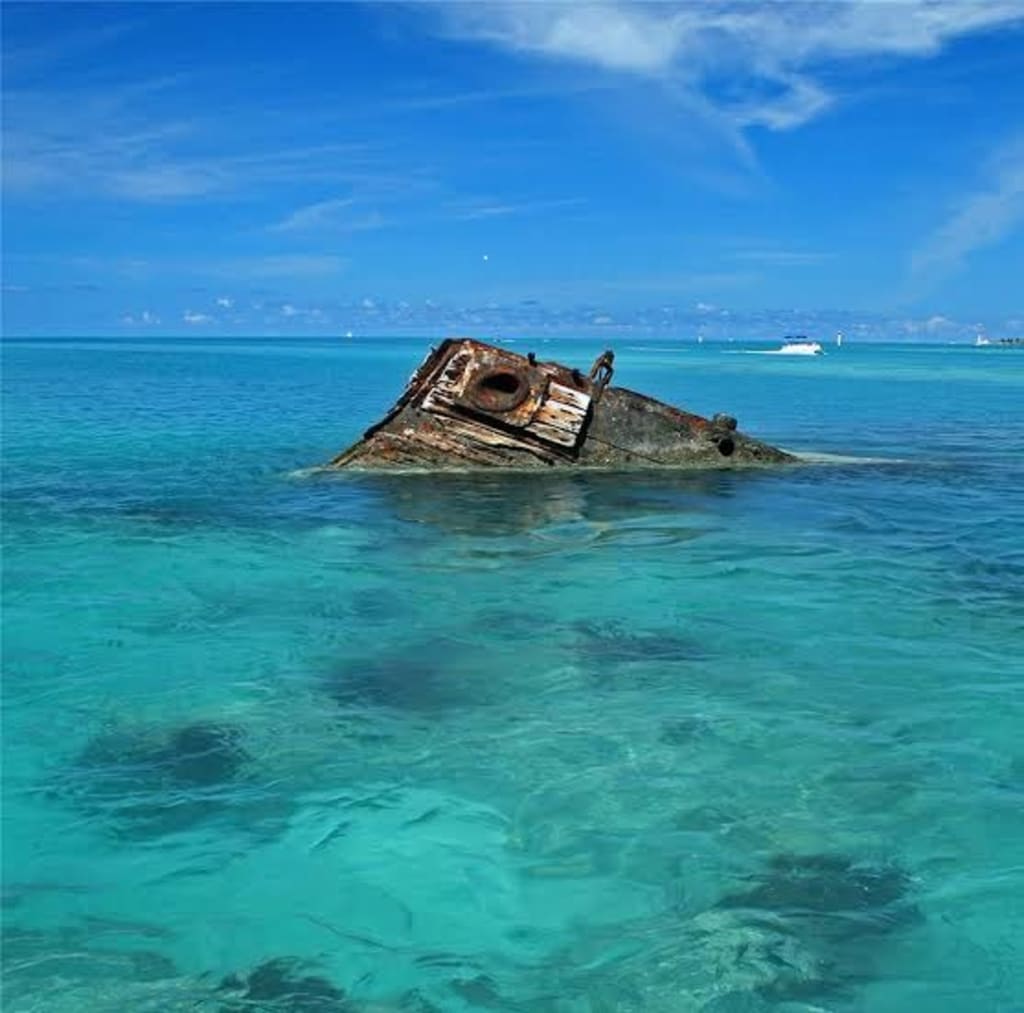
A new geological discovery beneath Bermuda is drawing fresh scientific attention to the North Atlantic, shifting focus away from old myths and toward a far more intriguing natural mystery. Researchers have identified an unusually thick rock layer—about 20 kilometers (12.4 miles)—hidden beneath the oceanic crust below the Bermuda archipelago. No similar structure of this size has been documented anywhere else on Earth.
According to William Frazer, a seismologist at Carnegie Science in Washington, D.C. and lead author of the study, the finding challenges long-standing assumptions about oceanic geology. Normally, the oceanic crust transitions directly into Earth’s mantle. In Bermuda’s case, however, scientists found an unexpected intermediate layer embedded beneath the crust and within the tectonic plate that supports the island.
A Possible Explanation for Bermuda’s Elevated Seafloor
Although the exact origin of this hidden layer remains uncertain, it may help resolve a long-standing puzzle: why Bermuda sits atop an elevated region of ocean floor known as an oceanic swell. Typically, such swells are associated with active volcanic processes, yet Bermuda has shown no volcanic activity for roughly 31 million years.
Frazer suggests that the island’s final volcanic phase may have forced mantle material upward into the crust, where it cooled and solidified. This dense intrusion could act like a geological “float,” lifting the surrounding seafloor by approximately 500 meters (1,640 feet) and preventing it from sinking over time.
Beyond the Bermuda Triangle Myth
While Bermuda is widely known for the legend of the Bermuda Triangle—an area historically associated with unexplained ship and aircraft disappearances—scientists emphasize that those stories are largely exaggerated. The real mystery lies beneath the surface: why the island’s oceanic swell has persisted for millions of years without ongoing volcanism.
In contrast, island chains such as Hawaii form above mantle hotspots, where rising heat creates continuous volcanic activity. As tectonic plates move away from these hotspots, the seafloor typically cools and sinks. Bermuda, however, defies this pattern.
Seismic Imaging Reveals the Hidden Layer
To investigate what lies below Bermuda, Frazer and co-author Jeffrey Park, a professor at Yale University, analyzed seismic data recorded on the island from powerful earthquakes occurring across the globe. By studying how seismic waves changed as they passed through Earth’s interior, the researchers were able to map geological structures down to a depth of about 50 kilometers (31 miles).
Their analysis revealed the presence of a thick, relatively low-density rock layer beneath the crust—an anomaly that likely plays a role in maintaining Bermuda’s elevated position.
The research was published on November 28 in the journal Geophysical Research Letters.
Ancient Carbon From Deep Within Earth
Independent research supports the idea that Bermuda’s geology is unique. Sarah Mazza, a geologist at Smith College who was not involved in the study, noted that remnants of ancient volcanic material beneath the island may still be contributing to its elevation.
Mazza’s previous work found that Bermuda’s lava is unusually low in silica, indicating an origin from carbon-rich mantle material. Her analysis of zinc isotope variations, published in September in the journal Geology, suggests that this carbon was transported deep into the mantle hundreds of millions of years ago—likely during the formation of the supercontinent Pangea, between 900 and 300 million years ago.
This process differs significantly from what is observed beneath volcanic islands in the Pacific and Indian oceans. Scientists believe the difference may be linked to the Atlantic Ocean’s relatively young age, as it formed when Pangea broke apart, unlike the older ocean basins that existed along Pangea’s margins.
About the Creator
Ahmed Ghanem
i am a mechanical engineer of 23 years experience in my career.
I am fond of ancient things, history , new inventions , cooking and science
Keep reading
More stories from Ahmed Ghanem and writers in Earth and other communities.
The Most Unknown Legendary Football Players You’ve Probably Never Heard Of
Football remembers goals. It remembers trophies. It remembers headlines. But it often forgets the players who changed matches, shaped generations, and disappeared quietly — not because they weren’t great, but because history is selective.
By Ahmed Ghanem2 months ago in FYI
Full Moon Snow Moon
On cold winter nights, when the air feels sharper and the sky appears unusually clear, the Moon often seems brighter and more commanding than at any other time of year. One of the most evocative lunar events of winter is the full moon Snow Moon, a name that carries both astronomical meaning and deep cultural history. Beyond its poetic title, the Snow Moon invites people to look up, reflect on the rhythms of nature, and ask timeless questions—like what planet is next to the moon tonight?
By Saboor Brohi 4 days ago in Earth
Billie Eilish Passes Adele And Bruno Mars With Her New Grammy Win
Billie Eilish has once again made music history, reportedly surpassing major global artists Adele and Bruno Mars in Grammy-related achievements with her latest award win. The milestone highlights Eilish’s continued dominance in the global music industry and reinforces her position as one of the most influential artists of her generation.
By Aarif Lashariabout 10 hours ago in Earth
Instructions Included Challenge Winners
For the Instructions Included challenge, we asked writers to tell a story through instructions and to trust the form to carry what could not be said outright. Across the top entries, that trust paid off in many different ways.
By Vocal Curation Team6 days ago in Resources



Comments
There are no comments for this story
Be the first to respond and start the conversation.