
How Energy Startups in Charlotte Are Using AI for Predictive Maintenance Apps?
When Machines Began Speaking Before They Broke — And Why Energy Companies Started Listening

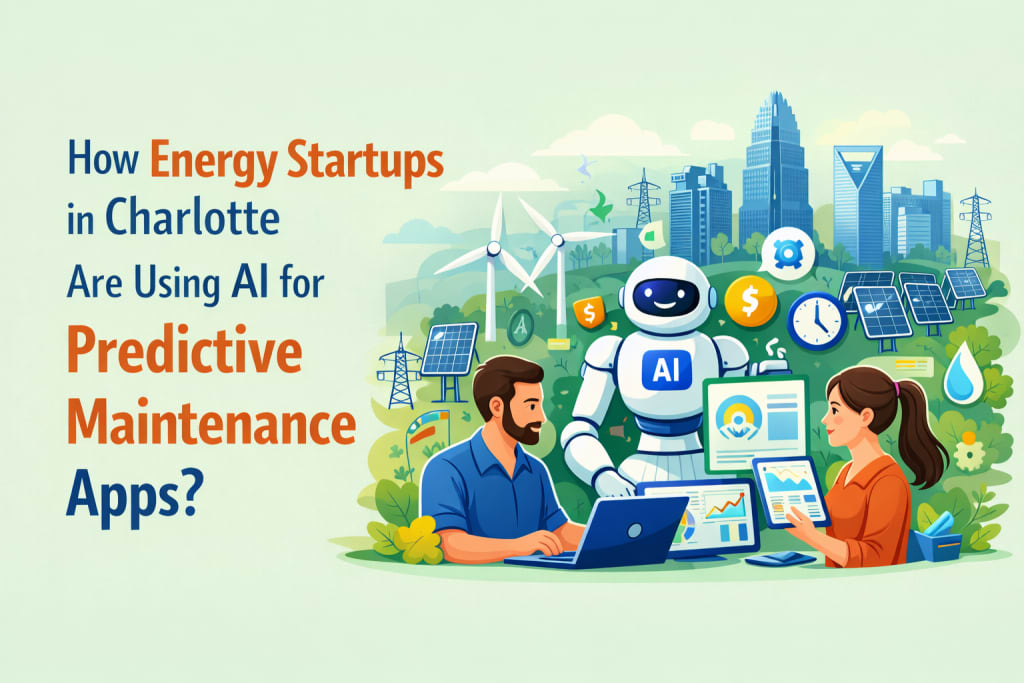
For decades, energy infrastructure relied on reactive maintenance. Equipment failed, alarms sounded, and technicians responded. The cost of downtime was accepted as part of operating complex systems. That mindset has shifted rapidly. Today, energy companies increasingly expect machines to signal risk long before breakdown occurs.
Predictive maintenance, powered by artificial intelligence, has moved from experimental research into everyday operational strategy. In Charlotte, a city with growing influence in both energy and financial sectors, startups are building mobile applications that translate raw equipment data into actionable intelligence.
These apps do more than monitor systems; they reshape how energy organizations think about maintenance, efficiency, and long-term planning.
The Economic Pressure Driving Predictive Maintenance Adoption
Energy infrastructure operates under tight margins and rising operational expectations. Downtime affects not only revenue but also public reliability, environmental performance, and regulatory compliance.
According to research from McKinsey, predictive maintenance strategies can reduce maintenance costs by up to 20% while decreasing equipment downtime by as much as 50%. For energy companies managing distributed assets such as turbines, transformers, or solar installations, these improvements represent substantial financial impact.
Charlotte-based startups recognize that mobile apps provide a practical interface for delivering predictive insights directly to technicians in the field. Instead of waiting for centralized reports, engineers receive alerts through real-time dashboards.
The shift toward mobile-first monitoring reflects broader changes in how industrial workforces operate.
Artificial Intelligence as the Core Engine Behind Predictive Systems
Predictive maintenance relies on analyzing patterns across large datasets. Sensors embedded within equipment collect continuous streams of information, including:
- Temperature fluctuations.
- Vibration patterns.
- Energy output metrics.
- Environmental conditions.
Machine learning models compare real-time data against historical patterns to detect anomalies indicating potential failure.
Gartner research suggests that by the late 2020s, a majority of industrial companies will adopt some form of predictive analytics for maintenance planning. Early adopters gain advantage by preventing unexpected disruptions.
Charlotte startups often build mobile apps connecting these AI models to frontline workers. The mobile interface becomes the bridge between data science teams and technicians managing physical equipment.
Why Mobile Interfaces Matter for Predictive Maintenance
Predictive analytics alone does not improve outcomes unless information reaches the right people at the right time. Mobile apps play a central role by translating complex data into actionable instructions.
Key features commonly include:
- Real-time alerts highlighting risk levels.
- Visual dashboards showing equipment health.
- Guided maintenance workflows.
- Historical performance tracking.
Field technicians frequently work in environments where laptops are impractical. Mobile apps provide portability, allowing workers to access insights while inspecting equipment.
Research into industrial mobility shows that companies adopting mobile-first maintenance workflows often reduce response times significantly compared with traditional reporting systems.
Charlotte’s Energy Ecosystem and Its Influence on Startup Development
Charlotte hosts utilities, renewable energy initiatives, and companies focused on grid modernization. This ecosystem provides fertile ground for experimentation with predictive technologies.
Energy transition trends, including increased renewable adoption and decentralized power generation, create new challenges for maintenance teams. Solar arrays, battery storage systems, and smart grid infrastructure require continuous monitoring.
Startups operating within this environment often collaborate with established energy companies seeking digital tools that support evolving infrastructure needs.
Discussions around mobile app development Charlotte frequently include industrial applications alongside financial or consumer-focused products, reflecting the city’s diverse technology landscape.
Data Quality and the Challenge of Building Reliable AI Models
While predictive maintenance promises efficiency gains, success depends heavily on data quality. Sensors must produce accurate readings, and historical datasets must represent realistic operating conditions.
Common challenges include:
- Missing or inconsistent data streams.
- Environmental noise affecting sensor accuracy.
- Limited historical failure examples for training models.
Startups address these issues through hybrid approaches combining statistical modeling with domain expertise from engineers.
Research published in IEEE industrial journals indicates that combining machine learning with expert rule-based systems often improves prediction accuracy compared with relying on AI alone.
User Experience Design for Industrial Applications
Designing mobile apps for energy technicians differs from building consumer applications. Interfaces must prioritize clarity and speed over visual complexity.
Effective design patterns include:
- Large, readable indicators showing equipment status.
- Simple navigation allowing quick access to critical alerts.
- Offline functionality supporting work in remote locations.
Field workers often operate under time pressure, making intuitive design essential. Predictive maintenance apps must present information in ways that support rapid decision-making rather than overwhelming users with raw data.
Environmental Impact and Sustainability Goals
Predictive maintenance contributes to sustainability efforts by reducing energy waste and extending equipment lifespan. Avoiding unexpected failures can prevent resource-intensive emergency repairs and minimize environmental risks.
Energy companies increasingly align maintenance strategies with sustainability goals. AI-driven monitoring allows organizations to identify inefficiencies early, improving overall system performance.
Reports from the International Energy Agency highlight digital technologies as key drivers of energy system optimization, suggesting that predictive analytics may play a central role in reducing carbon emissions.
Workforce Transformation and New Skill Requirements
As predictive maintenance tools become more widespread, workforce expectations evolve. Technicians now require familiarity with digital dashboards, data interpretation, and AI-generated recommendations.
Training programs increasingly combine traditional mechanical knowledge with digital literacy. Startups developing mobile apps must consider onboarding experiences that help workers understand how to interpret predictive alerts.
Human factors remain central to adoption. Even accurate predictions may be ignored if users lack confidence in the system.
Security and Reliability Concerns in Connected Energy Systems
Connecting industrial equipment to mobile apps introduces cybersecurity risks. Energy infrastructure represents critical assets, making secure communication essential.
Developers must address:
- Encryption of sensor data.
- Secure authentication for mobile users.
- Monitoring for unauthorized access attempts.
Government agencies emphasize cybersecurity standards for energy systems, reflecting growing concern about digital vulnerabilities.
Security considerations influence both backend architecture and user interface design, shaping how predictive maintenance platforms evolve.
Future Trends Shaping Predictive Maintenance Apps
Several developments may influence the next generation of AI-driven maintenance tools:
Edge Computing
Processing data directly on devices near equipment may reduce latency and improve reliability.
Digital Twins
Virtual replicas of physical systems allow simulation of potential failures before they occur.
Autonomous Maintenance Scheduling
AI systems may recommend optimal maintenance windows based on operational patterns.
Integration With Augmented Reality
Technicians could receive visual overlays guiding repair steps through mobile devices.
These trends point toward increasingly intelligent systems supporting human decision-making rather than replacing it.
Final Reflection: From Reactive Repairs to Predictive Thinking
Predictive maintenance represents a broader shift in how organizations approach operational risk. Instead of reacting to problems after they occur, energy companies now anticipate challenges through data-driven insights.
Charlotte’s energy ecosystem demonstrates how mobile apps and artificial intelligence combine to reshape traditional industries. Startups building predictive maintenance tools stand at the intersection of engineering, software development, and sustainability.
As AI continues evolving, the real transformation may not lie in machines predicting failures but in how organizations rethink maintenance itself — moving from crisis response toward proactive care, where technology quietly works behind the scenes to keep systems running smoothly long before problems become visible.
About the Creator
Ash Smith
Ash Smith writes about tech, emerging technologies, AI, and work life. He creates clear, trustworthy stories for clients in Seattle, Indianapolis, Portland, San Diego, Tampa, Austin, Los Angeles, and Charlotte.
“It Has Ventilation Systems, Food Storage, Nurseries, Toilets and Highways” – 11 Animals That Build Villages, Towns and Even Cities
When we think of cities, we picture skyscrapers, highways, sewage systems, and carefully designed neighborhoods. Yet long before humans mastered architecture and infrastructure, animals were already building complex settlements complete with ventilation systems, food storage facilities, nurseries, waste management areas, and transportation routes.
By Ayesha Lashari5 days ago in Earth




Comments
There are no comments for this story
Be the first to respond and start the conversation.