
From Loss to Harvest
The Pigeon Pea Tree, Resilience, and the Promise of Christmas Arroz con Gandules

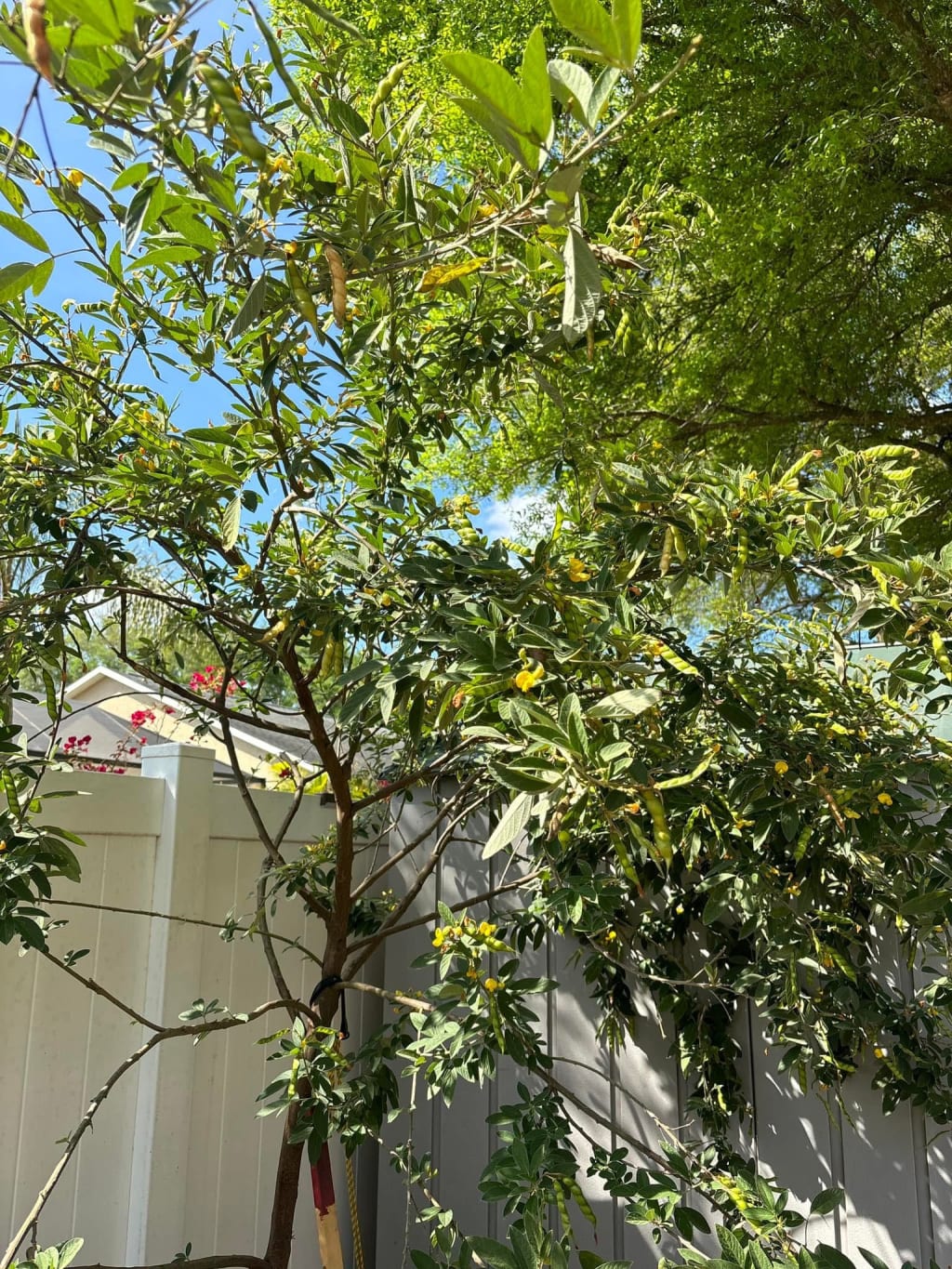
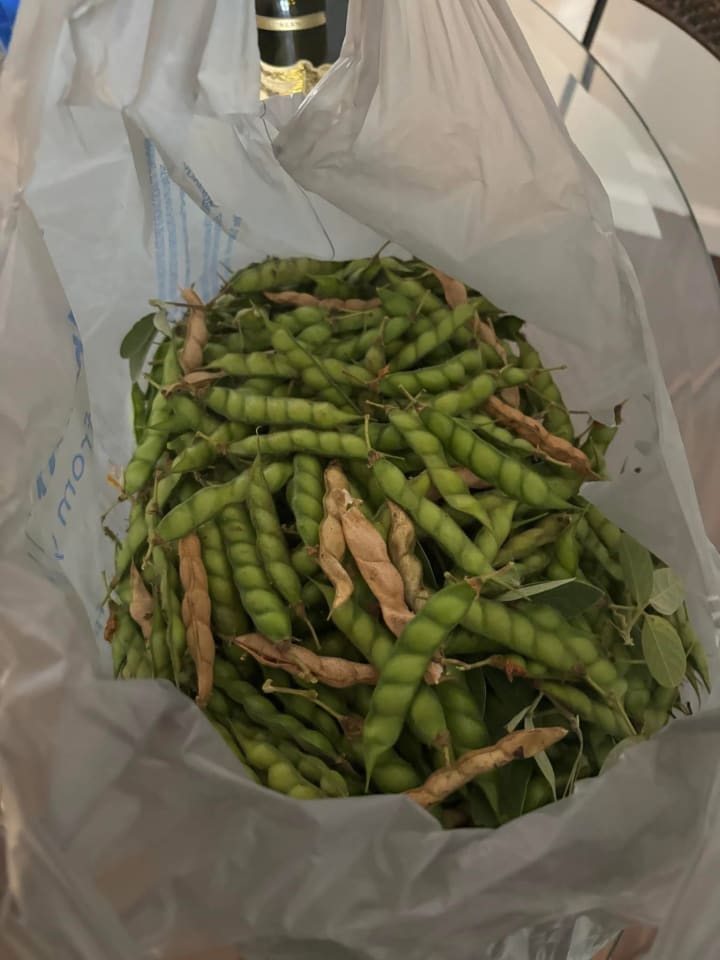
Today we took down our pigeon pea tree. After the recent freeze, it simply couldn’t hold on. The cold wrapped itself around its branches, and what once stood tall and green slowly surrendered to brittle stems and fading leaves. It’s strange how quickly a shift in weather can change the fate of something that felt so steady. But three weeks before the freeze, I gathered its final harvest. And for that, I am grateful.
For those unfamiliar, the pigeon pea tree, Cajanus cajan, is more than just a plant. It is a drought-tolerant legume grown for its edible seeds and cherished across tropical and subtropical regions. In India, Africa, and throughout the Caribbean, it is a staple. In Puerto Rico, it is tradition.
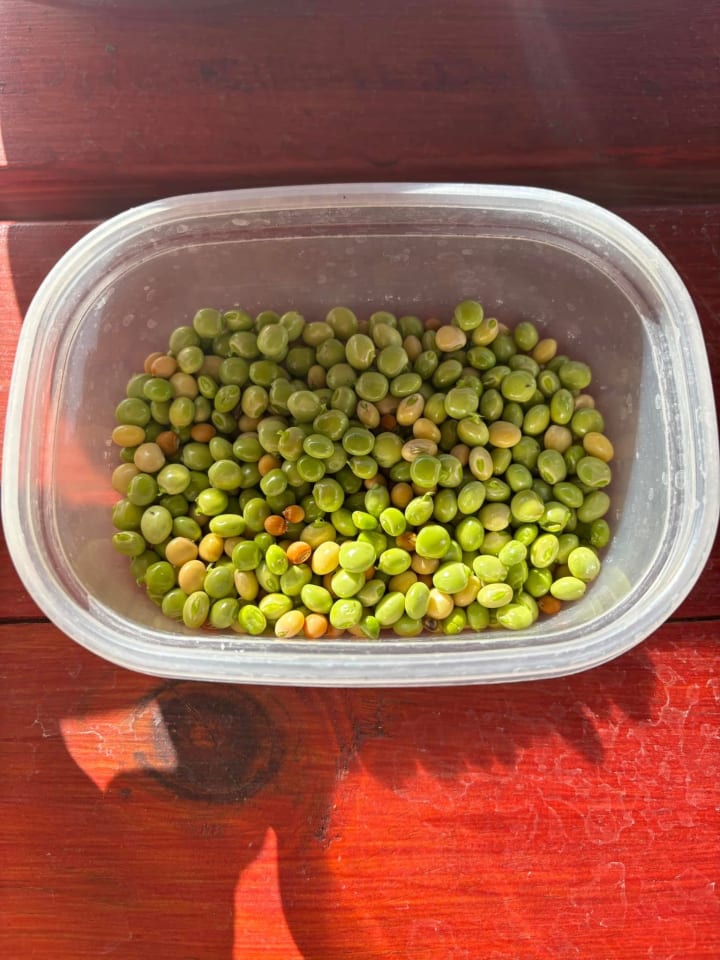
The peas, known to many of us as gandules, can be eaten fresh and green or dried and split. They are rich in protein, fiber, and iron. But beyond their nutritional value, they carry culture. Memory. Home.
If you’ve ever smelled a pot of arroz con gandules simmering in a Puerto Rican kitchen, you know this is not just food. It is ceremony.
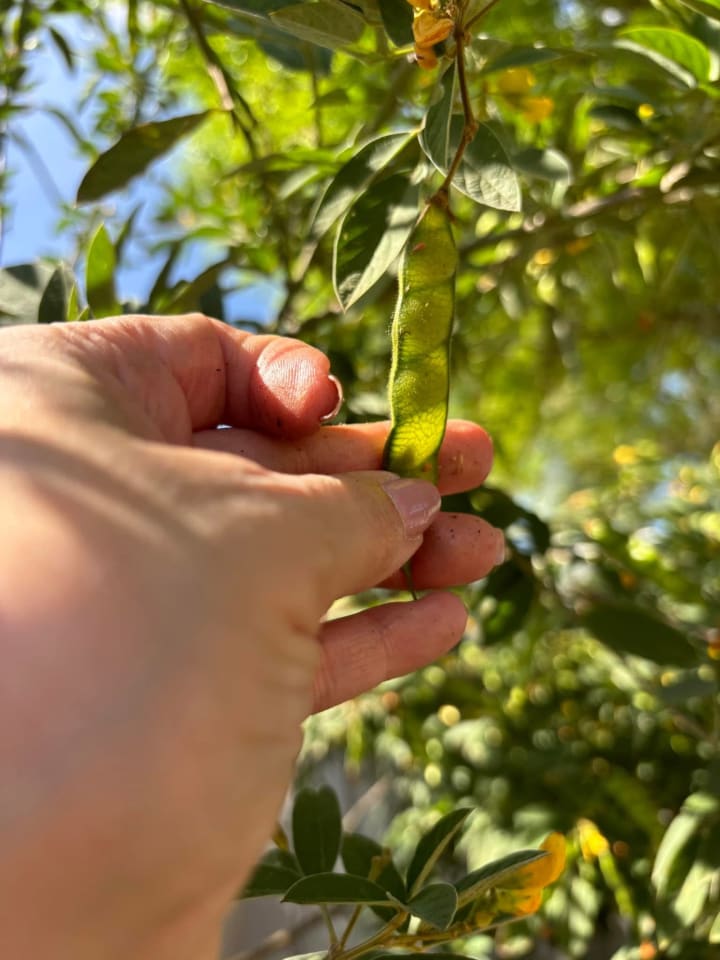
The pods themselves are unassuming. Dry, slightly curved, and humble in appearance. When you crack one open, you’ll usually find four or five peas tucked neatly inside, like hidden treasure. Some argue that shelling pigeon peas is tedious work. Too time-consuming. Too repetitive.
I disagree. There is something deeply grounding about sitting with a bowl of pods, gently opening each one, and collecting the peas in your palm. The rhythm becomes meditative. Crack. Gather. Drop. Repeat.
In a world that moves fast and rarely pauses, harvesting your own food slows you down. It reminds you that nourishment does not come from convenience, it comes from patience. There is satisfaction in knowing that what ends up on your plate once grew in your own soil.
When we cut the tree down today, I felt a mix of sadness and respect. Gardening teaches you quickly that nothing is permanent. Seasons shift. Weather humbles you. Growth is never guaranteed.
But here is what I’ve learned: loss in the garden is rarely the end. Before saying goodbye to the tree, I saved a dry seed. Small. Ordinary-looking. Easy to overlook. Yet inside that seed is potential. Legacy. Continuation.
I will propagate it into a seedling and transfer it back into the ground. Luckily, pigeon pea plants grow quickly. They are resilient by nature—drought-tolerant, adaptable, and generous when cared for. What the freeze took this season, I will replant with intention for the next.
And I already know what I am planting it for. Arroz con gandules, asopao de gandules, and gandules guisado.
There is something deeply symbolic about growing pigeon peas with the hope of harvesting them in time for arroz con gandules and other dishes. That dish is the heart of a Puerto Rican Christmas table. It sits beside pernil and pasteles, anchoring the meal with its savory aroma of sofrito, rice, and tender gandules.

To grow the peas yourself adds another layer to the celebration. It transforms the meal from tradition into testimony. Testimony of resilience. Testimony of patience. Testimony of faith in another season. The freeze may have killed the tree, but it did not erase the harvest. It did not erase the seed. It did not erase the possibility of next year’s abundance.
In many ways, the pigeon pea tree mirrors life. We experience unexpected freezes - moments that damage what we worked hard to grow. Plans fall apart. Efforts feel wasted. Something we nurtured with care suddenly stands lifeless before us. But if we pay attention, we often realize we gathered fruit before the frost came. And even when we didn’t, there is almost always a seed left behind.
So today, while we cleared the dry branches and pulled the roots from the soil, I wasn’t just removing a dead tree. I was making room. Room for replanting. Room for hope. Room for the next harvest.
Gardening has a way of teaching quiet faith. You press a seed into the earth and trust that something invisible is happening beneath the surface. You water soil that looks unchanged. You wait. And then one day, green breaks through.
When Christmas comes and arroz con gandules fills the kitchen again, I hope to know that the peas in that pot came from the very seed I saved today. From what looked like an ending. Because sometimes what feels like loss is simply preparation for renewal.
The pigeon pea tree may be gone for now. But the story, and the harvest, are far from over.
About the Creator
Debbie
Debbie is a dedicated writer, avid traveler, and skilled medium, who serves as a transformative spiritual healer. To embark on a journey of connection and insight with her, visit https://spiritualconnecting.com.
The Arctic is Breaking Down: Why This Rare February Signal Has Meteorologists On Edge
As the calendar turns through February, something unsettling is happening 30,000 feet above the North Pole. High-altitude sensors and satellite data are flashing "code red" signals that haven't been seen in decades. Meteorologists are sounding the alarm on an unusually early Arctic breakdown—a massive disruption of the atmosphere that could flip the script on the rest of our winter.
By Adil Ali Khan6 days ago in Earth
Diaries to Nietzsche
Quotation from Friedrich Nietzsche "He who wrestles long with monsters should beware lest he himself become a monster. And if you gaze long into an abyss, the abyss also gazes into you. Man is not destroyed by suffering, but by the meaning he makes of it."
By LUCCIAN LAYTH3 days ago in Critique



Comments
There are no comments for this story
Be the first to respond and start the conversation.