
Do Trees Have the Power to Tackle Climate Change?
Is Planting Trees to Fight Global Warming a Double-Edged Sword?

Bill Gates has taken a firm stance on the debate surrounding mass tree planting as a solution to combat climate change. He emphasized that he does not support tree planting as a means to offset carbon emissions, as he considers it one of the less proven approaches. During a climate discussion organized by The New York Times, Gates expressed his skepticism, referring to the idea that planting vast numbers of trees could single-handedly address the climate crisis as "complete nonsense." He questioned whether those advocating for such approaches were truly following scientific reasoning.
Gates' statements generated considerable attention and drew criticism from proponents of reforestation (planting trees in damaged forests) and afforestation (planting in non-forested areas). Jad Daley, the head of American Forests NGO, who has dedicated years to making forests part of the climate solution, voiced his concerns. He pointed out that such commentary could hinder their efforts and setback progress in this area.
For years, mass tree planting initiatives have gained momentum as a practical method for removing carbon dioxide from the atmosphere on a large scale. Even US Republicans, who have often been skeptical about climate change, have introduced legislation supporting the planting of a trillion trees globally.
However, Gates is not alone in his doubts regarding the efficacy of these ambitious tree planting plans. A group of scientists recently cautioned that such initiatives could potentially do more harm than good, especially in tropical regions. Their concern revolves around the replacement of complex ecosystems with single-species plantations, leading to a loss of biodiversity and increased vulnerability to diseases.
The scientists argued that carbon capture is just one aspect of the essential ecological functions provided by tropical forests and grassy ecosystems. They pointed to examples in southern Mexico and Ghana, where once-diverse forests have transformed into homogeneous landscapes.
Critics of large-scale tree planting initiatives have raised various issues, including the potential replacement of native vegetation with fast-growing timber species like teak. This could pose additional risks to ecosystems and native species.
Despite the criticisms, proponents of tree planting, such as Jad Daley, argue that the value of well-planned and carefully executed reforestation projects should not be dismissed outright. He emphasized that the premise behind Gates' criticism is flawed, as no one is claiming that forests alone can solve environmental problems. Daley believes that critics are too focused on poorly executed schemes and ignore well-thought-out initiatives involving native species in areas that genuinely require reforestation.
Efforts are being made to bridge the gap between critics and supporters of tree planting. For instance, the Royal Botanic Gardens, Kew, and Botanic Gardens Conservation International have proposed ten "golden rules for restoring forests." These guidelines suggest avoiding areas like grasslands and wetlands, prioritizing natural regeneration, and selecting resilient and biodiverse tree species. However, they emphasize the crucial starting point: protecting existing forests before embarking on new planting efforts, recognizing that forest recovery can take over a century.
In conclusion, the debate over mass tree planting as a solution to combat climate change is a complex and nuanced one. Bill Gates' recent skepticism, while raising important questions, should not overshadow the fact that carefully planned and well-executed reforestation initiatives can indeed play a vital role in mitigating the climate crisis.
The concerns raised by critics are valid and highlight the importance of avoiding poorly conceived schemes that may inadvertently harm ecosystems and biodiversity. It is crucial to prioritize native species, protect existing forests, and adhere to guidelines that promote sustainable practices in reforestation efforts.
While tree planting alone cannot be the sole answer to our environmental challenges, it is an essential part of a broader strategy that includes reducing emissions, protecting natural habitats, and transitioning to cleaner energy sources. In this collective effort, we must remain open to ongoing research, adapt our approaches, and work collaboratively to address the urgent issue of climate change.
Ultimately, the goal is clear: to safeguard our planet and ensure a sustainable future for generations to come. This necessitates a balanced approach that acknowledges both the potential benefits and limitations of mass tree planting while continuing to explore innovative solutions for a healthier, more resilient Earth.
About the Creator
Keep reading
More stories from Morsheda Akter and writers in Earth and other communities.
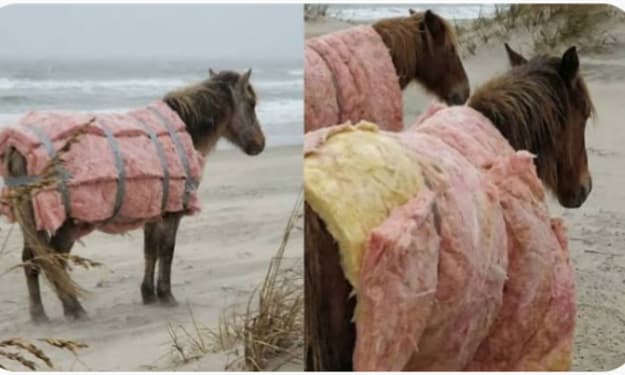
No, North Carolina Wild Horses Were Not Wrapped in Insulation
You might have seen some shocking images circulating online: wild horses on a North Carolina beach supposedly wrapped in pink insulation by volunteers trying to “help” them survive the winter. The photos went viral, sparking outrage, concern, and a flurry of social media shares.
By Sajida Sikandara day ago in Earth
Storm Leonardo Triggers Mass Evacuations Across Spain and Portugal
Storm Leonardo has unleashed severe weather across parts of Spain and Portugal, forcing authorities to evacuate more than 11,000 residents as flooding, powerful winds, and widespread disruption threaten public safety. Emergency services in both countries remain on high alert, warning that risks persist even as conditions show signs of gradual improvement.
By Adil Ali Khan3 days ago in Earth



Comments
There are no comments for this story
Be the first to respond and start the conversation.